




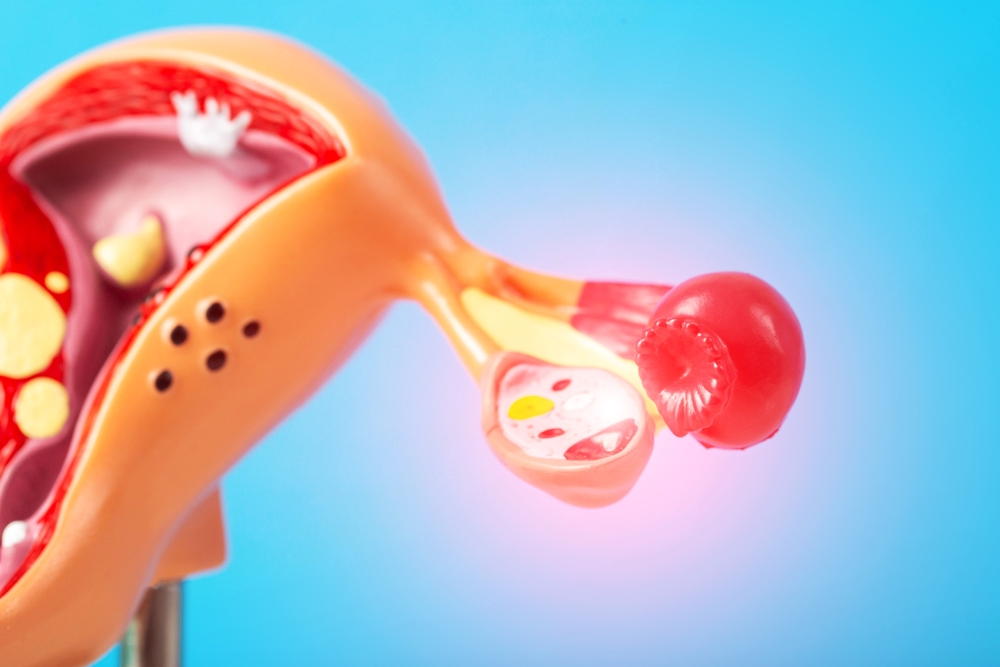
Many young women today experience the annoyance of irregular menstruation, reduced menstrual blood volume, missed periods, fatigue, hair thinning, low libido, and mood swings. Some even find themselves unable to conceive when they’re ready to start a family. A diagnosis usually reveals a premature ovarian failure. This condition involves a decline in ovarian function before the age of 40 and can drastically affect fertility, hormone balance, and overall well-being.
In traditional Chinese medicine (TCM), premature ovarian failure is seen as a result of underlying constitutional imbalances—particularly involving the kidneys, spleen, and liver. Rather than focusing solely on the ovaries, TCM aims to rebalance the entire body. By nourishing the kidneys, which govern reproduction; strengthening the spleen, which supports blood and energy production; and smoothing liver “qi,” or energy flow that regulates menstruation, TCM works to restore ovarian function and improve reproductive health from the inside out.
Understanding the Root Causes in TCM
Generally, women stop menstruating naturally around the age of 50, but patients with premature ovarian failure may begin to experience menopausal symptoms such as hot flashes, night sweats, palpitations, hair loss, and insomnia between the ages of 20 and 30. These symptoms can have a significant effect on both the body and mind.
The key lies in early detection and conditioning of physical constitution to improve ovarian function. Ye Ruduan, director of Taiwan Jiapin Chinese Medicine Clinic, said on an episode of “Health 1+1” that in clinical practice, premature ovarian failure is common in the following three physical constitutions:
1. Kidney Deficiency Constitution
In TCM, the kidneys are considered the foundation of reproductive health. The kidneys store “essence” or “jing,” which governs growth, development, fertility, and aging. When this essence is weak—referred to as “kidney deficiency”—it may affect:
- Producing and maturing eggs (follicular development)
- Regulating hormones that control the menstrual cycle
- Maintaining overall ovarian function
This is why women with kidney deficiency may show signs of early menopause. Supporting the kidneys in TCM often means restoring energy or qi, nourishing the body’s essence, and warming the body to strengthen reproductive capacity.
2. Weak Spleen and Stomach
In TCM, the spleen and stomach are responsible for digesting food and transforming it into qi and blood, which nourish all organs, including the ovaries. TCM holds that qi and blood are the basic substances that make up the human body and maintain all its physiological activities.
When the spleen and stomach are weak:
- The body may not produce enough qi and blood
- It may not circulate blood adequately to the ovaries
- It may not deliver the nutrients the ovaries need to function
This can lead to irregular or absent menstruation and ovarian decline. Women with this type of constitution may also experience fatigue, bloating, and a tendency to feel cold.
3. Abnormal Liver Qi
The liver in TCM is in charge of regulating the smooth flow of qi and blood, particularly important in the menstrual cycle and ovulation. Emotional stress, anxiety, or irregular lifestyle habits—such as staying up late or skipping meals—can block this flow, a condition known as “liver qi stagnation.”
When liver qi is stagnant:
- It disrupts the timing and quality of ovulation
- It can lead to irregular, painful, or absent periods
- It may disrupt hormonal signals to the ovaries
This type often presents with mood swings, irritability, chest tightness, or premenstrual tension.
Signs of Premature Ovarian Failure
Ye said that women may experience certain abnormal signs of menstruation two or three years prior to menopause.
1. Changes in the Menstrual Cycle
The standard menstrual cycle is 28 days. If it is shortened to 26 or 25 days, followed by further reduction to 24 or 23 days—or even shorter—this is a first warning signal of ovarian function decline. On the other hand, if the menstrual cycle slowly gets longer, followed by a sudden stop of the period, this will also be a sign of premature ovarian failure.
2. Reduced Menstrual Blood Volume
Normal menstruation usually includes two days of heavy menstrual blood discharge. When the menstrual blood volume decreases, it may be related to premature ovarian failure.
3. Shortened Menstrual Period Days
A normal menstrual period is about five to seven days. If this time span gradually shortens to four to three days—or even ends completely within three days—it may be an early sign of premature ovarian function degeneration. This condition should be addressed promptly.
Risk Factors of Premature Ovarian Failure
The following risk factors need special attention:
- Congenital inheritance: Some people have inherited chromosomal abnormalities, such as Turner syndrome, which could affect ovarian function and require chromosome screening.
- Ovarian disease or surgical history: Chocolate cysts and ovarian teratomas may affect ovarian tissue after surgery.
- Chemotherapy and radiotherapy: Especially when radiotherapy is performed in the pelvic cavity, the radiation may directly damage ovarian function. Certain chemotherapy drugs may also cause direct damage.
- Autoimmune diseases: Some autoimmune diseases may directly attack the ovaries and affect the development of follicles.
- Exposure to environmental toxins: Toxins like plasticizers, dioxins, and pesticides may interfere with hormone balance and affect normal ovarian function. Several animal model studies have confirmed the negative effects of microplastics on ovarian function. Microplastics have also been found in human follicular fluid.
- Lifestyle factors: Habits such as staying up late, chronic stress, smoking, drinking, and lack of exercise may negatively affect ovarian health.
- Rapid weight loss: Excessive dieting and extreme weight loss routines may disrupt the endocrine system and impair ovarian function.
How TCM Treats Premature Ovarian Failure
TCM treats premature ovarian failure by restoring balance in the body and supporting natural ovarian function through a personalized, whole-body approach.
- Herbal formulas: Custom-blended prescriptions may nourish kidney essence, strengthen the spleen, or soothe the liver depending on the diagnosis.
- Acupuncture: A therapy used to regulate hormonal balance, improve blood flow to the ovaries, and support emotional health.
- Moxibustion: A warming technique applied to acupuncture points—especially on the lower abdomen and back—to enhance kidney and spleen function.
- Dietary and lifestyle adjustments: Guidance on eating foods that nourish qi and blood, promote digestion, and reduce stress—such as warm, cooked meals; avoiding cold or raw foods; and going to bed early.
A Case That Offers Hope
Ye recalled a memorable case that shows the power of this integrative approach.
A 28-year-old woman had stopped menstruating for nearly a year and was hoping to become pregnant. She first sought treatment from a Western medical doctor, who prescribed hormone therapy to induce menstruation. Unfortunately, the treatment didn’t work. Blood tests revealed that her anti-Müllerian hormone (AMH)—a marker of ovarian reserve—was less than 0.01, indicating almost no remaining egg supply.
Feeling discouraged, she turned to Ye’s TCM clinic.
“I began treating her, and after several visits, her symptoms like hot flashes and night sweats improved noticeably,” Ye said.
“During her last visit, she asked for a month’s worth of herbal medicine because she lived far away and couldn’t come back regularly.”
Two years later, the woman returned—this time with surprising news.
“She told me that after taking that month’s medicine, she became pregnant—and had given birth to a healthy baby.”
Recommended Preventive Measures
If you can properly adjust your daily lifestyle and be more attentive to your health status as early as possible, you are more likely to prevent premature ovarian failure and help maintain normal ovarian function. Ye noted that it is important to focus on several key areas:
- Maintain a balanced diet: Include high-quality protein and nutrients such as vitamin A to support hormonal balance. Irregular mealtimes—common with modern work demands—can lead to nutritional deficiencies.
- Keep regular work and rest times: Reducing late nights and maintaining a consistent routine help regulate hormone function.
- Get proper exercise: Moderate physical activity promotes blood circulation, boosts metabolism, and helps stabilize body functions.
Early Detection of AMH
For women of childbearing age, Ye recommends early detection of AMH. This check is not affected by menstruation and is simple and convenient.
AMH is often called an indicator of ovarian reserve, which is used to assess whether the ovarian reserve function is consistent with age. As age increases, the ovarian reserve gradually decreases. For women aged 35 to 40, an AMH test value of 2 nanograms per milliliter (ng/mL) would indicate good ovarian function. However, if the same value appears in women between 20 to 30, it may signal premature decline and should be monitored.
It is worth noting that higher AMH is not always better. If AMH is greater than 5 ng/mL, polycystic ovary syndrome may be present.
Premature ovarian failure is more than a fertility issue—it can affect a woman’s hormones, emotional health, and long-term vitality. TCM offers a time-tested, individualized approach that focuses on restoring balance, not just replacing hormones. With early detection, lifestyle care, and targeted therapy, there is real hope for women to reclaim their reproductive health—and their future.