



In my nearly 40 years of clinical practice, I have frequently encountered people whose blood sugar levels fluctuate wildly. A husband of a diabetic patient once told me that his wife often experienced hypoglycemia after taking blood sugar suppression drugs and insulin injections at night, causing him great anxiety and sleeplessness. In fact, to stabilize blood sugar, medication and injections alone are not enough; daily lifestyle adjustments are even more important.
Foods for Stabilizing Blood Sugar
For those whose blood sugar does not drop after meals, I highly recommend eating yams.
1. Yams
A friend of mine who is also a doctor shared the following case with me. One of his friends had high blood sugar during a health check, and he recommended that he eat steamed yams every day. His friend followed suit by eating 1.3 to 4 ounces of yams daily without taking any hypoglycemic drugs. Shortly after, his blood sugar returned to the normal range.
Some people may wonder why yams, a starchy food, can lower blood sugar. The secret lies in a secretion from the slimy surface of yams, which slows down the release of sugar in the intestines. Traditional medicine and modern-day research both show that yams have many health benefits, including lowering blood sugar, blood lipids, and blood pressure.
Yams are recommended to be steamed and in soups, such as yam-and-pork rib soup and “Four-Ingredient Soup.”
2. Onions and Garlic
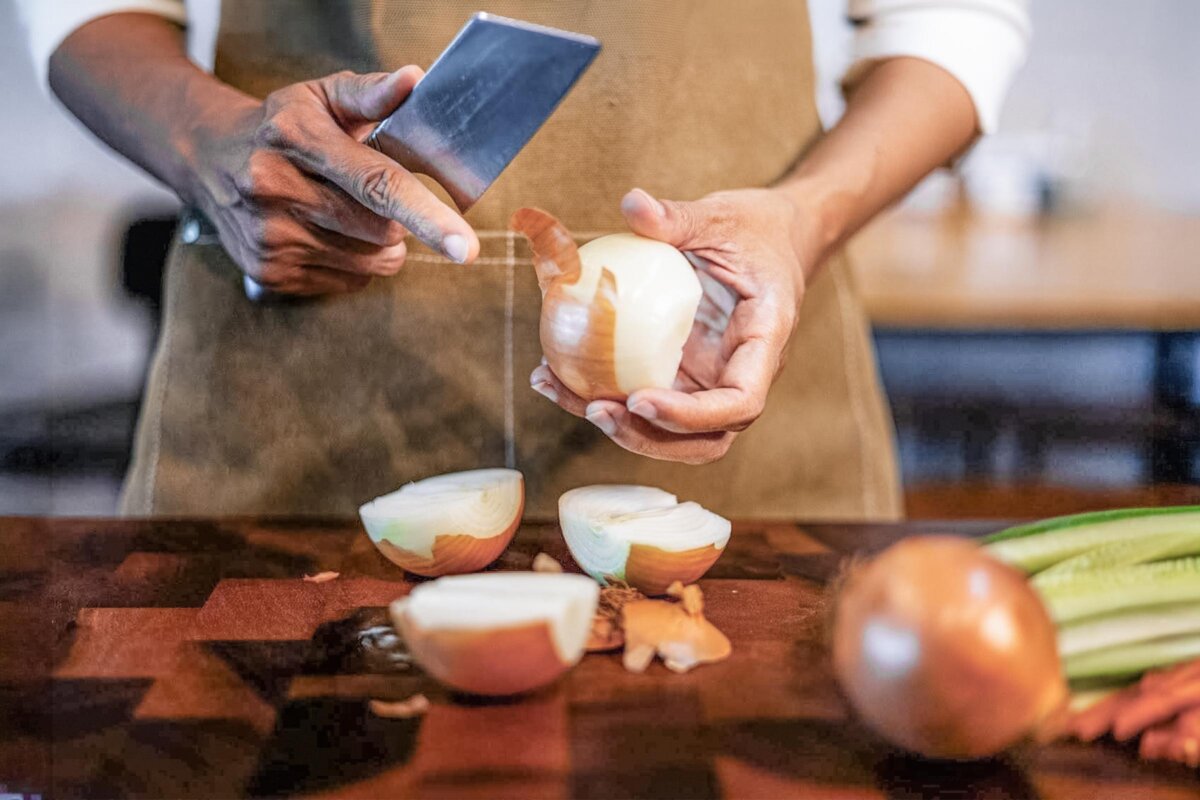
Famous Japanese chef Yoshinao Kubota developed diabetes in his 40s and tried to lower his blood sugar through diet. One important means was eating onions daily, especially soup made with onion peels and onions. Now more than 90 years old, he still serves as the head chef of a well-known Western restaurant.
Onion Soup Recipe
Ingredients
- 4 onions with peels
- 1/2 ounce kelp strips
- 1 clove garlic
- 2 ounces bacon, cooked
- 1 tablespoon soy sauce
- 1 tablespoon bonito broth
- 2/3 tablespoon vinegar
- A pinch of pepper
- 5 cups water
Preparation
- Make a broth by placing washed onions with peels into water, bringing to a boil, then removing the peels.
- Chop the onions and bacon into small pieces and mince the garlic.
- Add all ingredients to the pot and simmer over low heat for 20 to 30 minutes.
Soy sauce, bonito broth, kelp strips, and other Japanese seasonings can be found in Asian supermarkets. If you do not have them at home, you can replace them with a small amount of salt and other umami ingredients, such as mushrooms.
Onions are rich in quercetin, which has a blood sugar-lowering effect. The quercetin content in onion peels is particularly high, so adding them to the broth enhances its effect. Allicin in garlic can improve insulin secretion. It is recommended to eat roughly one clove of garlic daily to help lower blood sugar. A review of 768 patients with Type 2 diabetes found that daily allicin supplementation improved blood sugar and cholesterol levels.
Drinks for Diabetics
People often ask me what they can drink if they have high blood sugar. Any unsweetened tea and milk are fine, but unsweetened drinks containing artificial sweeteners may pose health risks and interfere with blood sugar metabolism. Therefore, it is best for diabetics and the population in general to avoid drinking beverages with added artificial sweeteners too often.
If you really want a little sweetness, I suggest buying sugar-free drinks and adding a small amount of honey yourself—this is better than adding sugar or fructose.
I recommend burdock tea as one suitable for diabetics. From a traditional Chinese medicine (TCM) perspective, burdock helps remove excess sugar and water from the body, making blood vessels less prone to blockage. Burdock tea bags are available commercially—simply steep in hot water for five minutes before drinking.
Note: Pregnant women and those with colds or coughs should not drink burdock tea.
2 Acupoints for Stabilizing Blood Sugar
In addition to dietary adjustments, it is recommended to strengthen the body’s self-regulation ability through acupoint massage. The two most used acupoints are sanyinjiao (SP6) and gongsun (SP4).
1. Sanyinjiao (SP6): Located on the inner side of the lower leg, about four finger-widths above the medial malleolus (the knob-like projection on the inner side of the ankle), where you can feel a depression.
Efficacy: Sanyinjiao connects the liver, spleen, and kidney meridians (energy pathways). From a TCM perspective, these three systems are related to energy metabolism, blood circulation, and digestion and absorption. Sanyinjiao lowers blood sugar and regulates the endocrine system. When the body functions in a coordinated manner, blood sugar levels are less likely to fluctuate wildly. Studies have also found that massaging sanyinjiao can improve proteinuria (abnormal quantities of protein in the urine) symptoms in patients with diabetic nephropathy.
Caution: Pregnant women should not press sanyinjiao.
2. Gong Sun (SP4): Located on the inner side of the foot. First, find the depression behind the big toe joint, then move along the inner edge of the foot and trace back about one thumb’s width; it is in the depression just below the metatarsal bones.
Efficacy: The gongsun acupoint is primarily used to activate the function of the “spleen.” In TCM, the spleen is not a single organ, but rather a system centered around the spleen, related to digestion, absorption, and energy conversion. If the spleen’s energy is insufficient, blood sugar may fluctuate, accompanied by digestive problems such as constipation.
2 Habits Most Harmful to Blood Sugar Levels
In addition to being careful about eating blood sugar-lowering foods and acupoint massage, we should avoid two unhealthy habits. The first is drinking vegetable and fruit juices. I heard about an 80-year-old man whose blood sugar was previously well-controlled, but one day it suddenly spiked. It turned out he had been drinking a glass of vegetable and fruit juice every morning. Vegetable and fruit juices seem nutritious, but the speedier absorption of juiced fruits and vegetables can easily cause blood sugar spikes.
The second easily overlooked habit is eating dinner too late. Many people eat dinner after working overtime, then immediately sit down and use their phones or lie down. Studies have found that eating dinner late does not allow blood sugar enough time to be fully metabolized by bedtime. Even if the same number of calories is consumed, nighttime blood sugar will still be higher, making fat synthesis easier, an action that may continue until the next morning.
If you are working late, at least avoid lying down immediately after eating. Get up and walk around for 10 minutes to help with post-meal metabolism and prevent calories from accumulating in your abdomen, forming a “spare tire.” A randomized crossover trial found that getting up and walking for 10 minutes immediately after eating can significantly lower the peak post-meal blood sugar, with an effect comparable to walking half an hour after eating.
Views expressed in this article are the opinions of the author and do not necessarily reflect the views of The Epoch Times. Epoch Health welcomes professional discussion and friendly debate. To submit an opinion piece, please follow these guidelines and submit through our form here.