



Mr. Zhao, 56, tried to lose weight by limiting himself to just one meal a day. Instead of slimming down, however, he grew increasingly weak—and didn’t lose any weight.
On a winter day in 2025, Zhao visited Serene Feng, a senior TCM physician at Northern Medical Center in New York. At first glance, he showed classic signs of “skinny fat”—excess body fat with low muscle mass. He weighed 195 pounds at 5 feet 9 inches.
The man was also dealing with fatty liver, high cholesterol, hypertension, and borderline high blood sugar. During the consultation, he repeatedly pressed his hand against the right side of his ribcage, complaining of a persistent dull pain in the liver area.
Years earlier, Zhao had successfully lost weight by eating less and exercising more. However, after marriage, a demanding career, and family responsibilities took over, the pounds gradually crept back on. Recently, he tried repeating his old approach—but this time it didn’t work. His extra weight made even light exercise painful on his knees. Eating only one meal a day left him ravenous, so when he finally ate in the evening, he overate—trapping himself in a frustrating cycle that sabotaged his efforts.
His Western physician had recommended GLP-1 drugs to lower blood sugar and promote weight loss. However, Zhao worried about side effects. Seeking a safer alternative, he turned to TCM.
Feng designed a personalized plan.
16:8 Light Fasting With Breakfast
Feng did not begin weight loss treatment immediately. Instead, she focused on restructuring Zhao’s daily routine and eating schedule.
Previously, he skipped breakfast entirely. In the morning, he would drink milk when hungry; at noon, he snacked on nuts; and his only real meal came at 8 p.m. or 9 p.m. He often stayed up until 1 a.m. or 2 a.m.
“It’s admirable that you have the discipline to eat just one meal a day,” Feng told him, “but the timing is working against you.”
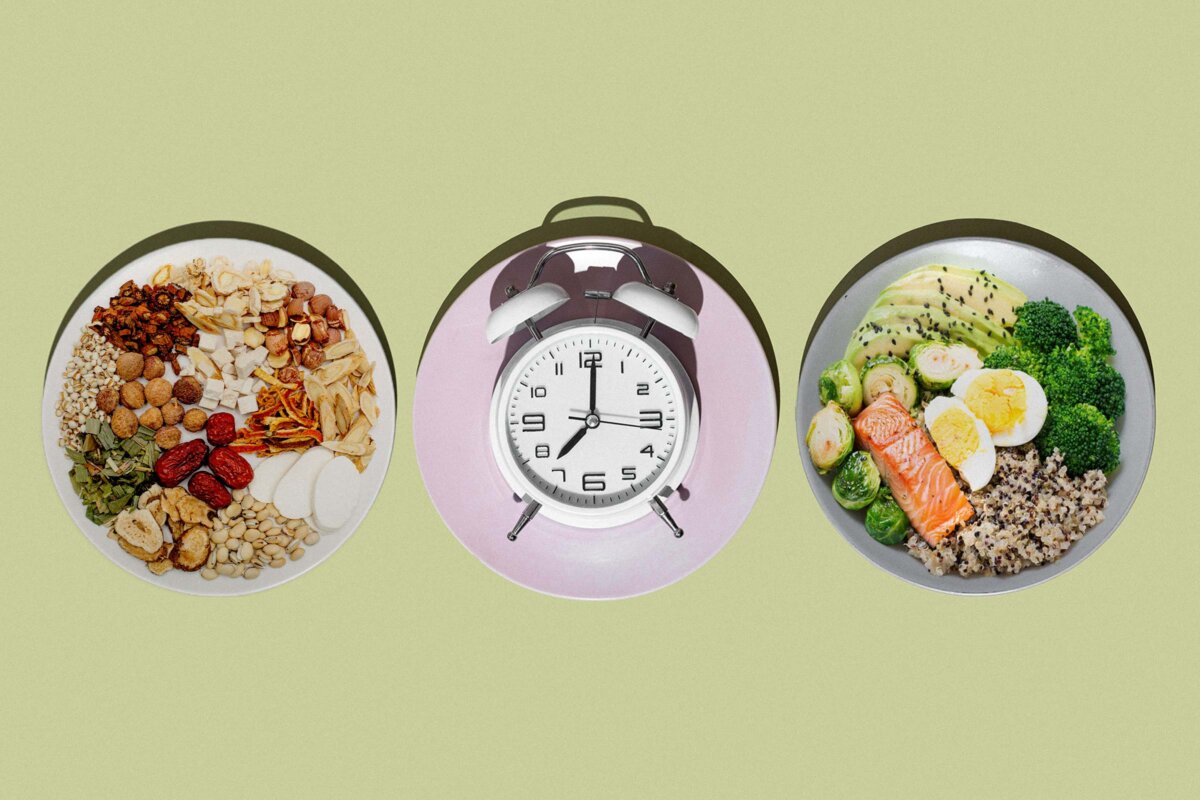
She recommended a 16:8 intermittent fasting schedule—fasting for 16 hours and eating within an 8-hour window—and including breakfast. A study involving 11 overweight adults found that eating earlier in the day—focusing on breakfast and lunch while avoiding late-afternoon and evening meals—can improve blood sugar control, regulate metabolism and circadian rhythms, and may even slow aging.
From a TCM perspective, Feng said that the stomach and spleen meridians (energy pathways) are most active between 7 a.m. and 11 a.m., making it the optimal window for digestion and nutrient absorption. “Eating breakfast during this time aligns with the body’s natural rhythms,” she said. “It helps restore normal metabolism and reduces the tendency for fat accumulation.”
She also advised that Zhao stop eating after 6 p.m. and go to bed before 11 p.m. Eating late and staying up late, she noted, places extra strain on the liver and disrupts metabolism.
In TCM, the period from 11 p.m. to 3 a.m. corresponds to the gallbladder and liver meridians. Quality sleep during this time is considered essential for liver repair.
“If you’re still eating at 8 p.m. or 9 p.m., the liver can’t rest,” Feng said. “It has to keep producing bile to digest food—like forcing an already overworked organ to stay on duty.”
Eating Right to Accelerate Metabolism
Zhao’s previous diet relied heavily on large salads, vegetable and fruit juices, and foods made from refined wheat, with very little meat.
In TCM, excess body fat and low muscle mass often reflect a buildup of metabolic wastes, known as “phlegm-dampness.” Raw, cold foods can further slow metabolism in someone with poor digestive function, Feng said.
For people with poor metabolic function, she recommends switching to cooked vegetables instead of freshly squeezed vegetable or fruit juices. She also suggests incorporating ginger, which can help accelerate metabolism. Drinking ginger-infused water can also be beneficial. Animal studies suggest that ginger supports healthy fat and sugar metabolism, potentially aiding weight loss and lowering blood lipid levels.
Regarding Zhao’s preference for foods made from refined wheat, Feng noted that such foods are high in starch and often contain added sugar, which can cause significant blood sugar fluctuations. Although eating large amounts of crackers or bread provides a temporary feeling of fullness, the low protein content causes hunger to return quickly.
Feng advised Zhao to eliminate foods made from refined wheat for 100 days and replace them with whole grains and mixed cereals, such as rice prepared with a mix of several whole grains, oats, chickpeas, and black soybeans. Coarse grains have a lower glycemic index than white rice and are higher in protein and fiber, resulting in more stable blood sugar levels.
Feng often prescribes a “100-day plan” to weight-loss patients. “For 100 days, you must strictly follow the dietary restrictions,” she said, “Once you reach a normal weight after 100 days, you can gradually reintroduce your favorite foods. But if your weight starts to increase again, you should go back to the plan.”
In addition, she encouraged moderate portions of high-quality beef or chicken to increase satiety, sustain energy, and improve mental clarity without overeating.
In Feng’s experience, using these methods, people with a higher starting weight can expect to lose about 3 to 4 pounds per week, while those with a lower starting weight can still lose 1 to 2 pounds per week.
After one week of the adjustments, Zhao lost 3 pounds.
Combining Multiple TCM Therapies
Beginning in the second week, Feng introduced TCM therapies.
She diagnosed Zhao with “liver qi stagnation” and “phlegm-dampness.” In TCM, the liver governs the smooth flow of qi (vital energy) and is easily affected by stress and emotions. When liver qi becomes stagnant, overall circulation slows, impairing the body’s ability to metabolize fats and eliminate waste, and leading to fluid retention and phlegm-dampness, which commonly manifests as high cholesterol, hypertension, high blood sugar, and fatty liver.
Her strategy combined herbal medicine, acupuncture, acupressure, and additional TCM therapies. The primary goals were to eliminate dampness, and relieve stagnation in the liver meridians.
Soon after treatment, Zhao reported feeling noticeably lighter and more relaxed. The dull pain in his liver area also disappeared.
TCM holds that the energy of internal organs flows through meridians on the body’s surface. Techniques such as acupuncture and massage help clear blockages, improve organ function, and support metabolism. Clinical studies suggest that acupuncture can help manage body weight, improve body mass index, and positively affect certain blood markers.
One week later, Zhao lost another 7 pounds.
Moving Mealtimes Earlier for Faster Results
After losing 10 pounds in two weeks, Zhao felt encouraged and wanted to accelerate his progress.
Losing weight too quickly is not ideal, Feng said, as the body needs time to adapt, and the process should be gradual. Still, she offered one safe method that could accelerate fat loss without harming the body.
She recommended shifting his meal times earlier: eat a proper breakfast in the morning, have a healthy lunch at noon, and stop eating after 3 p.m. If he felt hungry in the evening, he could drink water instead of eating.
Two weeks later, he lost another 5 pounds.
Zhao happily reported that he no longer felt hungry after 3 p.m.—and best of all, he now had the energy to start exercising again.
A Sustainable Path to Health
Over about two months, Zhao lost a total of 22 pounds.
The strength of TCM-based weight loss lies in addressing root causes by regulating the body’s constitution, Feng said. “The approach carries minimal side effects, and has a lower risk of rebound weight gain.”
“The greatest benefit is guiding people back to a healthy lifestyle.”