



The use of commercially available cannabis edibles impairs people’s driving ability, even after several hours of consumption, a study has found.
Published in the JAMA Network Open journal on Aug. 31, the peer-reviewed study looked at simulated driving performance after the consumption of cannabis edibles.
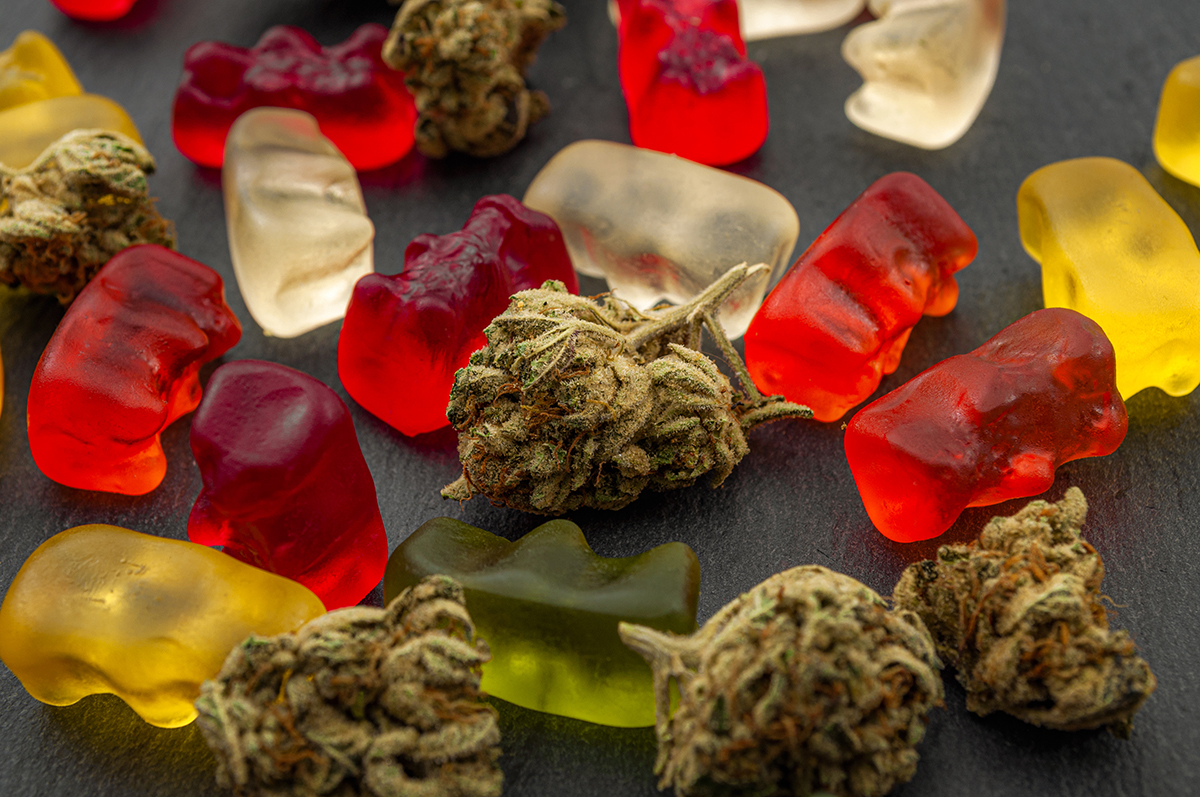
Conducted in a Canadian hospital, the study analyzed data of 40 people aged 19–45 years. They received gummies containing delta-9-tetrahydrocannabinol (THC)—the main psychoactive chemical in cannabis that causes brain-altering effects. Various combinations of THC and placebo edibles were given to achieve four doses of THC exposure—0 mg, 2 mg, 10 mg, and 20 mg.
The study measured the standard deviation of lateral position (SDLP), which assesses how drivers adjust lane position and is used to evaluate the effects of medicines and illegal drugs.
Researchers found that SDLP was “significantly increased” at 20 mg and 10 mg doses compared with the placebo at two and five hours post-consumption, suggesting greater difficulty in maintaining lane position.
Reaction time and the standard deviation of speed were “negatively influenced” among drivers due to THC exposure, the study said. The individual’s willingness to drive was also found to have “significantly decreased” at 20 mg exposure, according to the study.
For the highest dose of 20 mg, whole-blood THC concentrations peaked at 3.4 nanograms per milliliter (ng/mL). This falls within the 1 to 5 ng/mL limits for drivers set by some U.S. states.
The Centre for Addiction and Mental Health in Toronto highlighted the link between driving impairment and blood THC levels in an Aug. 31 statement.
All peak blood THC concentrations in the study were below or near common thresholds used for roadside enforcement, the statement said. This was true even among those who consumed the highest dose.
“Many people may underestimate the impairment caused by cannabis edibles,” Dr. Christine Wickens, co-author of the study, said in the statement. “Our findings show that commonly consumed doses can significantly affect critical driving skills, reinforcing the need for caution when making decisions about driving after use.”
The study was funded by a grant from Public Safety Canada. Two authors reported conflicts of interest, including receiving grants from pharmaceutical companies.
In an April 20 statement, the University of Colorado Anschutz also reported similar findings. In these studies, people were made to use a driving simulator before and after consuming cannabis.
Cannabis was found to affect driving performance, especially lane-control measures, such as lane departures and weaving. Inhaling cannabis showed smaller and less consistent changes, while edible cannabis resulted in “more noticeable impairment, including slower speeds and increased lane variability and departures,” the statement said.
US Cannabis Reclassification
In the United States, the Trump administration recently reclassified cannabis, or marijuana, under the Controlled Substances Act. On April 23, the Department of Justice and the Drug Enforcement Administration announced placing some cannabis products under Schedule III of the Act.
Schedule III drugs are deemed to have lower abuse potential and are accepted for medical use. The classification is only applicable to cannabis items approved by the Food and Drug Administration or regulated by a state medical marijuana license.
The American Trucking Associations (ATA) has raised concerns about public safety risks arising from the reclassification.
In an April 24 statement, Brenna Lyles, ATA’s vice president of safety policy, highlighted concerns about rescheduling cannabis without proper safeguards to preserve the U.S. Department of Transportation’s (USDOT’s) testing authority for workers carrying out safety-sensitive jobs.
“Absent clear protections for USDOT’s marijuana testing authority, a policy shift could undermine the Department’s drug- and alcohol-testing program and weaken highway safety,” Lyles said.
“That risk is compounded by the lack of a reliable, widely accepted standard to measure marijuana impairment, whether roadside or before a driver gets behind the wheel.”