



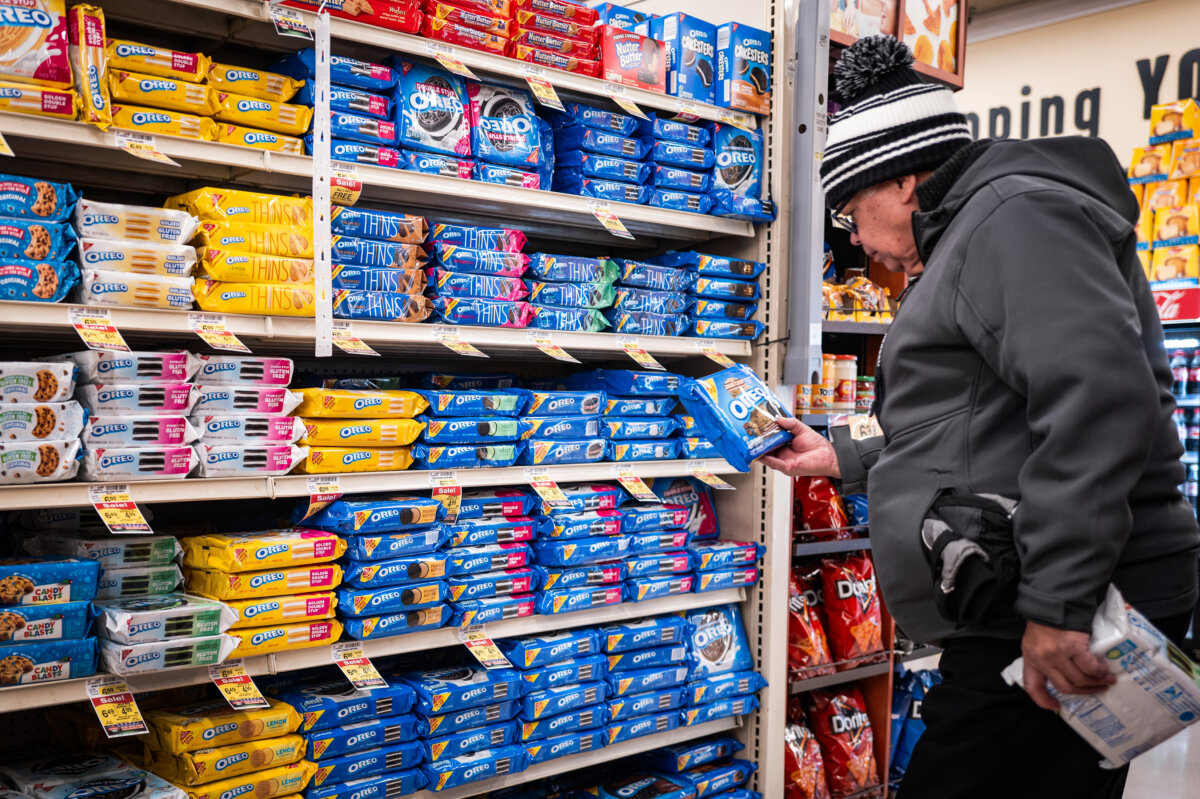
A majority of calories consumed by Americans come from ultra-processed foods, the Centers for Disease Control and Prevention said on Aug. 7.
Some 55 percent of total calories taken in by Americans 1 year of age and older came from ultra-processed foods, a category that includes burgers, sweet baked goods, savory snacks, pizza, and soda, the CDC said in a brief.
Young people are more likely to eat and drink ultra-processed products. Youth aged 1 to 18 derived 61.9 percent of their calories from such foods, according to the data, which came from a national survey conducted from August 2021 through August 2023. Adults consumed 53 percent of their calories from such foods.
The CDC used the definition of ultra-processed foods from the NOVA classification system.
The system defines ultra-processed foods as products resulting from one or more of multiple processes, including changing whole foods into substances, chemically modifying the substances, and using them to create foods. They are typically designed to include cheap ingredients, last a long time, and be ready to eat with minimal effort.
Studies have found that ultra-processed foods are associated with health issues, including cancer.
Health Secretary Robert F. Kennedy Jr. and the Make America Healthy Again Commission have taken aim at the foods, describing them in the commission’s first report as leading to nutrient depletion, increased intake of calories, and exposure to harmful additives.
The government’s 2020–2025 dietary guidelines recommend eating a range of whole foods while limiting foods with added sugars. The commission said that the guidelines wrongly focus on reducing consumption of foods with certain ingredients, such as sodium, instead of emphasizing the importance of minimizing ultra-processed foods.
A new version of the guidelines will be released in September, according to Kennedy. A second report from the commission, looking at solutions to problems outlined in the report, is due out later this year.
The consumption of ultra-processed foods has gone down in recent years, according to the new CDC data. Young people consumed 65.6 percent of their calories from ultra-processed foods in 2017 and 2018, while adults took 55.8 percent of their calories from the foods in those years.
Anne Williams, a CDC nutrition expert, declined to speculate on the reason for the drop.
Andrea Deierlein, who studies nutrition at New York University and was not involved in the research, suggested that there may be greater awareness of the potential harms of ultra-processed foods.
“People are trying, at least in some populations, to decrease their intakes of these foods,” she said.
Deierlein recommended that Americans limit consumption of ultra-processed foods. For instance, instead of instant oatmeal that may contain added sugar, sodium, artificial colors, and preservatives, they can use plain oats sweetened with honey or maple syrup.
The Associated Press contributed to this report.