



A recent decision by the UK to introduce a cigarette ban has piqued the interest of Australia’s health minister, who said his government will be monitoring the ban closely.
On Oct. 5 UK Prime Minister Rishi Sunak, announced his government’s ambition to raise the smoking age by one year, every year, starting in 2027. The proposal means that any child in the UK who is 14 today will never be able to buy cigarettes legally. New Zealand has introduced a similar law.
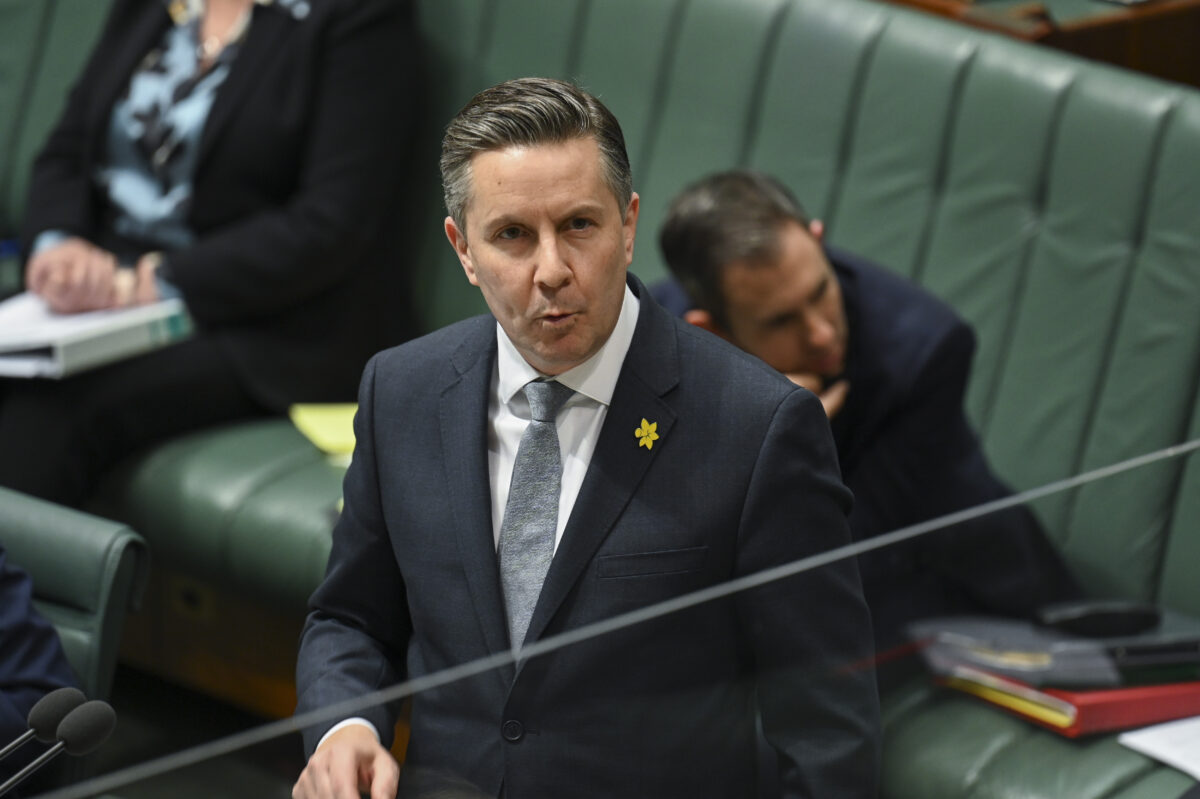
Speaking to ABC on Oct. 5, Federal Health Minister Mark Butler, who recently introduced reforms on tobacco and vaping laws, said the UK and New Zealand have introduced the measure as a way to counter the tactics employed by “Big Tobacco,” and added that his government will be monitoring the ban’s implementation “with interest.”
“The government has taken an evidence-based approach, following a deep review of existing tobacco regulation, but also best practice across the world,” Mr. Butler said.
Meanwhile, Dr. Colin Mendelso, the founding chairman and director of the Australian Tobacco Harm Reduction Association, has criticised the move, declaring the ban an “unproven strategy.”
“My concern is that when you ban anything, people always find a way of getting these products,” Dr. Mendelso told 3AW.
“One thing we do know is if you increase the legal age to 21, that makes a significant difference, and they’ve done that in the U.S. and they found that has helped.”
Dr. Mendelso also added that making “new, innovative, effective treatments” to help smokers quit will have a “bigger impact” on public health than this “unproven strategy.”
Australia Should ‘Consider’ UK’s Cigarettes Ban
While Mr. Butler has recently tabled federal Labor’s legislation aimed at reducing smoking and vaping rates, health experts say the UK and New Zealand should be on the cards.
New Zealand’s crackdown on cigarettes took effect in 2023, banning the sale of tobacco to anyone born on or after Jan. 1, 2009. Additionally, the ban remains in place for a person’s life; retailers can also be fined $NZ150,000 (A$140,109) for any breach.
But Mr. Butler has not yet committed to a similar measure.
Dr. Ken McCroary from the Royal Australian College of GPs said the UK’s decision was “something that we should be really considering.”
“The damage I see all day, every day from cigarette smoke, even just today, lung cancer, heart disease, vascular disease, it’s everywhere,” Dr. McCroary told 2GB.
“I really think (Mr. Sunak) is on the right track. I’d like to see him go further actually, the vaping issue is massive over there.
“Here (in Australia) the Big Tobacco, they’ve moved into vaping; they’re taking over production, manufacture, and selling; they know a significant proportion of our young people, our most vulnerable, and our future that do take up vaping eventually do take up tobacco smoking and cigarettes, and they get hooked for the rest of their lives.”
Dr. McCroary said that while only 10 percent of Australia’s population currently smokes, the 20-40 percent of kids who are currently vaping “may eventually become smokers.”
“Any disincentive is a positive step. If we make things a little bit harder, and moderately amount harder, a great deal amount harder, it’s going to be a better outcome for our kids and the rest of the population,” he said.
Smoking Rates in Australia
Data from the Australian Bureau of Statistics (ABS) shows that in 2021-22 one in 10 adults smoked daily, while this figure was 7.1 percent for young people.
Yet vaping rates for both groups appeared to increase in the past five years, with data from the Australian Health Department by Cancer Victoria finding more than 3.5 million Australians aged 14 and older having smoked or vaped.
The research by Cancer Victoria found a significant jump (7.3 percent of the population) in the number of Australians who vape.
In May, Mr. Butler introduced legislation that will crack down on recreational vaping and further disincentivise smoking.
Under the proposal, additional warnings will be added to cigarette sticks, cigarette, and menthol flavours will be banned, and graphic labels will be refreshed.
Additionally, the importation of non-prescription vaping products will be banned, including those that do not contain nicotine.
This means that vapes will only be sold in pharmacies to people with a prescription.
Under current vaping laws, vaping products containing nicotine can only be bought and sold with a prescription, but non-nicotine products are available over the counter.
Mr. Butler said he aimed to have the ban in place before the end of the year as part of comprehensive measures supported by all states and territories.
“All governments … agreed on a plan, on a mission to get rid of these things that are changing the lives of our children for the worse, making school communities deeply worried,” he said.
According to the Australian Institute of Health and Welfare (AIHW), tobacco smoking contributes to 44 percent of the country’s cancer burden.