



First, the name. Dandelion comes from the French dents de lion, “lion’s teeth,” thanks to those jagged leaves that look like a big cat’s dental situation on a bad day.
In Gaelic, it’s Bearnan Bride, “little notched plant of Bride,” tying it to St. Brigid, patron saint of various admirable things, including midwives, poetry and, apparently, vigorous perennial herbs.
Over the centuries, the plant accumulated aliases: cankerwort, priest’s crown, puffball, swine’s snout, wild endive, Irish Daisy, milk-witch, yellow gowan. It’s the botanical equivalent of someone who’s been in Witness Protection three times.
But the real giveaway to its medicinal pedigree is its Latin surname—”Taraxacum officinale.” Anything with officinale in it was once stored in a monastery’s officina, or storeroom, meaning the monks used it as actual medicine rather than something decorative to put near a saint’s elbow. This alone should give dandelions a little swagger.
Which brings us to folklore.
Fairy Clocks, Hairy Witches, and Bed-Wetting
Folklore attaches itself to the dandelion the way its seeds attach to every single pair of socks you own. Children once called them “fairy clocks” because their daily rhythm of opening and closing could predict time.
They were also tiny meteorologists. Dandelion flowers close up when bad weather’s coming, which is why they got nicknames like “rustic oracle.” If the seeds fall on a still day, that’s meant to mean rain on the way. Cheaper than the Bureau of Meteorology and marginally more cheerful.
Then there’s the wishing. Blow the seeds away and make a wish. In some regions, you were only granted the wish only if every last seed came off; in others, the number left told you how many years you had left to live, which feels like a very intense game for children who still sleep with the light on.
The plant has always had a bit of a split personality. Its bright yellow flowers were once linked with the sun and happiness. By Victorian times, however, someone decided they were “coquettish” and associated them with deceit in love, because apparently, the Victorians couldn’t let us have anything fun.
And then there’s the famous bladder angle. Its diuretic effect gave rise to all the “wet-the-bed” names. Children were warned not to pick dandelions after a certain time of day, or they’d be up all night. Meanwhile, adults quietly used the same plant to flush out the kidneys and treat urinary issues—classic grown-up double standard.
Salad, Wine, And Fake Coffee
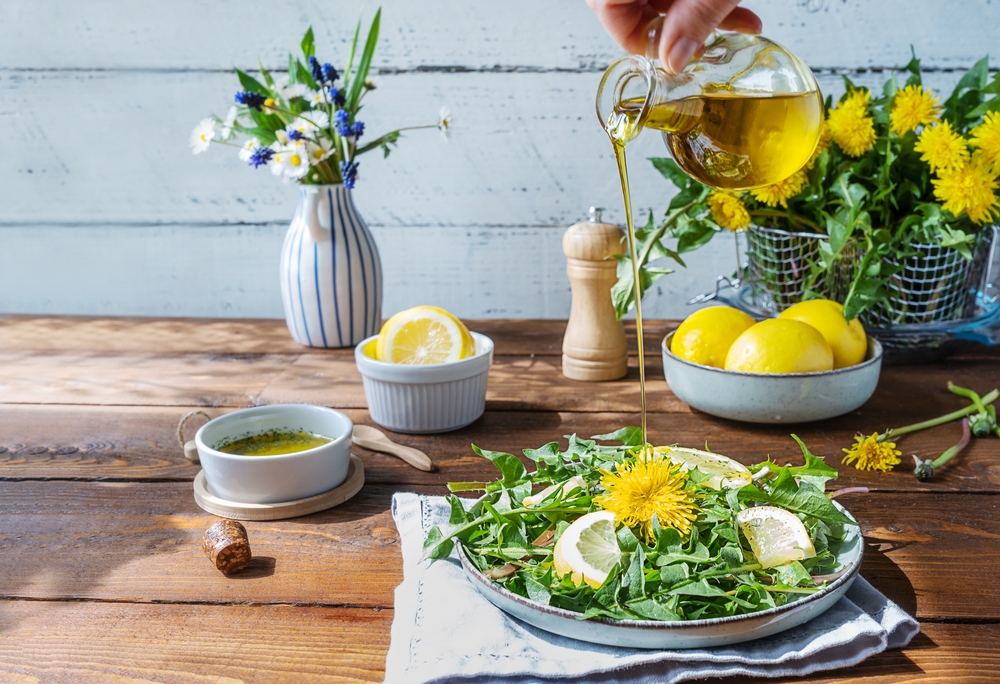
The leaves are packed with vitamins A, C, and K, plus calcium, iron, potassium, magnesium, and a decent whack of fibre. You can eat them raw in salads (you’ll get a pleasantly bitter, chicory-like flavour) or cook them down like spinach if you’re feeling rustic and Italian.
The flowers pull double duty. You can:
- Sprinkle petals over salads
- Batter and fry them as little yellow fritters
- Turn them into syrup or “honey”
- Ferment them into dandelion wine, which has a long history in Britain as a country drink and a short history in making people do questionable things at village fairs
Then there’s the root. Roasted and ground, it becomes a coffee substitute that kept more than one household going when real coffee was unavailable or too expensive.
It is not going to replace your flat white, but it will do a passable impression of “warm, bitter, and vaguely grown-up” in a mug.
The Herbal Overachiever
Medicinally, dandelion is everywhere. Traditional Chinese medicine used it to “clear heat” and support the body, and Arabic medical texts were recommending it for liver and kidney issues centuries ago.
Western herbalism eventually caught up and started throwing it at digestion, skin problems, joint stiffness, and general sluggishness.
Modern research backs up at least some of this enthusiasm:
Liver and Digestion
Dandelion root acts as a bitter tonic, nudging the liver and gallbladder to produce bile and help digestion along. The root is rich in inulin, a prebiotic fibre that feeds good gut bacteria and helps keep things moving. The tea is a classic, gentle laxative and “spring detox” remedy.
Blood Sugar and Metabolism
Compounds like chicoric and chlorogenic acid appear, in early studies, to help with insulin regulation and glucose uptake. In very boring terms, this means dandelion may help your body handle sugar a bit more gracefully.
Inflammation and Antioxidants
The plant is full of polyphenols and beta-carotene, which act as antioxidants. Lab and animal studies suggest these compounds, which are found in dandelion, can help the reduce inflammation in certain diseases and protect cells from oxidative stress. Your body, basically, likes them.
Cholesterol
Some animal studies link dandelion extracts with lower cholesterol and triglycerides, which is attributable to chicoric acid and have beneficial antioxidant effects.
Cancer Research
Dandelion root extract has shown promising results in test tubes and animal models, prompting excitement about its potential to target certain cancer cells without harming normal ones. This is fascinating, but we are very much in the “scientists in lab coats are intrigued” stage, not the “throw out your oncologist and live on tea” stage.
Bones, Skin, and Immunity
Between its vitamin K, calcium, antioxidants, and inulin, dandelion quietly ticks many boxes for bone and immune health. Extracts have also been tested for supporting skin repair and protecting against UV damage. Again, promising, but don’t bin the sunscreen.
Sensible Grown-Up Caveats
Like most things that grow out of the ground and look innocent, dandelions are not for absolutely everyone.
Some people react to it, especially if they’re allergic to related plants, like ragweed, which is part of the Asteraceae family.
They can interact with certain medications, including blood thinners, some antibiotics, and drugs that affect blood sugar or fluid balance.
So if you’re on prescription meds, pregnant, or the sort of person whose body likes to surprise you with random rashes, have a chat with a doctor or herbalist before you start mainlining dandelion tea.
Maybe Don’t Mow Them All
So yes, you can still pull them out of the cracks in the driveway. You are only human. But maybe don’t declare total war on every yellow head in sight. Dandelions feed early-season pollinators, they’ve nourished generations of humans, and they’ve held whole folk traditions in their sunny little faces.
You can drink them, eat them, wish on them, and if you’re unlucky, need the loo because of them. For a plant we’ve demoted to “weed,” that’s a pretty impressive portfolio.