



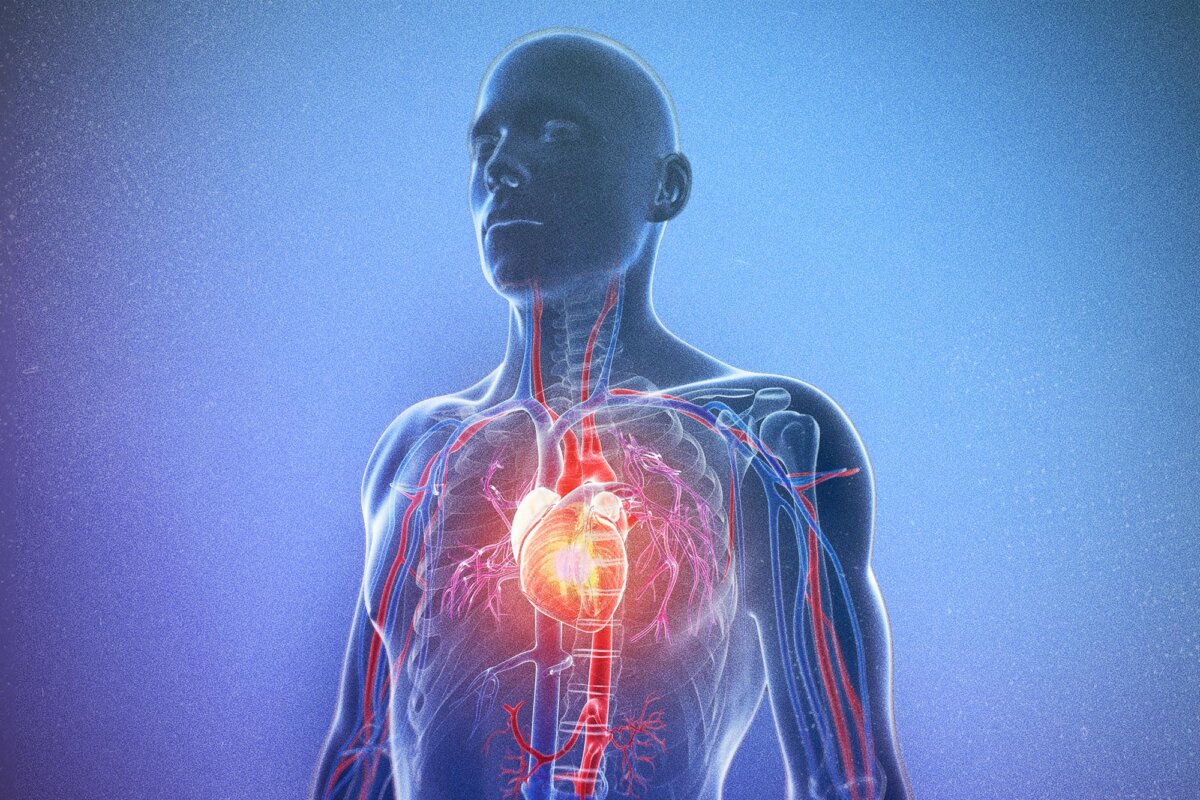
Researchers have discovered the human heart is capable of regenerating heart muscle after a heart attack, challenging long-standing beliefs that heart muscle damage is permanent and irreversible.
The findings, described as a “world-first,” could reshape how researchers and doctors think about recovery for heart health and heart failure.
New Finding Breaks New Ground
The study, published in Circulation Research in December 2025, was led by researchers from The University of Sydney, the Baird Institute, and the Royal Prince Alfred Hospital in Sydney.
Researchers examined the heart tissue from nine people who had suffered heart attacks.
The study used living tissue samples taken from patients undergoing bypass surgery, or Coronary Artery Bypass Grafting, where blood flow to the heart is improved by rerouting blocked arteries using a healthy vessel from a part of the body.
The “pre-mortem” tissues (living samples) were taken from consenting patients, and represents the first time live samples were used.
An “infarcted” sample—a heart that had undergone a heart attack, was also used.
Researchers compared these heart samples using various imaging, genetic, protein, and metabolic techniques to identify cells that were actively dividing.
They identified heart cells undergoing mitosis—a process where cells replicate or reproduce themselves during growth and repair.
By using specific cell markers, cardiomyocytes (or heart muscle cells that are responsible for its contraction and relaxation) were identified as going through the stages of mitosis in their early and late phases.
First author Robert Hume from the University of Sydney’s Faculty of Medicine and Health said this was a significant finding.
“Until now we’ve thought that, because heart cells die after a heart attack, those areas of the heart were irreparably damaged, leaving the heart less able to pump blood to the body’s organs,” Hume said in a media release.
“Our research shows that while the heart is left scarred after a heart attack, it produces new muscle cells, which opens up new possibilities.”
Cardiovascular Disease—a Leading Cause of Death in Australia and Worldwide
Cardiovascular disease (CVD) is a leading cause of death among Australians. There were 45,000 deaths (24 percent of all deaths) from 2021-2022. In the same period, there were 568,000 hospitalisations.
In the United States, cardiovascular disease is also the leading cause of death, accounting for 1 in every 3 deaths in 2023 (919,000).
The World Health Organisation (WHO) estimates 19.8 million deaths from CVD globally, with 85 percent caused by heart attacks or strokes.
Heart attacks can wipe out a third of heart cells. While modern interventions have greatly improved survival rates, many patients who survive a heart attack still develop heart failure, a condition where the heart progressively loses its ability to pump blood.
Regenerative Theory Gains Momentum
Heart regeneration is not an entirely new concept. In species such as mice and zebrafish, there is evidence of increased heart cell division after injury.
A review published in 2022 describes methods where mature cardiomyocytes in animal models could be “dedifferentiated,” a process where the cells revert back to a less mature stage, where they regain the ability to grow and replicate. This happens through a set of changes—changes to gene expression, metabolism, and muscle cell alignment.
Meanwhile, research into the human heart has found evidence for cardiomyocyte regeneration but the rate has been slow and clinically insignificant. The turnover rate is estimated at 0.5 percent to 2.0 percent per year.
There are various ways to induce rejuvenated cardiomyocytes, where injecting and implanting different cell types into the heart can give therapeutic effects. This ability is shown in early research for bone-marrow cells, progenitor heart cells (an immature form of cardiomyocyte), and pluripotent cells (a type of stem cell with the capability to differentiate but has not done so yet).
The University of Sydney research is the first in 25 years that shows the heart’s own regenerative capabilities, specifically following major cardiac events like a heart attack.
Heart Health Treatments
At present, these findings cannot translate into immediate treatments. The number of new cells observed is not enough to restore function after a heart attack.
Instead, these findings can be regarded as a “proof of concept,” indicating the human heart has the potential to regenerate.
“Although this new discovery of regrowing muscle cells is exciting, it isn’t enough to prevent the devastating effects of a heart attack,” Hume said.
“Therefore, in time, we hope to develop therapies that can amplify the heart’s natural ability to produce new cells and regenerate the heart after an attack.”