



The Department of Health and Human Services (HHS) promised to release by June 25 ethics agreements for advisers picked by HHS Secretary Robert F. Kennedy Jr. but has still not done so as of July 10.
An HHS spokesperson told The Epoch Times in emails on June 13 and June 20 that before the new members of the Advisory Committee on Immunization Practices (ACIP) began work, their ethics agreements would be released.
“Before starting work on ACIP, the new members’ ethics agreements will be made public,” the spokesperson said in one of the missives.
The panel met on June 25 and June 26.
The agreements have not been made public as of July 10.
An HHS spokesperson did not say why the agreements were not made public before the meeting or whether the agreements will ultimately be released.
“All ACIP members have undergone ethics review,” the spokesperson told The Epoch Times via email. “The Department of Health and Human Services comprehensively reviewed all newly appointed ACIP members for conflicts of interests in accordance with federal law, regulations, and departmental polices.
“The Department provided new ACIP members with ethics training prior to discharging their duties. Counsel for the Department met with members prior to the meeting to address ethics questions.”
Kennedy ousted all members of ACIP on June 9, citing conflicts of interest, among other issues.
An Epoch Times review of the previous members found multiple votes despite conflicts, including a vote from Dr. Helen Y. Chu in 2024 on pneumococcal vaccine recommendations despite her receiving money from Merck, which manufactures more than one of the vaccines.
The former members whose conflicts and potential conflicts were detailed have not responded to requests for comment.
HHS and the Centers for Disease Control and Prevention (CDC) previously declined to provide the disclosures filled out for the government by former panelists. The CDC in 2023 rejected a Freedom of Information Act request from The Epoch Times for the information, saying the documents were “exempted from release by statute.”
Potential ACIP members have to fill out confidential financial disclosures with the Office of Government Ethics, which says filers have to report positions in the conflict of interest section for the preceding 12 months.
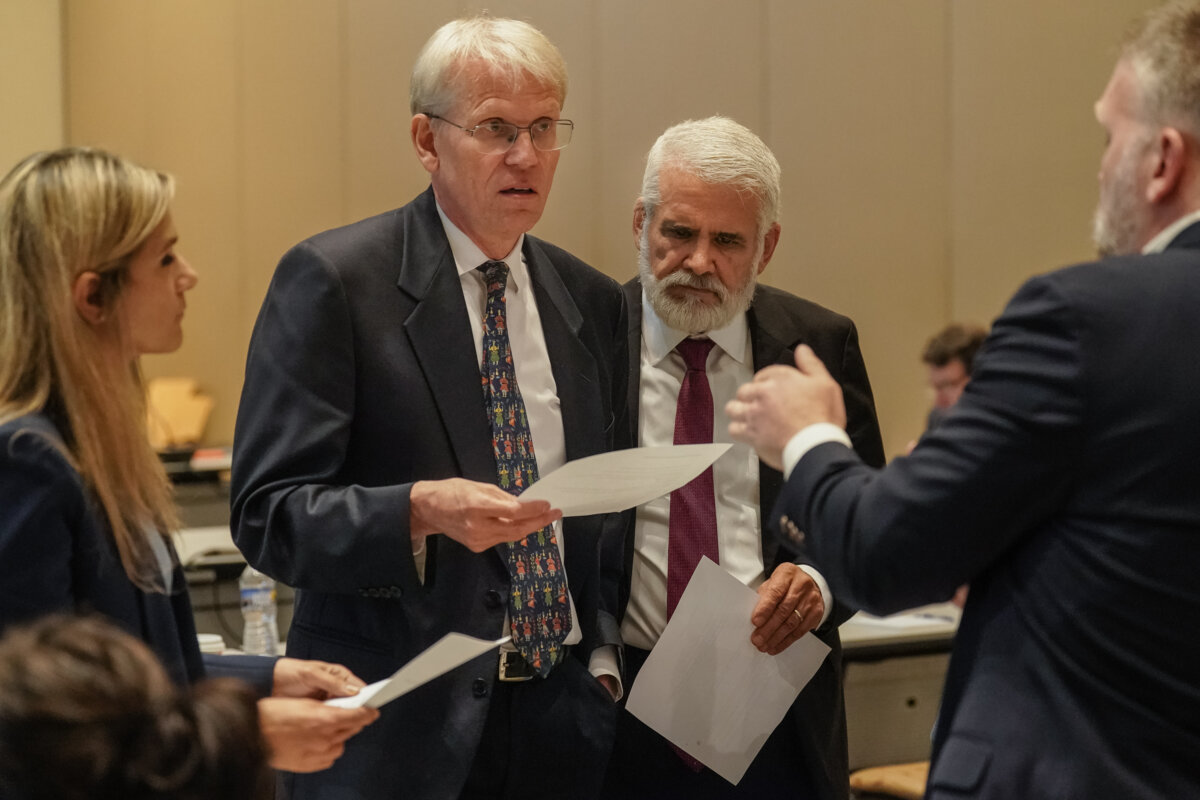
Kennedy, in June, picked seven new ACIP members, including Dr. Robert Malone and Martin Kulldorff, who have worked as paid witnesses in cases accusing Merck of fraud with regard to several of its vaccines.
Malone, who in 2018 prepared a report as part of his work, told The Epoch Times previously that the work ended years ago and that he underwent training and vetting on what he can and cannot do.
“I have heard nothing about these issues,” Malone told The Epoch Times in an email when asked about whether HHS officials have said anything to him about releasing the ethics agreements.
Several other members, including Kulldorff, did not return requests for comment.
Kulldorff issued a report in January for plaintiffs in a separate case against Merck and testified in 2024.
Kulldorff declared no conflicts during the meeting.
“I have never accepted any money from pharmaceutical companies, manufacturing vaccines, and I don’t have any conflict of interest with any of the topics of today’s meeting,” he said.
All of the other members but one also said they have no conflicts.
“As it relates to conflicts of interest I have been asked to read the following statement: As required under the ACIP policies and procedures, I am also disclosing that I own stock in health care sector fund that includes holdings relevant to the ACIP, including vaccine manufacturers,” Vicky Pebsworth said.
“However, the amount of that stockholding is under the Office of Government Ethics regulatory de minimis amount. I understand that I therefore can fully participate in the ACIP meeting.”
No conflicts for the new members have been listed in a database created by the CDC.
“Kennedy dismissed all previous members of ACIP claiming that they all had conflicts,” Dr. Joel Lexchin, a University of Toronto professor who has studied conflicts of interest, told The Epoch Times via email. “I don’t know if it’s true that they all had conflicts, but even if it was then refusing to release the conflict-of-interest statements of the new members seems like gross hypocrisy.
“Having a conflict doesn’t mean that you’re going to be biased but the public has a right to know about conflicts so that they can take those conflicts into account when looking at decisions that a committee makes.”