



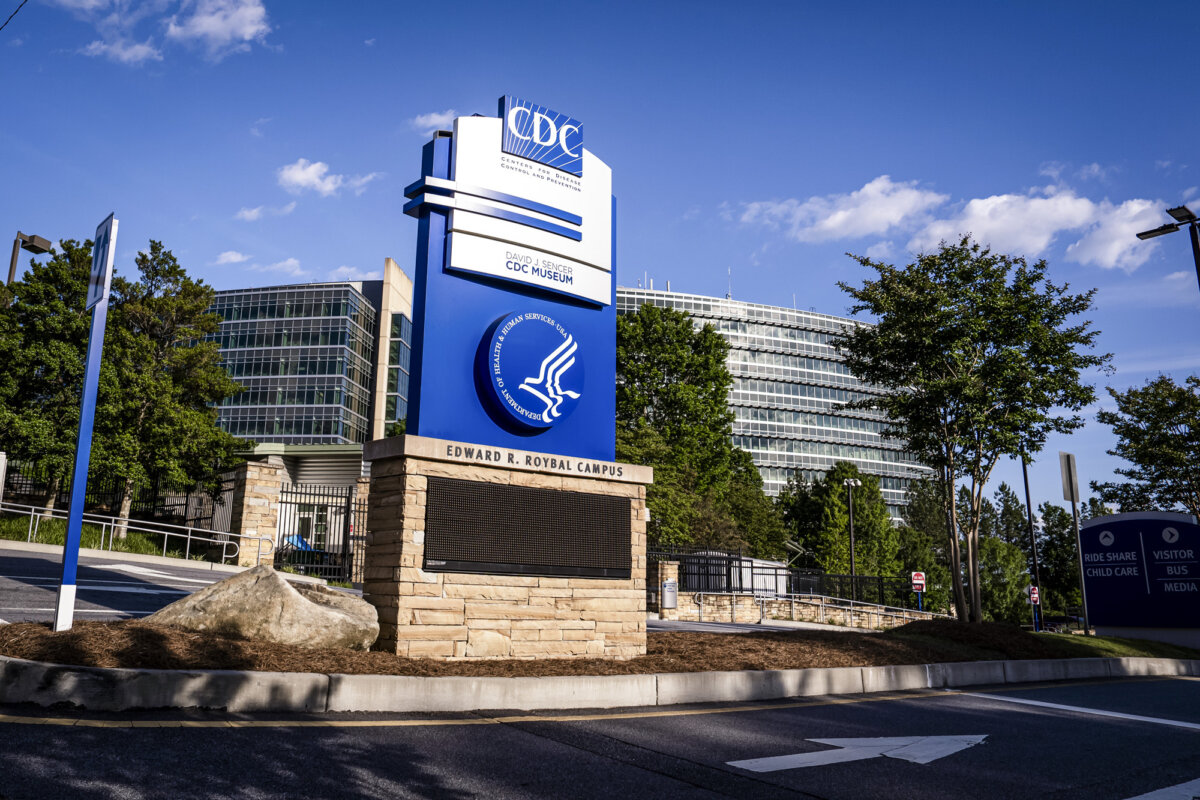
Experts who advise the Centers for Disease Control and Prevention will meet at the agency’s headquarters in December to discuss the hepatitis B vaccine and the current immunization schedule for children, the government said in a document released on Nov. 12.
The Advisory Committee on Immunization Practices (ACIP) will convene on Dec. 4 and Dec. 5 at the CDC’s headquarters in Atlanta, according to the document. People can watch the meeting remotely.
“The agenda will include discussions on vaccine safety, the childhood and adolescent immunization schedule, and hepatitis B vaccines,” the Federal Register notice reads.
Advisers may vote on the hepatitis B vaccine.
The meeting had been slated to take place in October but was postponed. A Department of Health and Human Services spokesperson declined to give a reason for the postponement.
The December meeting will take place about six weeks after ACIP last convened. The panel during that meeting was poised to vote on whether to postpone the first dose of the hepatitis B vaccine, but ultimately tabled the matter.
Some advisers have expressed interest in removing the entire hepatitis B vaccine from the CDC’s immunization schedule. Others said they wanted to keep it as is because they see it as safe and effective.
The CDC currently recommends a three-dose series, regardless of whether a child’s mother has hepatitis B, an infection caused by a virus that can leave people with liver damage and other issues.
The first dose is recommended within 24 hours of birth for most babies. A second dose is advised at 1–2 months of age. The third dose should be administered when a child is 6–18 months old, according to the vaccine schedule.
Many other countries recommend an early first dose to children born to mothers who test positive for hepatitis B. Some do not recommend hepatitis B vaccination to children whose mothers test negative for the infection.
President Donald Trump has advocated for shifting the hepatitis B series to adolescence, a move endorsed in a paper from Independent Women’s Forum senior fellow Dr. Monique Yohanan to reduce early exposure to aluminum, a vaccine adjuvant, and to provide better immunity in the period when people are more at risk of contracting the virus.
Dr. Debra Houry, a former CDC official, told lawmakers in September that she was told Health Secretary Robert F. Kennedy Jr. supports moving the first dose of the vaccine to age 4.
Merck and Sanofi are among the companies that manufacture hepatitis B vaccines available in the United States.
“The reconsideration of the newborn hepatitis B vaccination on the established schedule poses a grave risk to [the] health of children and to the public, which could lead to a resurgence of preventable infectious diseases,” a Merck official told ACIP earlier this year.
A Sanofi official said that “the hepatitis B birth dose and vaccination early in life remain the most effective option for prevention of hepatitis infections in infants and children.”
ACIP provides recommendations to the CDC. The recommendations are typically adopted without alteration.
Acting CDC Director Jim O’Neill in October approved ACIP’s most recent recommendations, including endorsing standalone chickenpox vaccination and loosening the agency’s recommendations for COVID-19 vaccines.