



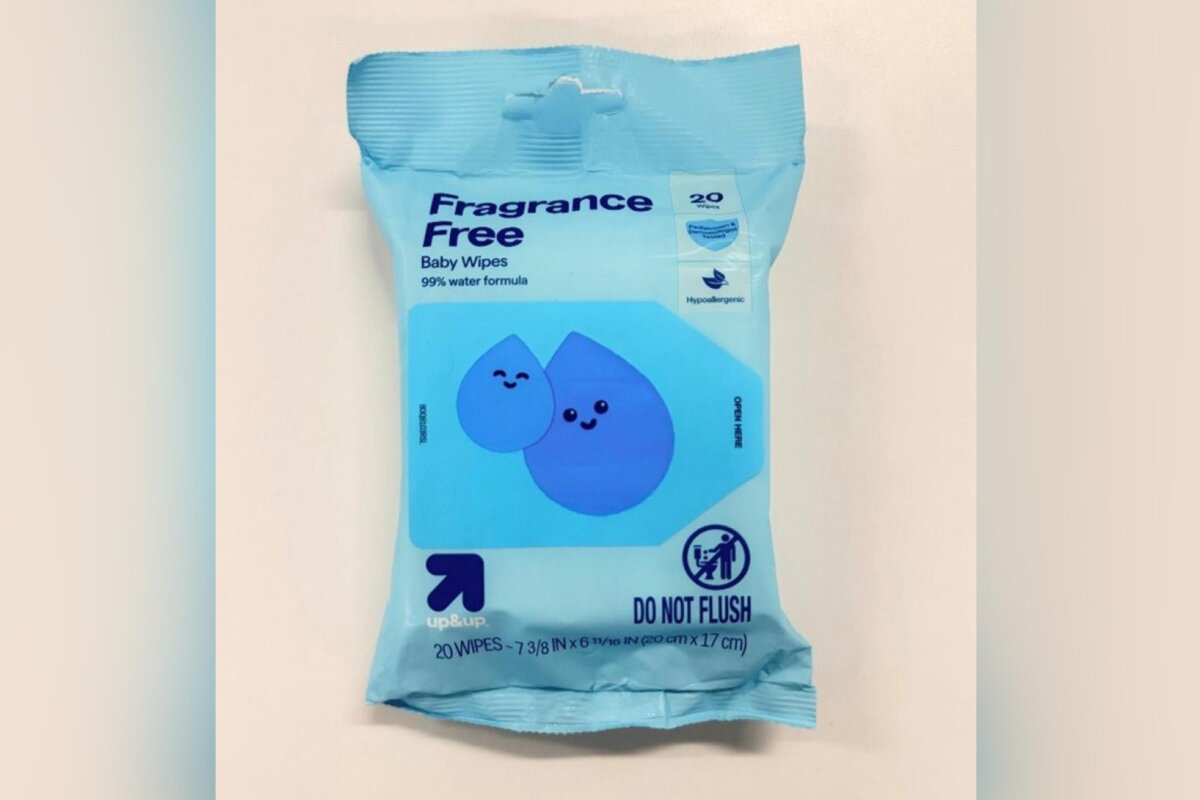
Retail chain Target has recalled baby wipe products from across the United States after finding bacterial contamination in the products that could result in serious and life-threatening infections for users.
The recall is applicable to “Up & Up Fragrance Free Baby Wipes” and “Up & Up Fresh Cucumber Scented Baby Wipes,” manufactured by a third party and sold by Target online and at its stores nationwide. The Food and Drug Administration, which conducted the testing, specifically identified the presence of Burkholderia gladioli and Burkholderia cepacia complex bacteria in product samples, according to a company announcement published by the FDA on June 5.
The use of products contaminated with these bacteria “may result in serious and life-threatening infections. The products are predominantly used on newborns, infants, and young children, who are particularly vulnerable to opportunistic infection due to their immature immune systems,” the company said.
“In healthy individuals, use of the product on skin with minor lesions will more likely result in local infections, whereas in immunocompromised individuals, newborns, infants and young children, the infection is more likely to spread into the bloodstream, potentially leading to life-threatening sepsis or pneumonia.”
Up & Up Fragrance Free products were packaged in plastic pouches containing 20, 72, and 100 wipes. The 20-count pouches were sold individually with UPC code 085239265956.
The 72-count items were sold both individually, with UPC 085239265949, as well as in bundles of three pouches, with UPC 085239265963.
The 100-count product was sold in 800-count boxes, with UPC 085239266137, and in 1,200-count boxes with UPC 085239266090.
These items, manufactured between Nov. 7, 2025, and May 5, 2026, have expiration dates between May 10, 2028, and Nov. 5, 2028.
As for the Up & Up Fresh Cucumber Scented products, they were sold in pouches containing 72 and 100 wipes.
The 72-count pouches were sold individually with UPC code 085239265970, and in a bundle of three pouches with UPC 085239265994. The 100-count pouches were sold in 800-count boxes with UPC 085239265987.
The products, manufactured between Dec. 29, 2025, and Dec. 30, 2025, have expiration dates of June 29, 2028, to June 30, 2028.
“Target and the manufacturer of the wipes, Sapro Temizlik Urunleri, have received a number of consumer complaints and adverse event reports alleging product discoloration and symptoms such as skin irritation, eye irritation, and infections potentially associated with the use of the product,” the announcement said.
“These reports remain under investigation. Target is coordinating with the manufacturer and continues to investigate this matter.”
In one complaint filed with the Consumer Product Safety Commission (CPSC) on Jan. 29, a consumer said that the baby wipes were faulty due to sealing issues, with the items carrying mold. No injury was reported in this incident. CPSC described the product as molded and having the smell of spoiled milk, with the item causing rashes among users.
Another complaint, submitted to CPSC on April 27, said that a one-year-old child contracted “a severe fungal infection” in their private areas after using the Up & Up baby wipes and diapers. The child had to be seen by a medical professional, with the infection lasting for a month.
In the company announcement, Target advised consumers to “immediately stop” using the recalled products and to return the purchased items to any of the company’s stores to get a full refund.
The Epoch Times reached out to Target for comment but did not receive a response by publication time.
Bacterial Infections
According to a June 2025 report from the Centers for Disease Control and Prevention, Burkholderia cepacia is a bacterium that can cause infections in health care settings.
The bacteria spread via exposure from soil, water, or watery environments, and contact with contaminated surfaces or equipment. It can also be transmitted person-to-person, seen more commonly in people with cystic fibrosis, a hereditary condition that can damage the lungs, digestive system, and other organs.
“Symptoms vary, ranging from no symptoms to serious respiratory infections, especially in patients with cystic fibrosis or other chronic lung disease,” the CDC said, adding that other symptoms may include fatigue and fever.
“In the United States, people in healthcare settings and those with weakened immune systems or chronic lung diseases, particularly cystic fibrosis, are at highest risk of infection with B. cepacia complex.”
The bacteria pose “little medical risk” to healthy individuals, the CDC said. Infection can be treated with antibiotics. However, many Burkholderia cepacia bacteria are resistant to antibiotics, making treatment difficult.
As for Burkholderia gladioli, this is an “opportunistic pathogen” that acts as an agent for infections in hospital settings, according to health care company Medtigo.
The pathogen “has emerged as a dangerous bacterium that can lead to severe lung infections in people with cystic fibrosis,” it said.
Some of the symptoms of Burkholderia gladioli infection are pneumonia, a type of blood infection called bacteremia; endocarditis, or an infection of the heart’s inner lining or valves; and peritonitis, an infection of the abdominal cavity lining.