



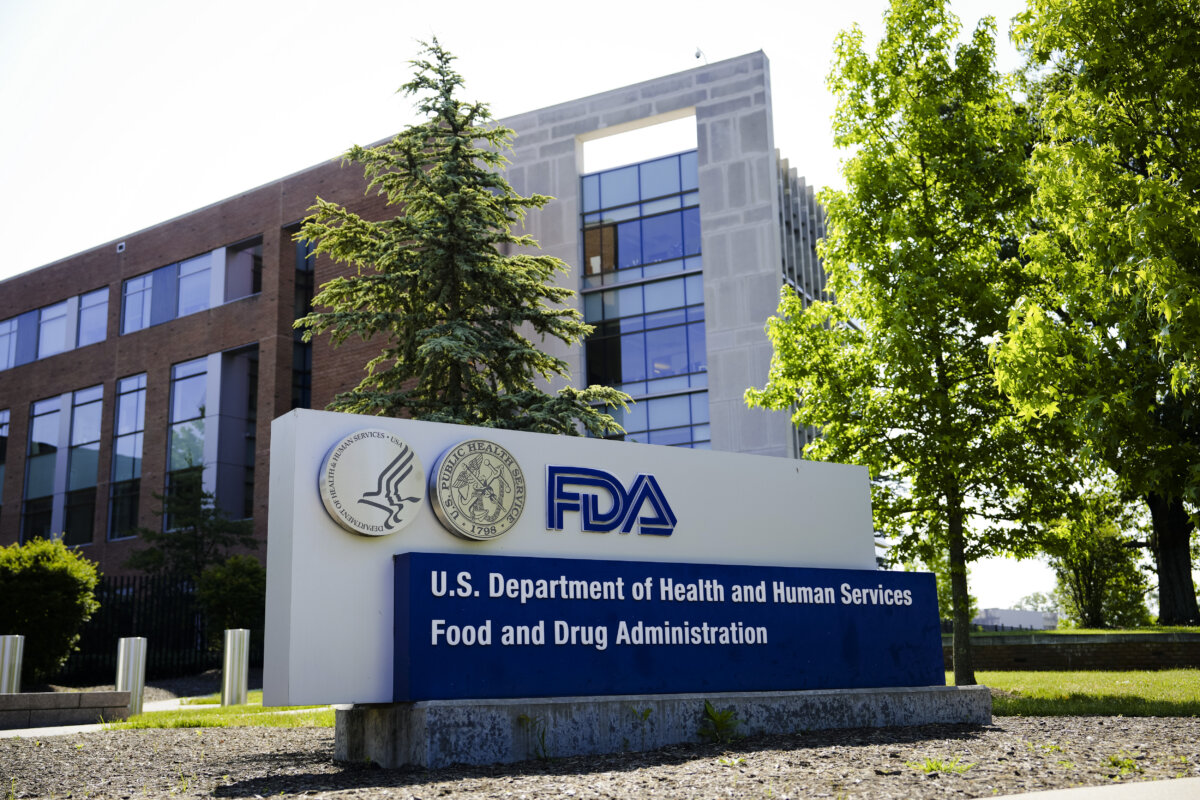
Moderna’s messenger ribonucleic acid (mRNA) influenza vaccine is effective, but uncertainties remain, Food and Drug Administration reviewers said in a document released on June 16.
Data from a Phase 3 trial show that the mRNA vaccine, known as mRNA-1010, had a “clinical benefit,” the reviewers said in the 92-page document.
The trial compared the immunogenicity and clinical results in a group that received Moderna’s vaccine with the results from a group that received an authorized, standard flu vaccine.
The U.S. government, though, recommends a high-dose flu vaccine for adults aged 65 and older.
“This limitation affects interpretation of the net clinical benefit in the 65 and older population and is a key issue for Advisory Committee deliberation,” the reviewers said.
Other lingering questions include vaccine safety, given that adverse reactions were more common among mRNA-1010 recipients, the staffers said.
The document was released ahead of a meeting scheduled for June 18 involving FDA staff members, the FDA’s vaccine advisory panel, and Moderna employees.
Three COVID-19 vaccines that utilize mRNA are available on the U.S. market, including two from Moderna. No mRNA influenza vaccines have been cleared by U.S. regulators. European regulators in April approved a combination COVID-19-flu mRNA vaccine from Moderna.
The FDA in February declined to review data for mRNA-1010, noting that the trial’s control arm did not receive the high-dose flu vaccine. About a week later, officials agreed to review a revised application.
Moderna is proposing a bifurcated regulatory pathway that acknowledges the limits of the trial data, according to the newly released document and another document from Moderna. The company wants traditional approval for the mRNA vaccine for adults aged 50 to 64 and accelerated approval for adults aged 65 and older, with a requirement to carry out a Phase 4, or post-approval, trial to verify that the shot benefits older adults.
The comparator vaccine in that trial would be a high-dose shot, with an expected enrollment in the hundreds of thousands.
Moderna said in its briefing document to the panel that results from the trial and other studies “support a positive benefit-risk profile for active immunization with mRNA-1010 to prevent influenza disease in individuals [at least 50 years old].”
The panel will hear from presenters with the FDA, the Centers for Disease Control and Prevention, and Moderna before voting on whether the available data show that the benefits of the vaccine outweigh the risks for adults aged 50 to 64. They will then vote on the same question regarding adults aged at least 65.
Health Secretary Robert F. Kennedy Jr., who oversees the FDA, has said that mRNA vaccines do not work against respiratory viruses such as influenza. Several FDA officials who had voiced opposition to mRNA vaccines have recently departed the agency.
FDA reviewers noted that the currently available influenza vaccines can range in effectiveness depending on the season, peaking at 60 percent and dropping to as low as 19 percent, according to Centers for Disease Control and Prevention estimates.
“There is a need for vaccines with improved effectiveness, particularly in older adults,” they said.