



Federal health officials may update vaccine recommendation categories, they said on Aug. 24.
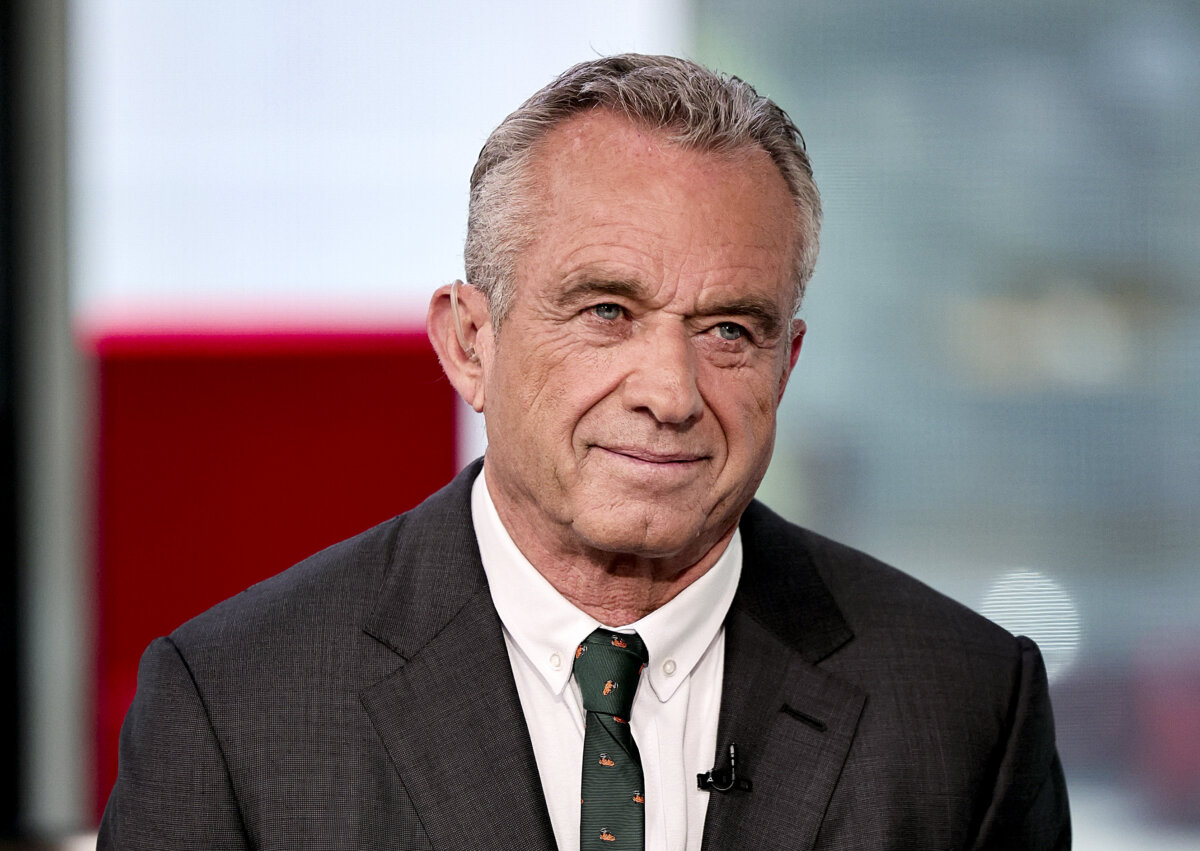
Health Secretary Robert F. Kennedy Jr. said in a document released on Aug. 24 that officials may change the recommendation levels used by federal agencies, including the Centers for Disease Control and Prevention.
The CDC publishes vaccine schedules for adults and children that are widely used by states.
The schedules primarily contain routine, or universal, recommendations. Shots under that category, including vaccines against polio and rotavirus, are recommended for virtually everyone.
Risk-based recommendations are narrower. Only people who fall into certain categories, such as those in the medical field, should receive vaccines in that category, per CDC guidance.
Before taking vaccines in the third category, formally known as shared clinical decision-making and also as individual-based decision-making, each person should take into account his health history and other factors and have a conversation with his doctor.
The document requests feedback from the public as to whether the current categories are “adequate, clear, and well understood by clinicians, patients, and parents” and whether they “convey meaningful differences in the strength of the evidence, the magnitude of individual and population benefit, and the room left for individual circumstances and values,” Kennedy said in the document.
Kennedy oversees the Department of Health and Human Services (HHS), of which the CDC is a division.
HHS officials also want to know whether the current three categories “unintentionally imply that parental permission, individual consent, or meaningful clinical discussion applies only to shared clinical decision-making recommendations.” That’s because that third category describes a process of consulting with doctors, while the others do not.
Under one possible new category, vaccines would be recommended, but not for infants, Kennedy said.
The public comment deadline is Sept. 20.
Officials tried in January to move six vaccines from routinely recommended to risk-based or shared-clinical decision-making, but the change was blocked by a federal judge. An appeal is ongoing.
President Donald Trump on Aug. 10 signed an executive order citing vaccine recommendations that HHS officials came up with to justify the changes, including highlighting that the U.S. schedule contains universal recommendations for some vaccines, such as the hepatitis A shot, that many peer countries recommend only for certain populations.
The order directed Kennedy to present plans within 90 days to offer more options for childhood vaccines, including splitting up the measles, mumps, rubella combination vaccine and assessing the best timing and sequencing for core vaccines.
The new document will help further the executive order, according to Kennedy.