



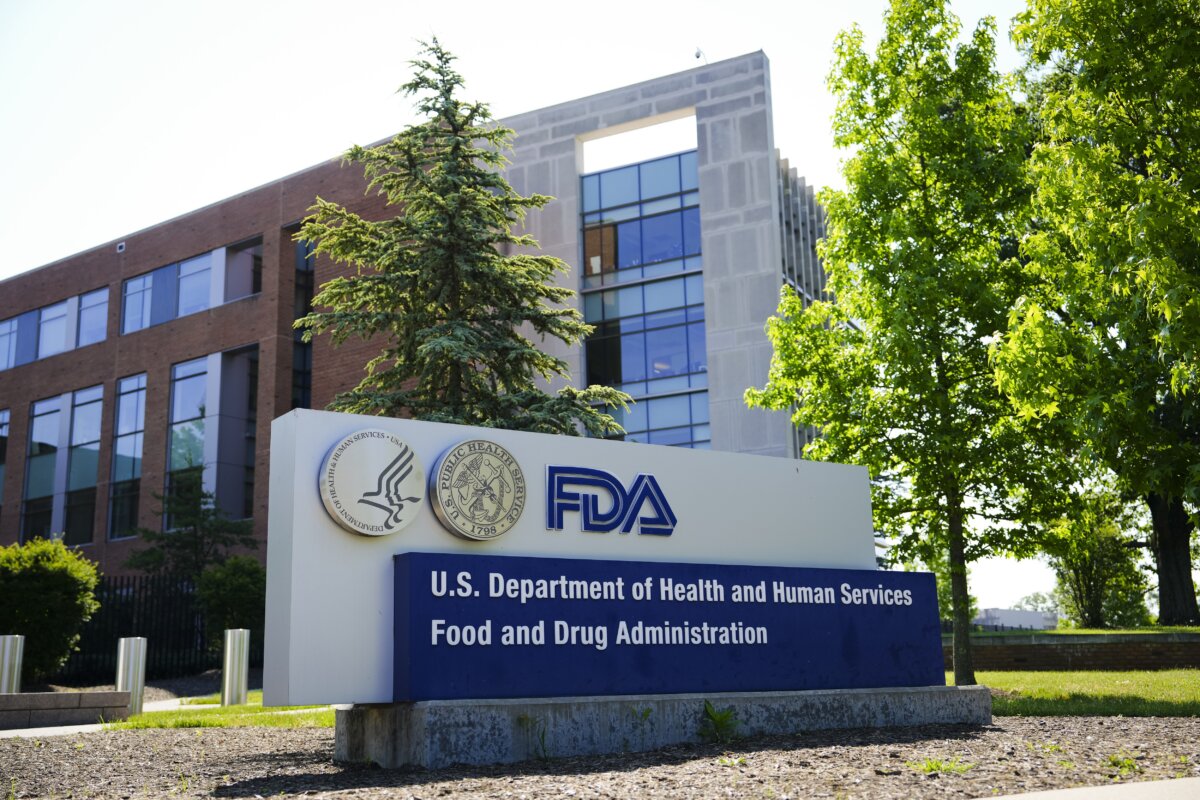
Federal regulators on Aug. 26 said they approved a new drug for the most common form of pancreatic cancer.
The drug, known as Rasonque and daraxonrasib, is approved to treat a cancer type responsible for about nine in 10 new pancreatic cancer cases diagnosed in the United States each year.
The approval was based in part on a phase 3 randomized, open-label clinical trial of 500 adults who had previously received treatment for the pancreatic cancer type, pancreatic adenocarcinoma.
Participants who received the drug survived for a median of 13.2 months, compared to 6.7 months in a control arm that only received chemotherapy.
Former Sen. Ben Sasse (R-Neb.), one of the trial participants, has credited the drug with helping reduce his tumor after being diagnosed with terminal pancreatic cancer.
“Today’s approval provides a critical new option for patients facing an extraordinarily difficult and historically hard-to-treat cancer,” acting FDA Commissioner Kyle Diamantas said in a statement.
“It is our fundamental duty to deliver more cures and meaningful treatments to patients as quickly as possible.
“I am immensely proud of the dedicated FDA scientists whose fast, thorough review and relentless commitment made this groundbreaking milestone a reality.”
Regulators carried out a rapid review of the drug under a program established by former FDA Commissioner Dr. Marty Makary for medicines deemed especially critical as transformative treatments.
Revolution Medicines, which makes Rasonque, did not respond to a request for comment on how much it will charge for the drug.
Pancreatic cancer causes about 3 percent of all cancers in the country, and about 8 percent of all cancer deaths, according to the American Cancer Society.
The five-year survival rate ranges from 44 percent if the cancer is localized to 3 percent if the cancer has spread to other body regions.
Rasonque targets a protein, RAS, that can cause pancreatic cancer. The drug is a pill that is given twice a day.
Dr. Brian Wolpin, director of the Hale Family Center for Pancreatic Cancer Research and Gastrointestinal Cancer Center at Dana-Farber Cancer Institute and the principal investigator of the trial testing Rasonque, said previously that if the drug was approved by the FDA, “it would mark a dramatic shift in how pancreatic cancer is treated.”
It has been provided to more than 2,000 patients in recent months, following the FDA’s clearing expanded access ahead of approval.
Adverse events were reported in nearly all trial participants, including all individuals who received the drug.
Side effects of the drug include rash, diarrhea, nausea, and bleeding, according to the FDA.