



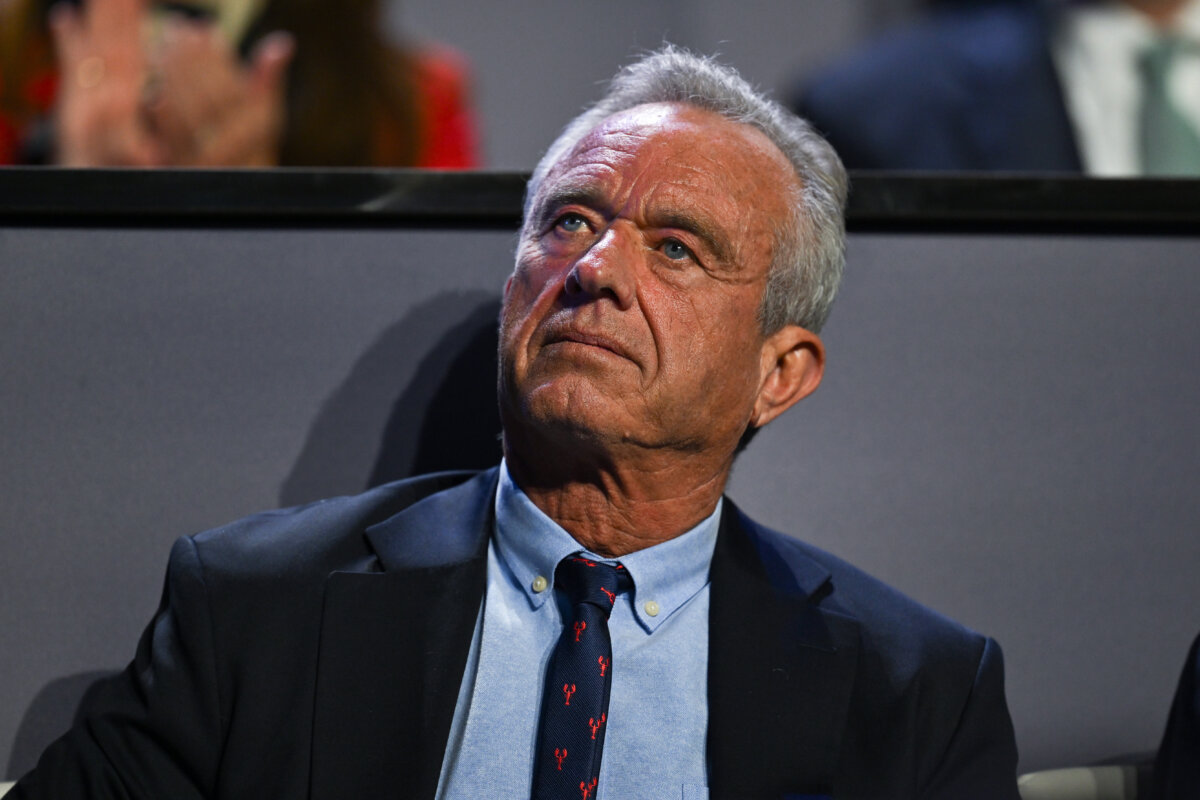
The Department of Health and Human Services (HHS) is examining electromagnetic fields, Health Secretary Robert F. Kennedy Jr. said on Sept. 17.
The department issued a request for researchers and others to provide input on the impact of electromagnetic field (EMF) exposure, including radiation from radiofrequencies, as it works to figure out the current evidence base and craft recommendations for schools and families.
Concern about the potential health effects of the exposure “has increased, particularly in relation to children, schools, and long-term cumulative exposure,” Kennedy wrote in the document. “At the same time, scientific literature is extensive, technically complex, and not always easy for policymakers or public health stakeholders to interpret.”
Evidence submitted by the public can include peer-reviewed studies, government reports, and industry data, he said. Individuals can also share experiences of health effects they believe may be associated with exposure to EMFs. They should outline the types of technology involved, the nature and duration of the exposure, the health effects, and any treatment that was sought.
Comments will be accepted for 30 days, starting on Sept. 21.
Kennedy, a lawyer, has been involved in litigation involving electromagnetic fields, including a case against the Federal Communications Commission that resulted in a court in 2021 finding the agency’s decision to keep in place 1996 wireless radiation limits was arbitrary and capricious because it “failed to provide a reasoned explanation for its determination that its guidelines adequately protect against the harmful effects of exposure to radiofrequency radiation unrelated to cancer.”
The ruling, from the U.S. Court of Appeals for the District of Columbia Circuit, ordered the agency to properly review information regarding health effects from exposure to wireless radiation.
Children’s Health Defense, which Kennedy once chaired, recently brought a new case challenging the commission’s apparent failure to comply with the order.
The agency has until later in September to reply. It states on its website that “no scientific evidence currently establishes a definitive link between wireless device use and cancer or other illnesses.”
Kennedy told a conference in Washington on Thursday that filings to the court that led to the win included more than 10,000 studies.
“But there are still gaps in knowledge, and we’re filling those,” he said. “HHS is reviewing the regulatory landscape, and we will release a report this fall.”
The report will include evidence submitted in response to the request for information, Kennedy said.
“We’ve opened the process to the public because these questions deserve rigorous science, transparency, and answers,” he said.