



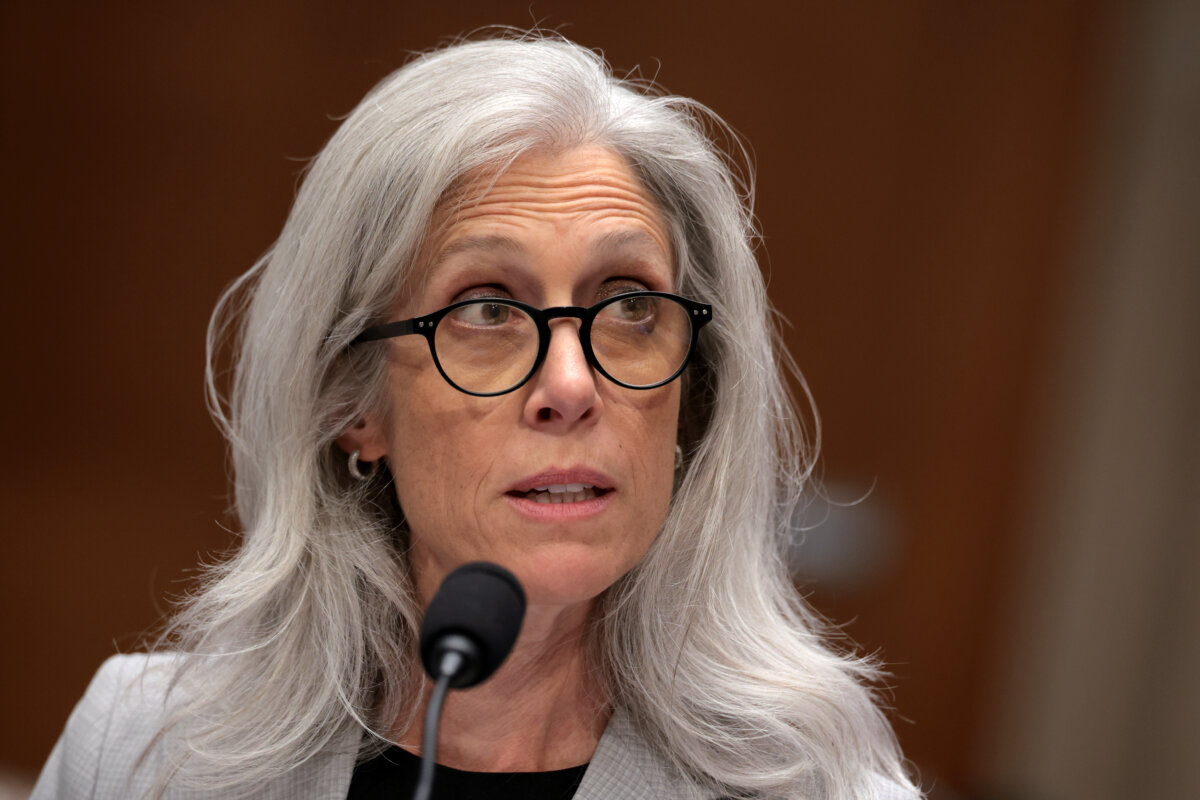
The new director of the Centers for Disease Control and Prevention has followed the advice of advisers to the agency and endorsed a new antibody for respiratory syncytial virus (RSV).
CDC Director Susan Monarez, recently confirmed by the Senate, endorsed on Aug. 4 the antibody called clesrovimab for infants born during or entering their first respiratory virus season, the CDC said on its website.
The advice is now the official recommendation of the CDC, meaning clesrovimab can be administered to infants this fall and winter.
The newly reformed Advisory Committee on Immunization Practices, which provides advice to the CDC, in June said that the CDC should recommend the Merck-made antibody for infants whose mothers had not received an RSV vaccine while they were pregnant.
“If I were your pediatrician, I would strongly recommend that either your wife receive the RSV vaccine, or a monoclonal antibody at birth” for the infant, Dr. Cody Meissner, one of the committee’s members, said at the time.
Retsef Levi, another member, was among the no votes because he said he was concerned about safety data from trials for the antibody.
Antibodies provide shorter-lasting protection than vaccines. They are sometimes referred to as passive immunization.
Federal regulators approved clesrovimab earlier this year.
It will be an alternative to Beyfortus, a Sanofi-made antibody that the CDC recommended for infants in 2023. There were shortages of Beyfortus following its clearance.
Health Secretary Robert F. Kennedy Jr., whose department is the CDC’s parent agency, separately approved advice from the advisory committee concerning influenza vaccination, according to the CDC.
Kennedy on July 22 adopted the committee’s position that influenza vaccination be recommended for all people aged 6 months and older unless they have contraindications or existing issues that would put them at heightened risk of side effects, the CDC said on its site this week.
Kennedy stepped in because there was no CDC director at the time, the agency stated.
The Department of Health and Human Services previously said that Kennedy approved the committee’s recommendation that the CDC stop recommending influenza vaccines with thimerosal, a mercury-based preservative.
“After more than two decades of delay, this action fulfills a long-overdue promise to protect our most vulnerable populations from unnecessary mercury exposure,” Kennedy said in July.
The actions mean that all advice from the CDC advisers has been adopted.
Kennedy removed all members of the committee ahead of the meeting. The seven new members were all chosen by him.
The advisers are slated to meet again in August or September, with an additional meeting taking place in late October.