



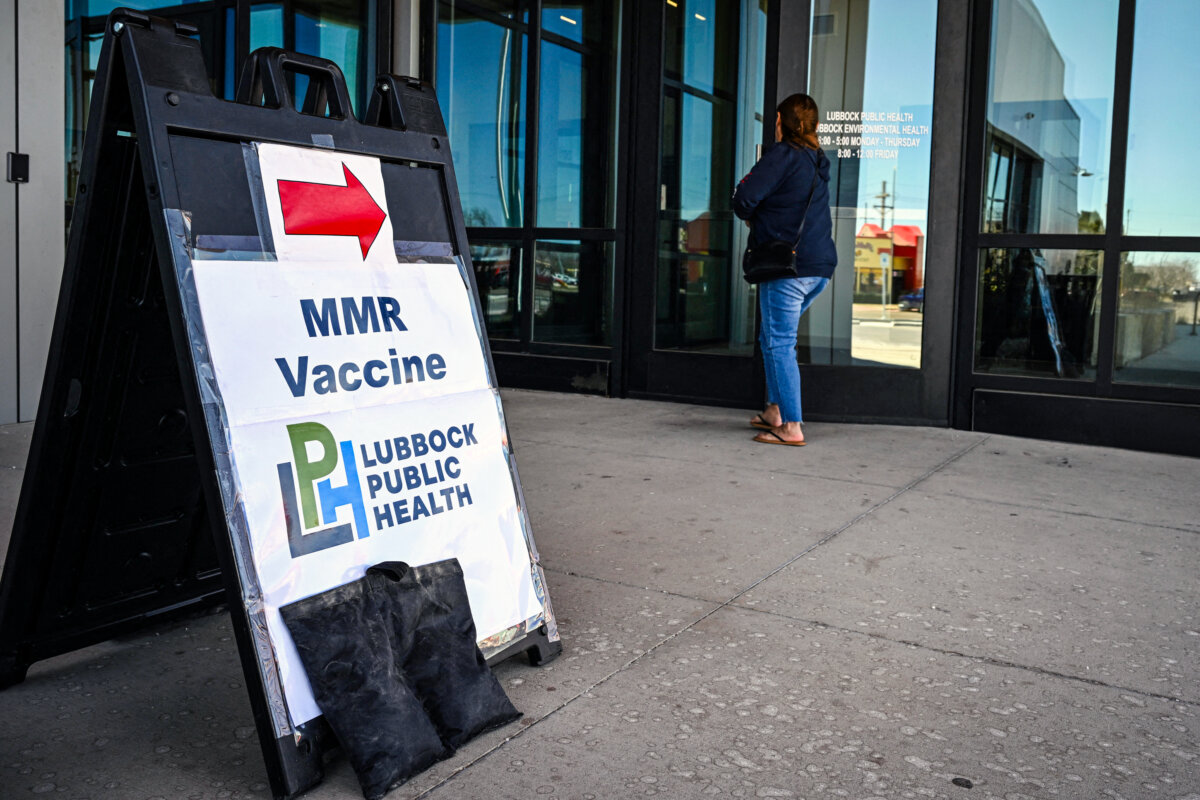
The Centers for Disease Control and Prevention has not linked outbreaks of measles across different states, despite a new report this week asserting otherwise, acting CDC Director Jim O’Neill said on Nov. 18.
“We do not have epidemiological evidence linking the two chains of measles transmission,” O’Neill wrote on X. “On the contrary, preliminary genomic analysis suggests the Utah and Arizona cases are not directly linked to Texas.”
The New York Times reported earlier in the week that the CDC had for the first time linked the outbreak of measles that started in Texas in January, and ended in August, to ongoing outbreaks in Utah and Arizona.
The newspaper cited a recording of a call involving officials from the CDC and state health departments. It did not release the recording.
The Department of Health and Human Services, the CDC’s parent agency, declined to provide a copy of the recording to The Epoch Times. It also declined to comment beyond O’Neill’s post.
“CDC continues to work with state and local health agencies to assess transmission patterns and ensure the same effective public health response that led to the Texas outbreak being declared over,” O’Neill, who is also the deputy health secretary, added.
Fueled by cases in Texas, the United States has recorded the most measles cases in a year in 2025 since 1992, according to figures posted in July. The 1,288 cases confirmed at the time have since risen to 1,723.
Eighteen Utah residents have been diagnosed with measles in the past three weeks, Utah officials said in a Nov. 18 update. Arizona officials said on Nov. 18 that seven cases have been confirmed in the past week, with an active outbreak in Mohave County. South Carolina is among the other states where measles has been spreading.
Measles had been eliminated in the United States, Canada, and Mexico. The designation from the World Health Organization (WHO) meant that measles had not circulated continuously for at least 12 months.
The WHO’s Pan American Health Organization said on Nov. 10 that the region is no longer free of an endemic measles situation.
“This loss represents a setback—but it is also reversible,” Dr. Jarbas Barbosa, director of the organization, said in a statement. “Until measles is eliminated worldwide, our Region will continue to face the risk of reintroduction and spread of the virus among unvaccinated or under-vaccinated populations. However, as we have demonstrated before, with political commitment, regional cooperation, and sustained vaccination, the Region can once again interrupt transmission and reclaim this collective achievement.”
U.S. Health Secretary Robert F. Kennedy Jr. has encouraged people to get a measles vaccine, describing it as the best way to prevent transmission, while also highlighting the vaccine’s side effects.
The CDC says on its website that measles was declared eliminated in the United States in 2000, thanks to a very high percentage of people having received the measles, mumps, and rubella vaccine, but noted in recent years that vaccination coverage has decreased among children.
“Global measles activity is increasing, meaning more chances of an unvaccinated person infected with measles abroad returning to the United States,” the CDC states.
The CDC recommends virtually all children receive two doses of the measles vaccine, with the first at age 1.
The CDC, in the spring, in light of the outbreak in Texas, recommended that children receive vaccination between the ages of 6 and 11 months if they live in counties affected by an outbreak.
There was a sharp increase in administration of early doses following that recommendation, researchers reported in a research letter in the Journal of the American Medical Association on Nov. 14.
“The Texas outbreak began to slow in May 2025, and as of August 13, 2025, 2 incubation periods have passed since the last reported case in Texas,” they said. “These data suggest that increased vaccination among younger children may have helped reduce the risk of cases among those at greatest risk.”