



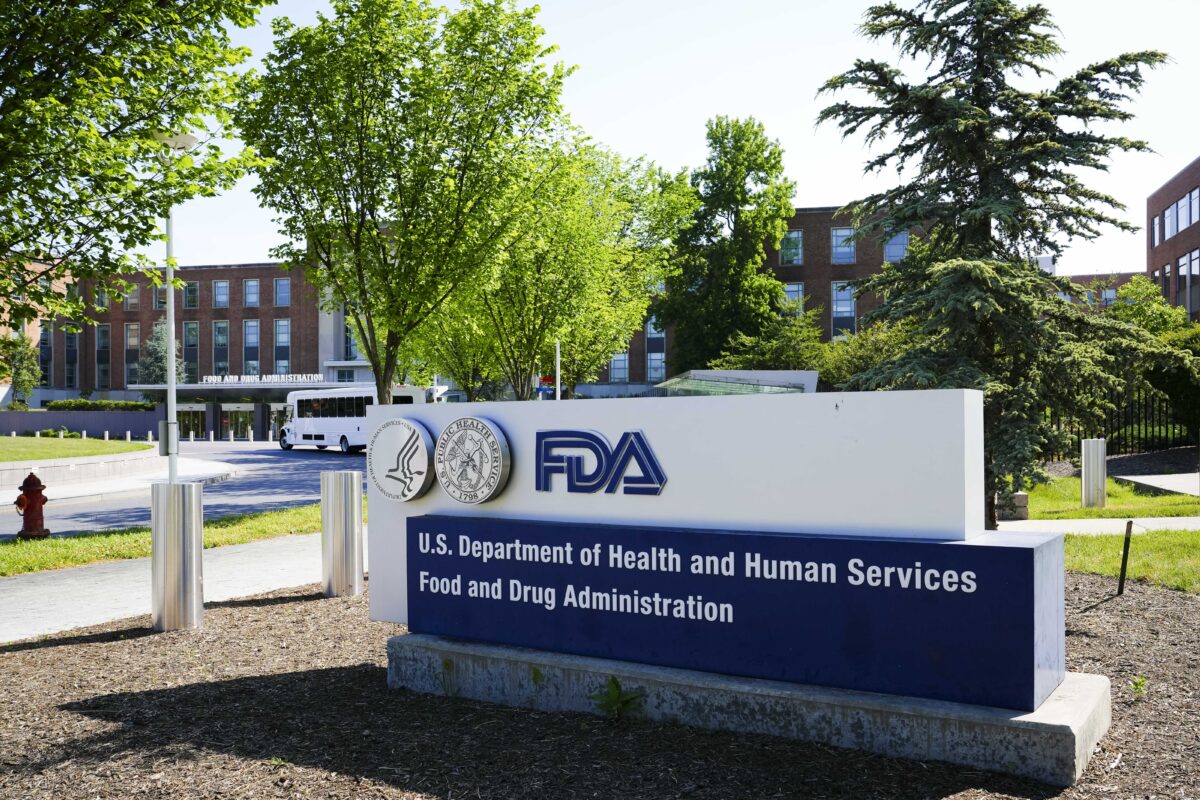
The Food and Drug Administration (FDA) has approved updated COVID-19 vaccines, while withdrawing emergency authorization.
Here is what to know about the developments.
Are Vaccines Still Available?
Yes. The FDA has approved the Pfizer-BioNTech, Moderna, and Novavax COVID-19 vaccines for all people age 65 and older.
All three vaccines are also approved for younger people who have at least one risk factor that officials say places them at higher risk of severe COVID-19 outcomes.
The existing Moderna vaccine, Spikevax, is approved for individuals aged 6 months or older. The Pfizer vaccine is approved for people age 5 and older. The Novavax vaccine is approved for people age 12 and older, as is a new vaccine from Moderna called mNEXSPIKE.
Other people can still get the vaccines for so-called off-label use, although insurers may not cover vaccines for populations for whom vaccination is not recommended. Any products the FDA approves can be used by doctors for unapproved, or off-label, purposes.
“These vaccines are available for all patients who choose them after consulting with their doctors,” Health and Human Services Secretary Robert F. Kennedy Jr. said on X.
Dr. Tina Tan, Infectious Diseases Society of America (IDSA) president, said in a statement, “Physicians can still provide COVID vaccines off-label, and IDSA strongly urges doctors to continue recommending and administering vaccination to their patients based on the best available science.”
The FDA regulates vaccines, while the Centers for Disease Control and Prevention (CDC) issues immunization recommendations. The CDC’s vaccine advisory panel is scheduled to meet soon to discuss COVID-19 vaccines and other topics.
Before the new approvals, the vaccines were only available under emergency authorization to children aged 6 months to 11 years.
The vaccines were all originally offered under emergency authorization, a clearance only available in certain circumstances—in this case, the declaration of a public health emergency over COVID-19 during President Donald Trump’s first administration and the lack of an “adequate, approved, and available alternative” to the products.
Why Did Regulators Revoke the Authorizations?
The FDA in July approved Spikevax for people as young as 6 months of age.
That means that there is an approved product for the population targeted by the latest versions of the emergency authorizations for Moderna and Pfizer, Dr. Vinay Prasad, the FDA’s top vaccine official, wrote in memorandums explaining the revocations of the emergency authorizations.
Novavax’s vaccine has also been approved for the same population, paving the way for rescinding that authorization, Prasad said in another memo.
The official also said the risk of severe problems from COVID-19 has “decreased dramatically over the last four years.” He said there has been a decline in hospitalizations attributed to COVID-19 and that post-infection immunity “appears robust.”
“Due to all of these circumstances, I have determined that circumstances exist that make it appropriate to revoke [the authorizations] and doing so is appropriate to protect the public health or safety,” Prasad said.
Moderna had already said it would not be carrying out any additional manufacturing under the emergency authorization and Novavax also did not protest the revocation, according to the memos. The companies issued statements that noted the new approvals.
Pfizer raised several concerns over the revocation of its emergency clearance, including the fact that there would only be one vaccine available to children aged 6 months to 4 years, Prasad said. He said Pfizer did not provide evidence that Moderna was unable to meet demand for that age group or that its vaccine has a better benefit-risk calculus than Moderna’s shot.
Officials have also pointed to low uptake for the latest vaccines. Just 13 percent of children and 23 percent of adults had received one of them as of April 26, according to the latest statistics available from the CDC.
Signaling Change
Dr. Marty Makary, the FDA’s commissioner, and Prasad signaled the coming change in May, when they said the FDA would not approve COVID-19 vaccines for people younger than 65 who do not have one of the risk factors, which include obesity and asthma.
The FDA would only issue approvals for that healthy population, estimated at 140 million to 240 million people, if manufacturers provided clinical trial data showing that the vaccines prevent symptomatic COVID-19, the officials said.
“The FDA can only approve products if it concludes, based on scientific evidence, the benefit-to-harm balance is favorable,” Prasad said at the time. “And we simply need more data to have that confidence for younger individuals at low risk of severe disease.”
Regulators had been approving updated versions of the vaccines each year without clinical data. In 2024, for example, the FDA cleared newer shots from Moderna, Pfizer, and Novavax without human data, citing animal tests and data from trials for previous versions.
In documents this year outlining the new spate of approvals, regulators cited Spikevax and Novavax vaccine studies carried out by the companies and concluding in 2022 that found that fewer vaccinated people contracted COVID-19 than placebo recipients. For mNEXSPIKE, the FDA highlighted a study that concluded in 2024 and pegged the vaccine as boosting efficacy by 9.3 percent compared with Moderna’s existing shot.
That data, combined with immunogenicity results, indicate that the vaccines are effective, FDA reviewers said.
The data underpinning the new approval for Pfizer’s vaccine have not been made available.
What Are Critics Saying?
Officials with the IDSA and the American Academy of Pediatrics were among the critics of the FDA’s moves.
“By narrowing its approval, FDA has made a decision that completely contradicts the evidence base, severely undermines trust in science-driven policy, and dangerously limits vaccine access,” Tan said.
The American Academy of Pediatrics, which recently said all children aged 6 months to 23 months and many older children should receive a vaccine, stated that it is maintaining that recommendation.
The CDC recently stopped recommending COVID-19 vaccination for healthy children.
Some who would like the Pfizer and Moderna COVID-19 vaccines to be limited further also expressed dissatisfaction.
“[Rescinding the emergency authorizations] does not change the fact that the product is still on the market and available for those who choose to use it, regardless of whether the CDC does or does not recommend it for children or other specific populations,” Barbara Loe Fisher, president and cofounder of the National Vaccine Information Center, told The Epoch Times via email.
Fisher and Vicky Pebsworth, who holds a doctorate in health services organization and policy and was recently appointed as one of the CDC’s vaccine advisers, said in a public comment in May that the FDA should “only allow availability for those who voluntarily choose to accept the known and unknown risks of the COVID shots.”
What Are Supporters Saying?
Still others said they support the series of FDA moves.
“I think it’s a really positive development,” Dr. Monique Yohanan, a senior fellow at Independent Women’s Forum, told The Epoch Times. “And I actually think—finally—that we’re actually doing evidence-based medicine for COVID.”
Yohanan, who is also chief medical officer at Adia Health, recently authored a policy paper that calls for clarity about how certain vaccines can achieve herd immunity and how others, such as COVID-19 vaccines, cannot.
She said the FDA threaded the needle well with the COVID-19 vaccines, although not perfectly.
“To have completely gotten rid of them, I think would have been scary for some people,” she said. “But if you look at the evidence, since 2022 it’s been really clear that the only people … the vaccines can really benefit are people who are older than 65 who have at least a few medical comorbidities. So the FDA was actually broader than that.”