



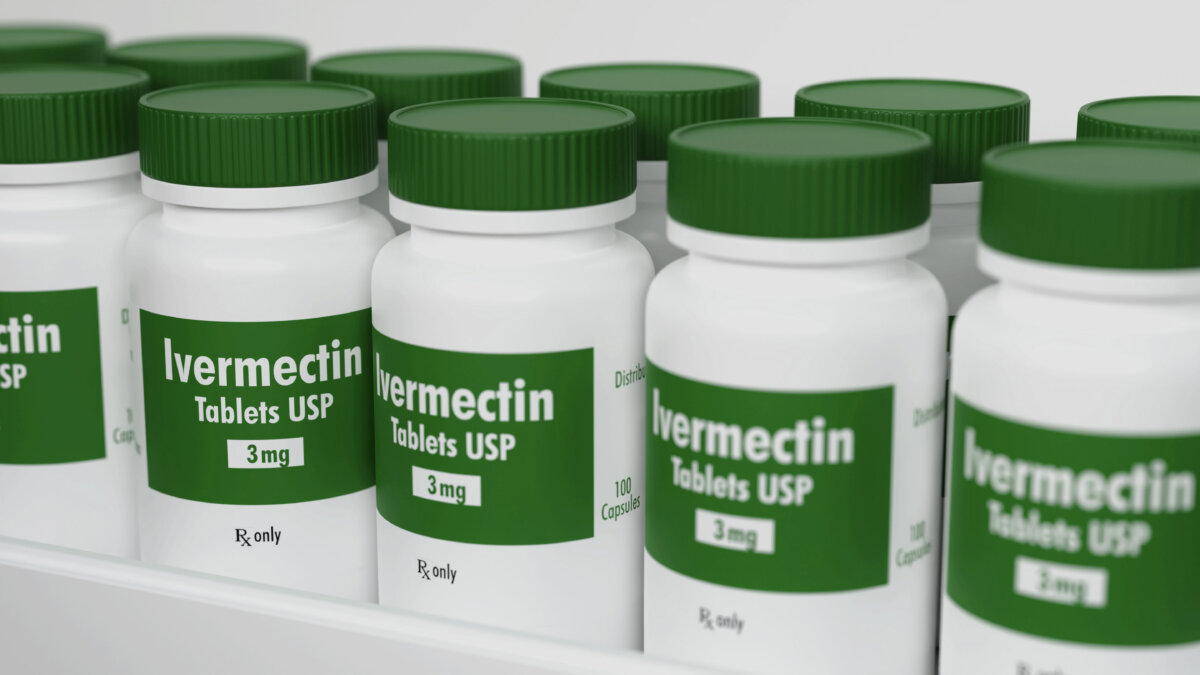
The drug ivermectin was shown to have reduced malaria cases by more than 25 percent in a randomized trial carried out in Africa, according to a study recently published in the New England Journal of Medicine (NEJM).
The authors of the paper said ivermectin, which saw its popularity increase during the COVID-19 pandemic, can kill mosquitoes that feed on people who have been treated with the drug. Due to the prevalence of mosquito-borne illnesses, ivermectin could be a novel solution for dealing with the transmission of malaria, they said.
“We are thrilled with these results,” study author Carlos Chaccour said in a statement issued by the Barcelona Institute for Global Health, which led the study.
“Ivermectin has shown great promise in reducing malaria transmission and could complement existing control measures.”
Researchers said that Kenyan children who received the anti-parasitic drug in the trial saw a 26 percent reduction in malaria incidence when compared with children who received a control drug, albendazole.
The trial, they said, involved more than 20,000 participants and more than 56,000 treatments. According to the study, the administration of ivermectin was also found to have produced no severe drug-related adverse effects, and only mild side effects were experienced by the participants.
“The findings suggest that ivermectin [mass drug administration] could be a valuable complementary strategy for malaria control, particularly in areas where mosquito resistance to insecticides is a growing concern,” Marta Maia, a researcher with the University of Oxford involved in the study, said in a statement.
Health officials say that ivermectin, discovered in the late 1970s by Japanese researchers, is primarily used to treat infections caused by roundworms, threadworms, and other parasites.
During the pandemic, some researchers touted ivermectin as a means to treat COVID-19, although federal health officials have said that the drug is not effective in treating the virus.
The Food and Drug Administration has not cleared ivermectin to be used for COVID-19 and has advised against people using forms of ivermectin intended for animals.
“The FDA has not determined that ivermectin is safe or effective for these indications,” the agency’s website says.
A study released in June 2021 found that ivermectin was linked to “large reductions” in COVID-19 deaths. Among hospitalized COVID-19 patients, the risk of death was found to be 2.3 percent among those treated with the drug, compared with 7.8 percent for those who were not.
A March 2022 study found that the drug was associated with decreased mortality, as compared with remdesivir. The study analyzed a national federated database of adults aged 18 and older with a confirmed COVID-19 infection from January 2020 to July 2021.
Ivermectin’s potential side effects include nausea, vomiting, dizziness, loss of appetite, constipation, weakness, body shaking, chest discomfort, and more serious problems, including rash, hives, itching, blistering or peeling skin, confusion, sleepiness, disorientation, and coma.
In recent years, some states have moved to allow the sale of ivermectin over the counter, without a prescription. In April, Idaho became the latest state to do so.
The World Health Organization describes malaria as a life-threatening disease that is caused by parasites transmitted by certain mosquitoes, causing significant numbers of deaths in sub-Saharan Africa. The U.N. body has estimated that more than 263 million cases of malaria were reported in 2023, compared with 252 million cases in 2022.