



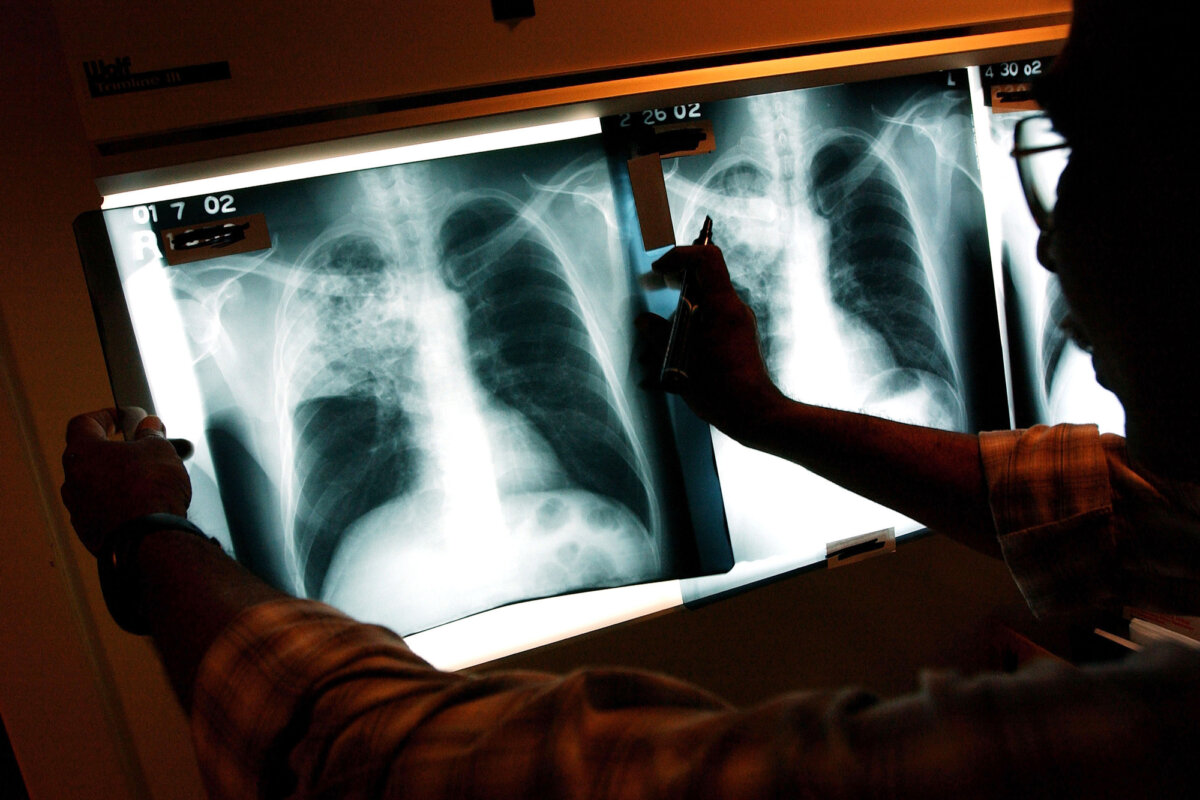
Worldwide deaths from tuberculosis (TB) decreased in 2024, along with the number of people newly diagnosed with the disease, according to a World Health Organization (WHO) report released on Nov. 12.
Last year, the number of people who were estimated to have been sickened by TB dropped to 10.7 million—representing the first drop since 2020—after reaching a record high of 10.8 million in 2023, according to the report.
That 2024 number is still higher than 2020’s level of 10.1 million, according to the organization.
Deaths from TB last year also decreased to 1.23 million, a 3 percent reduction from the year before, according to the report.
“This is a crucial period,” WHO Director-General Tedros Adhanom Ghebreyesus said in the report.
About 165,000 people were treated for an antibiotic-resistant strain of the disease in 2024, WHO reported.
From 2000 to 2024, treatment of people with TB prevented 83 million deaths, according to the report.
The disease is one of the top 10 causes of death worldwide and the leading cause of death from a single infectious agent, according to WHO.
People who are sick with TB expel bacteria into the air, usually by coughing, causing it to spread to others. About one-quarter of the global population is estimated to have been infected with the disease in its latent form, according to the organization.
WHO stated that it has been working with donors, partners, and affected countries to make up for funding cuts to continue combating tuberculosis after WHO lost substantial funding from the United States this year, according to Ghebreyesus.
The WHO report states that future progress in combating TB could be in jeopardy after the United States decreased funding to WHO.
WHO made cuts to its budget this year following reductions in foreign spending by the U.S. Agency for International Development.
The Trump administration began making drastic cuts to foreign aid distributed by the agency early this year after audits revealed questionable funding decisions made by the agency, including giving $122 million to groups aligned with designated terrorist organizations, including the Hamas terrorist group.
The United States has historically contributed the largest amount of funding to WHO, amounting to about $1 billion each year, according to the organization. The organization’s annual budget is about $6.8 billion.
/top-10-contributors-2022-23.jpg?sfvrsn=4b9e2080_5)
WHO’s director for infectious diseases, Dr. Tereza Kasaeva, said the report showed progress in fighting the disease.
“WHO’s Global tuberculosis report 2025 shows that progress is possible, even in the face of persistent challenges,” Kasaeva said in a statement.
“Coverage of TB prevention, diagnosis, and care continues to expand, powered by new WHO-recommended tools, from [artificial intelligence-driven] screening and rapid diagnostics to shorter, more effective treatments to save lives.”
Changes in WHO’s funding could threaten the progress made in the past few years, according to the report.
Future reductions require making improvements to TB diagnoses, treatment, preventive measures, and technological breakthroughs, including a new TB vaccine, the organization stated.
“All depend on adequate funding,” WHO stated.
There are 18 TB vaccine candidates in clinical development, including six that have entered a critical final stage of trials, according to the organization.