



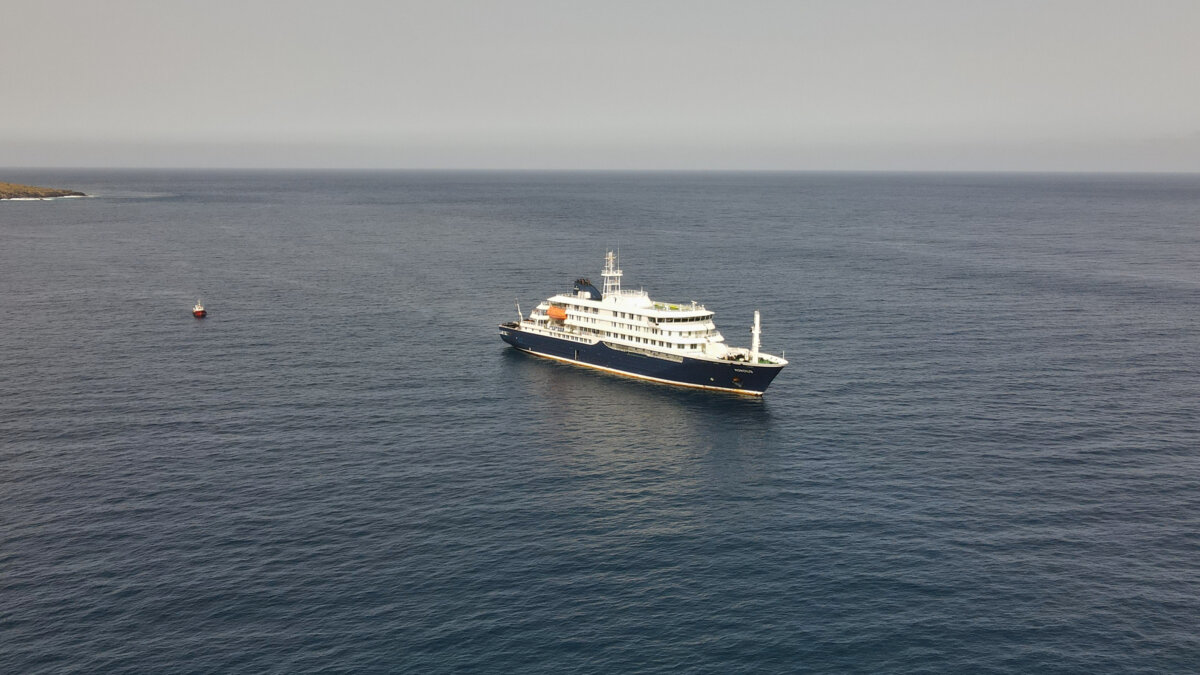
A Switzerland resident who was on board the MV Hondius when a hantavirus outbreak developed has tested positive for the virus, Swiss officials said on May 6.
The unidentified male, who was on the cruise ship with his wife, returned to Switzerland at the end of April. When he noticed he was sick, he called his doctor and went to the University Hospital Zurich for assessment, the Federal Office of Public Health said in a statement.
The man was immediately placed in isolation.
A test returned positive for the Andes virus, a hantavirus known to spread in South America. Hantavirus cases usually come from contact with the droppings, urine, or saliva of infected rodents.
The hantavirus outbreak on MV Hondius, believed to start in early April, has resulted in the deaths of a Dutch couple and a German woman.
A British man was sickened and rushed to intensive care in South Africa. Three others were evacuated on Wednesday and were on their way to the Netherlands, Tedros Adhanom Ghebreyesus, director-general of the World Health Organization (WHO), said on X.
“WHO continues to work with the ship’s operators to closely monitor the health of passengers and crew, working with countries to support appropriate medical follow-up and evacuation where needed,” he said. “Monitoring and follow-up for passengers on board and for those who have already disembarked has been initiated in collaboration with the ship’s operators and national health authorities.”
Oceanwide Expeditions, the ship operator, had said that there were plans to transfer two people with acute symptoms, and a third person who is “closely associated with a guest who passed away,” to medical and screening facilities.
The WHO said this week that human-to-human transmission among close contacts is suspected. The Andes virus was transmitted that way on occasion in the past.
“Unlike the European hantaviruses, which are transmitted through excretions of infected rodents, for the American hantavirus variant, person-to-person transmission has also been documented in rare cases. However, transmission only occurs through close contact,” the Federal Office of Public Health said, adding that the risk to the public in Switzerland is low and it considers further cases in the country unlikely.
The male patient’s wife has not shown any symptoms but is isolating as a precaution, the office said.
The update came hours after South African authorities said that they identified the Andes strain of hantavirus in two passengers—the man in intensive care, and one of the women who died.
The South African Department of Health said in a report that the information came from tests performed on the passengers after they were removed from the ship and flown to South Africa.
The ship set sail from Argentina, and two of the first cases on board, a Dutch woman who died in South Africa and her husband, had traveled in Argentina and elsewhere in South America before boarding the ship, according to the WHO.
Maria Van Kerkhove, the WHO’s chief of epidemic and pandemic preparedness and prevention, told reporters during a May 5 briefing that officials believe that couple was not infected on the vessel, before outlining off-ship excursions such as trips to islands off the African coast that have “a lot of rodents.”
The Associated Press contributed to this report.
Correction: A previous version of this article misstated the nationality of one of the deceased. The Epoch Times regrets the error.