



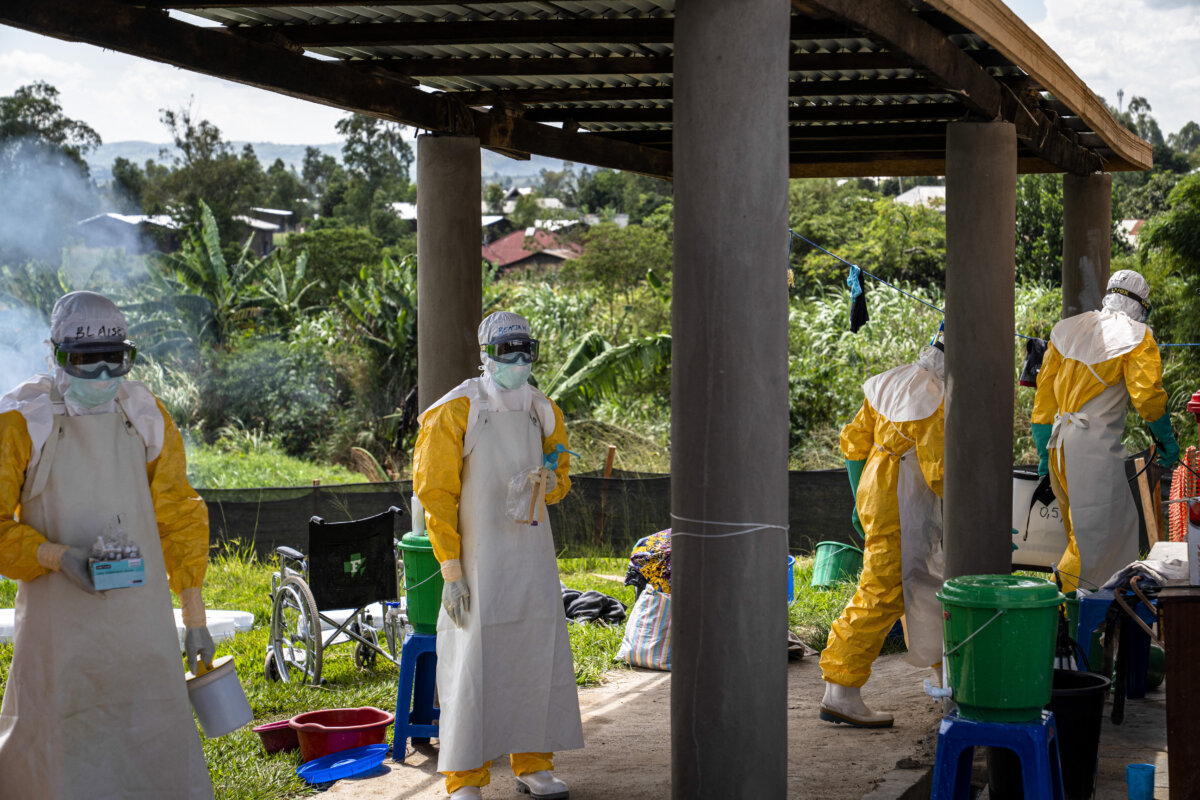
Multiple laboratories in Congo, the epicenter of the Ebola outbreak, are unable to carry out testing because they’re waiting for supplies, according to the World Health Organization (WHO).
Labs in Goma, Bukavu, and Lwiro zones “are currently experiencing stockouts,” WHO officials said in a situation report dated June 7 and published on June 9.
The labs need reagents, or substances required for testing, to resume testing, the report stated.
Congo is already dealing with a testing backlog stemming from difficulty processing the number of samples sent to labs since the outbreak was detected in mid-May.
The outbreak started earlier, but initial tests were not able to identify the Bundibugyo virus, a rare virus that causes Ebola, officials have said.
WHO and other organizations have been providing reagents, test kits, and other crucial supplies as Congo’s National Institute for Biomedical Research implements a testing strategy aimed at ramping up processing speed and reducing the time it takes to test samples.
Some labs are able to turn samples around on the same day they are received, Dr. Jean-Jacques Muyembe Tamfum, head of the institute, told reporters in a briefing on June 10.
WHO recommends testing all suspected cases, including those exposed to confirmed patients.
“If we’re not testing the right people, we’re going to be missing cases, and we’re going to be missing chains of transmission,” Maria Van Kerkhove, a WHO official, told reporters during the briefing. “If there are community deaths that aren’t being tested, then we’re going to be missing chains of transmission.”
Congo’s government said on June 9 that it has confirmed 598 cases and 115 deaths. Another 19 cases and two deaths have been confirmed in Uganda.
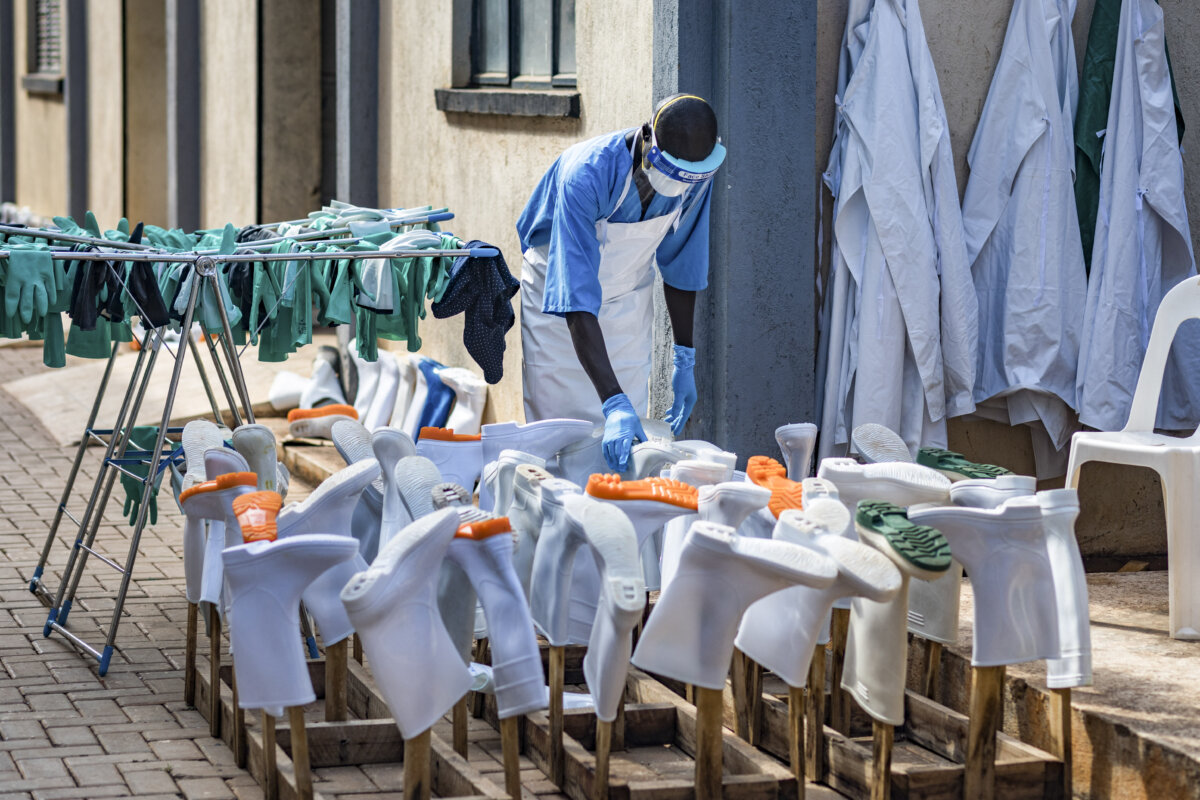
A recent increase in confirmed cases and deaths comes amid “the scale up of testing and diagnostic capacities, enabling testing of the backlog of previously collected samples,” WHO said in a separate report released on June 8.
The organization classifies the risk of Ebola in Congo as very high in part because “delays in laboratory confirmation resulting from stockouts of testing supplies and limited diagnostic capacity have hindered the timely detection, isolation, and management of cases,” the WHO said in its most recently updated risk assessment, released on June 6.
The risk to neighboring Uganda is high, and the risk to other countries is low.
Ebola primarily spreads through contact with bodily fluids from infected people, and people are only contagious after developing symptoms, according to the WHO and the U.S. Centers for Disease Control and Prevention.