



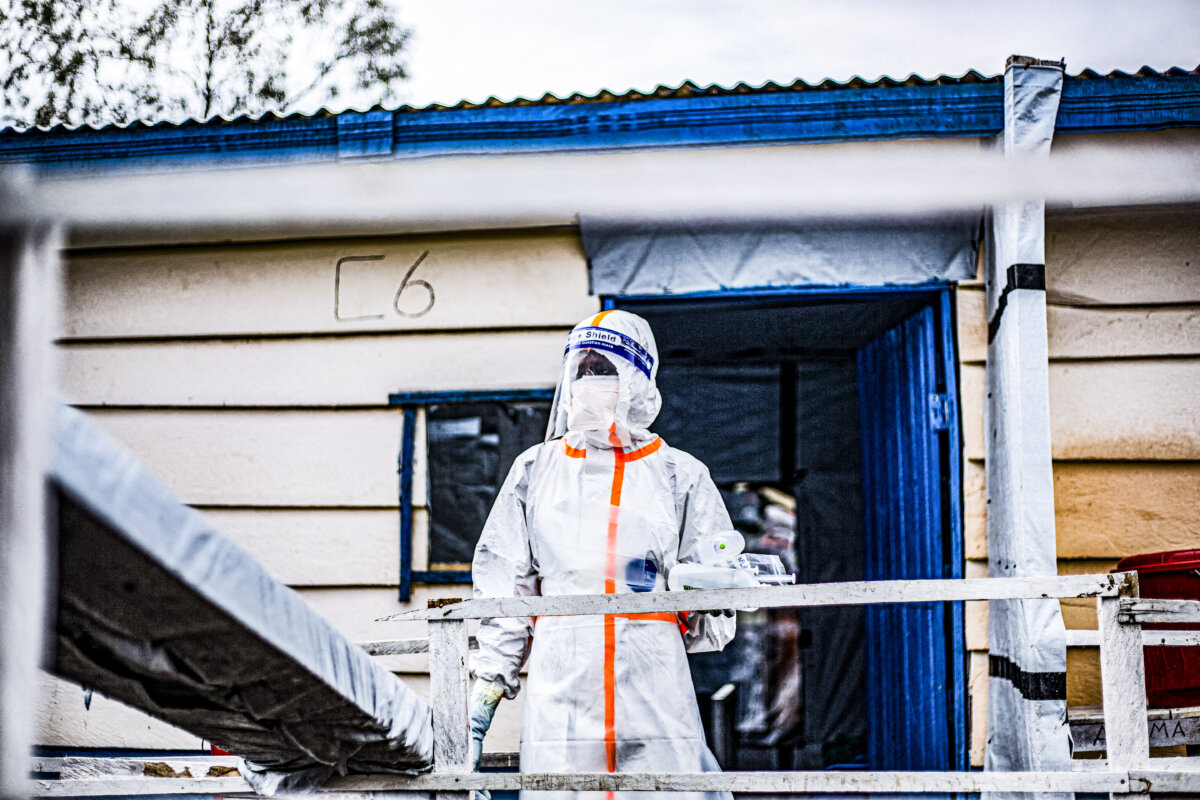
Congo has 3,200 confirmed Ebola cases, including 1,405 deaths, the Congolese government said on July 27 as health teams continue surveillance, laboratory testing, patient care, and contact tracing to contain the outbreak.
The latest figures, published by Congo’s Communication Ministry in a post on X, showed 773 patients were in isolation or hospitalized, while 571 people had recovered as of July 25.
The government said the case fatality rate stood at 43.9 percent and that contact tracing had reached 77.8 percent.
This is Congo’s 17th Ebola outbreak and is caused by the Bundibugyo virus, according to the U.S. Centers for Disease Control and Prevention.
The CDC said on July 24 that the current outbreak is now the third largest Ebola outbreak on record.
“This Ebola outbreak surpassed 1,000 confirmed cases within 40 days of response activation,” the CDC said. “In comparison, the 2018 Ebola outbreak in North Kivu, Congo, took approximately 235 days to reach more than 1,000 cases.”
Affected Areas
Congolese officials said the outbreak continues across five provinces, including Ituri, North Kivu, South Kivu, Haut-Uélé, and Tshopo.
Ituri remains the hardest-hit province, with 28 of its 36 health zones affected. North Kivu has 11 affected health zones, Haut-Uélé has five, and Tshopo has three.
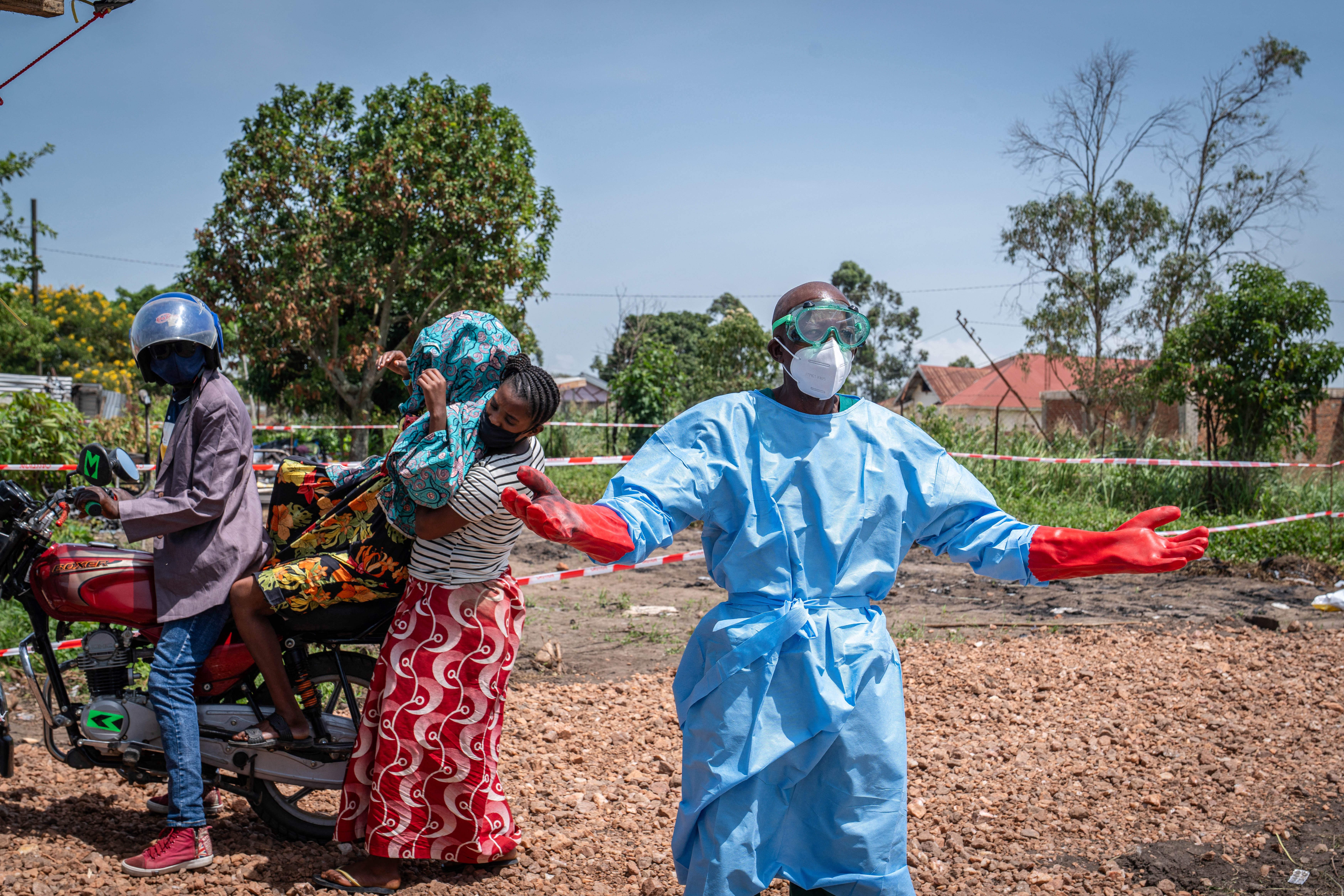 Dieudonné Sezabo (R), a health worker, gestures as he asks for help in transporting a patient (2nd L) suspected of having Ebola, who was brought by motorcycle taxi to the Rwampara Hospital in Ituri, in Congo, on May 26, 2026. (Glody Murhabazi/AFP via Getty Images)
Government officials said response operations remain fully active across the affected provinces.
They said surveillance systems, laboratory testing and patient care are allowing health workers to identify new infections quickly while continuing to treat patients successfully.
Officials said Ituri province continues to receive additional medical teams, laboratory support, and healthcare resources to improve early case detection and patient treatment.
Congolese authorities are expanding safe and dignified burial programs, the ministry said.
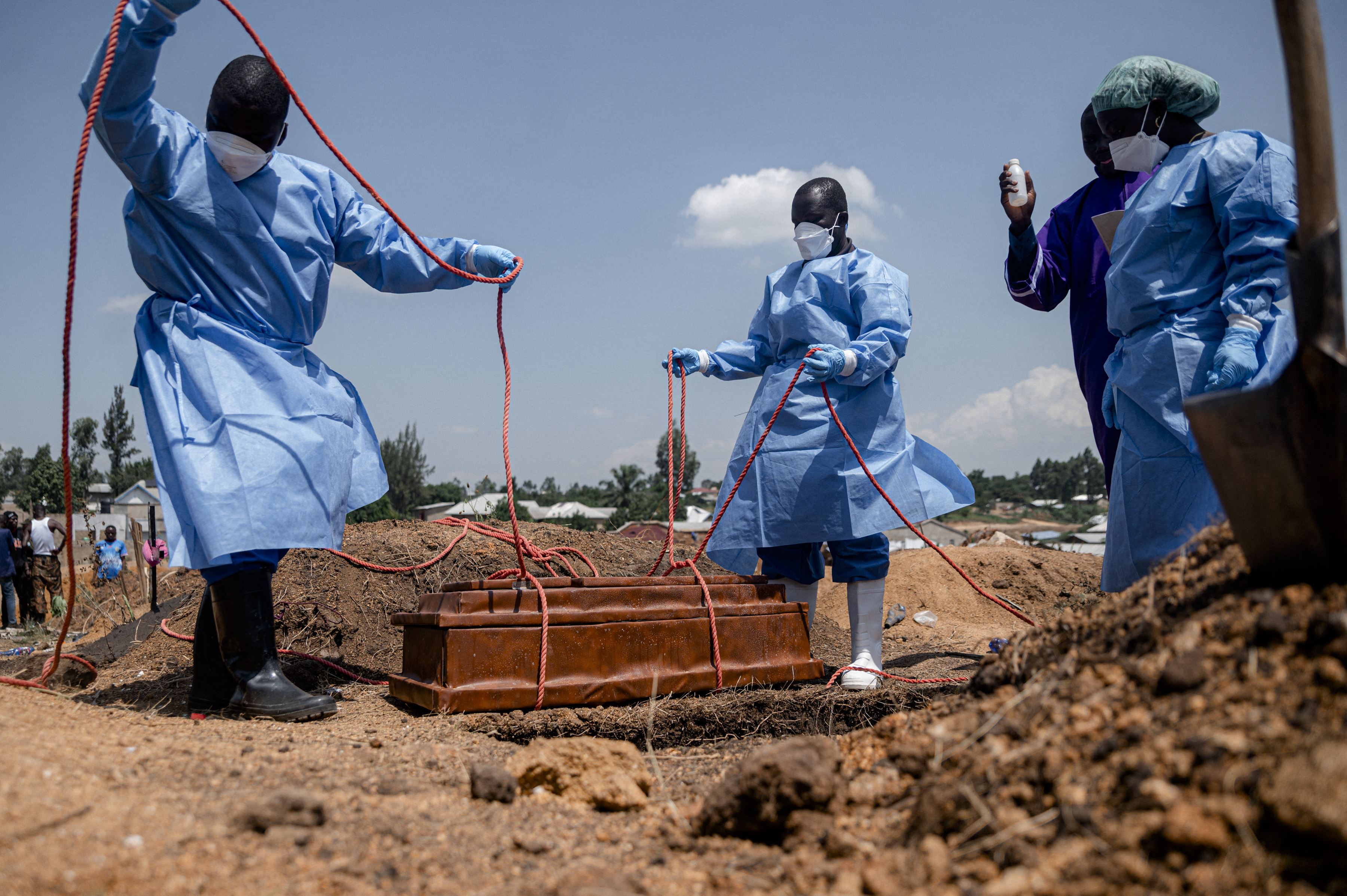 Teams from the International Federation of the Red Cross and Red Crescent Societies prepare for burial at Mbiyo cemetery the body of a fourth orphan who died from Ebola virus disease at an orphanage in Bunia, Ituri Province, on June 19, 2026. (Jospin Mwisha/AFP via Getty Images)
Congolese Prime Minister Judith Suminwa Tuluka said on July 26 that she had visited Kisangani, Bunia, Rwampara, and Mongbwalu, where she met affected families, patients, and healthcare workers.
“The Government has mobilized the necessary resources, with financial and technical support from our partners,” she wrote in a post on X. “We will remain mobilized until this epidemic is under control.”
Risk to Americans
The CDC said on July 24 that no Ebola cases linked to the outbreak have been confirmed in the United States.
“The overall risk to the American public and travelers remains low,” it added.
Federal officials nevertheless have expanded measures designed to prevent the virus from entering the United States.
The CDC said it has been assessing travelers arriving from the Democratic Republic of Congo, Uganda, and neighboring South Sudan for symptoms and possible exposure to Ebola.
The agency said the CDC, the Department of Homeland Security, and other federal agencies introduced public health entry screening, entry restrictions, and other measures on May 18.
It also noted that an order continuing the suspension of entry for specified foreign nationals took effect on July 13 for 30 days.
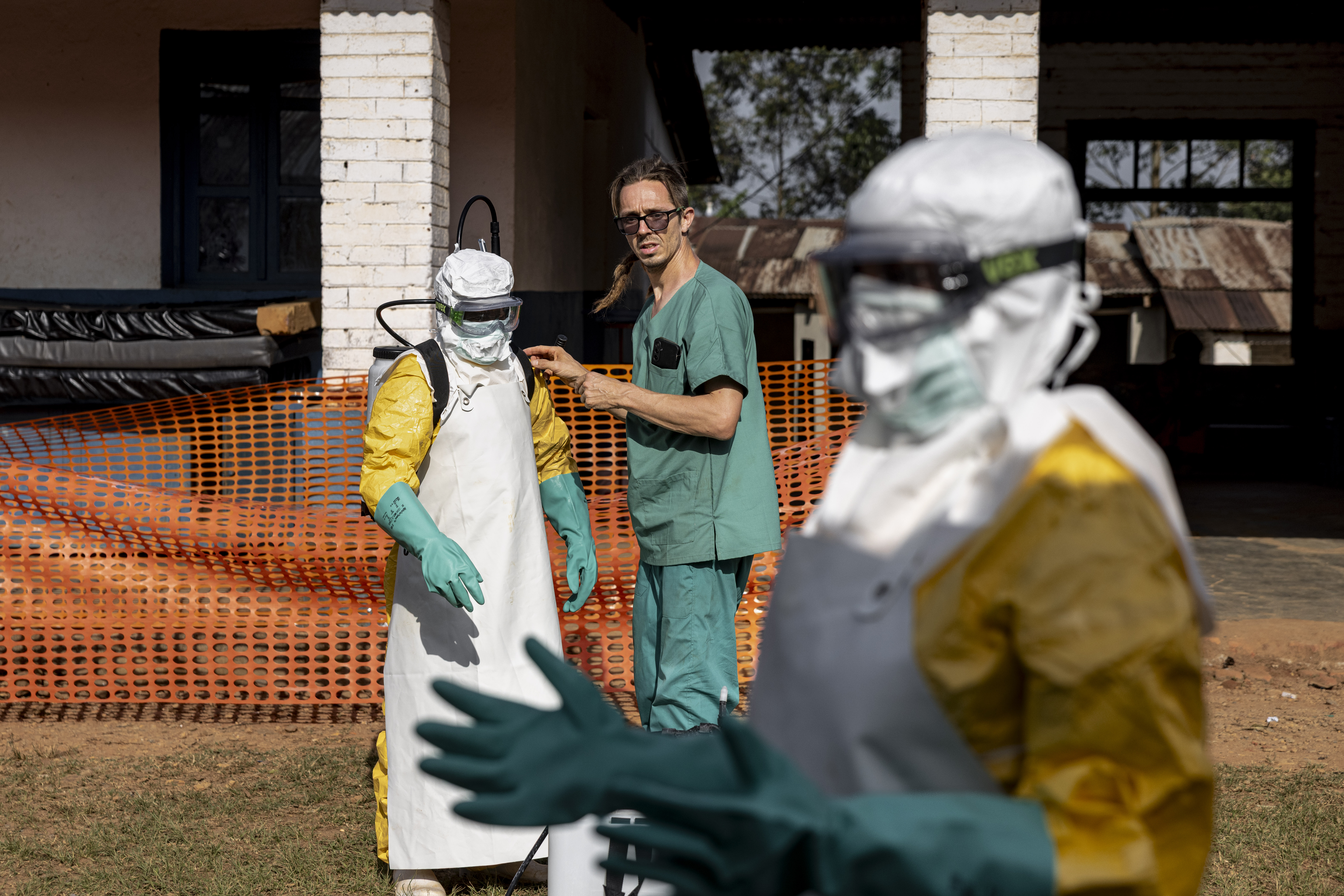 Health personnel in Mongbwalu, Congo, on May 26, 2026. (Michel Lunanga/Getty Images)
The CDC said the outbreak has spread unusually quickly because responders face several challenges, such as limited healthcare infrastructure and shortages of diagnostic laboratories.
Ebola kills about half of those infected on average, according to the World Health Organization, although fatality rates have ranged from 25 percent to 90 percent in previous outbreaks.
Last week, the University of Oxford announced that it had vaccinated the first volunteer in the world’s first clinical trial of a vaccine specifically designed to protect against Bundibugyo ebolavirus.
Researchers said the study is an important first step toward developing protection against a form of Ebola for which no licensed vaccine currently exists.