



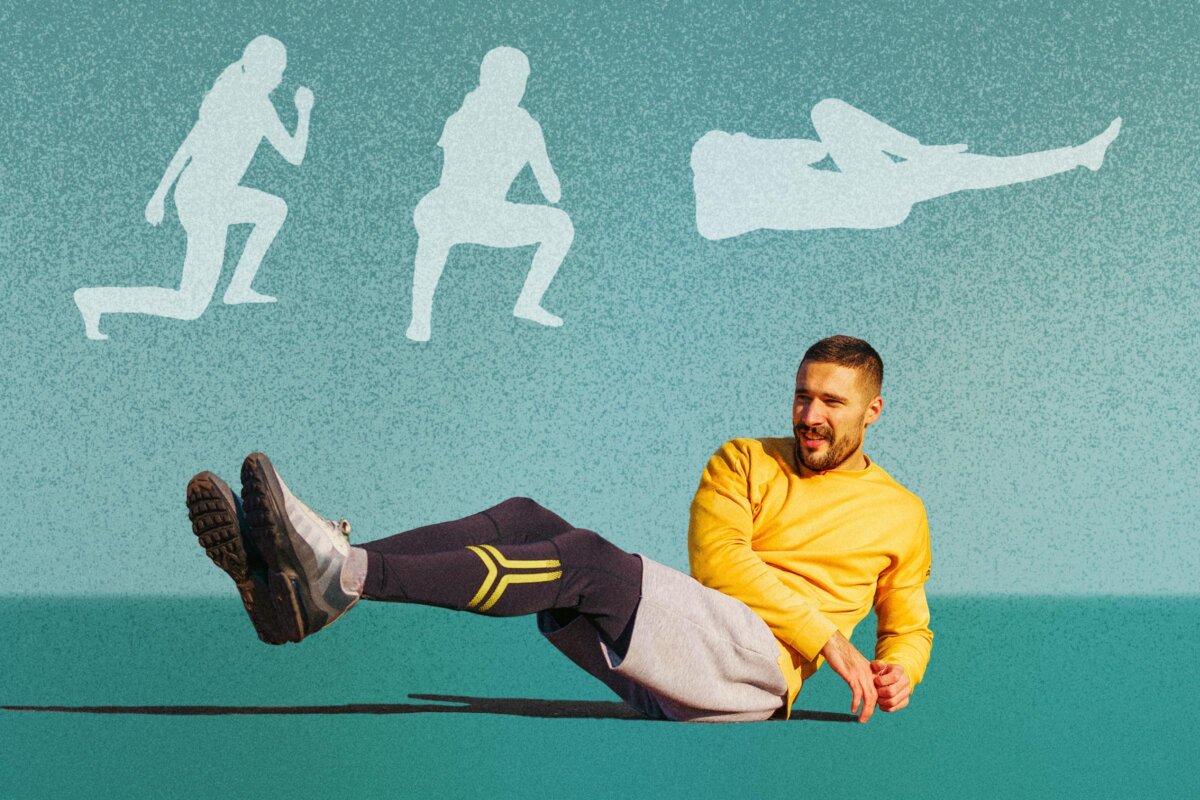
Do you really need to go to the gym to build muscle? Bodyweight training can be just as effective as a gym workout when you understand the principles.
I’ll walk you through the core training principles step by step, show you six powerful advantages of bodyweight training that will make you fall in love with it, and give you a complete, ready-to-use workout program.
6 Major Advantages of Bodyweight Training
In recent years, gym-based weight training has become the mainstream approach to building muscle. Extensive research shows its benefits for increasing muscle mass, improving bone density, and enhancing insulin sensitivity. That said, bodyweight training—which uses your own body as resistance—can also be very effective for building muscle. The key is choosing the right type of exercise for your personal goals and lifestyle.
Here’s a closer look at six major benefits of bodyweight training.
1. No Space Limitations
The biggest advantage of bodyweight training is its convenience. Whether you’re at home, in the office, or traveling, even with limited space and no professional equipment, bodyweight exercises offer a variety of ways to precisely target muscle groups and stimulate growth.
2. Full-Body Workouts
Unlike weight-training machines that usually target a single muscle, most bodyweight exercises involve multiple joints and engage the whole body, mirroring the movement patterns we use in daily life. Exercises such as squats, lunges, and planks engage multiple muscle groups simultaneously, enhancing functional fitness, promoting calorie burn, and boosting metabolism—so you feel the results more effectively.
3. Build a Strong Core
Most weight-training machines are designed to target either the upper or lower body. Although they require “core stability and limb power,” the main focus remains on the limbs. In contrast, bodyweight training includes many core-focused movements, and developing good core control starts with proper breathing—making it a more effective way to strengthen your core.
4. Lower Risk of Injury
When your movements are not stable, adding weight too quickly can easily lead to compensatory movement patterns and increase the risk of injury. Bodyweight training allows you to first learn correct movement patterns and muscle control under lighter loads. For beginners, this is a safer and more solid way to start.
5. Improved Flexibility and Coordination
Many sports injuries are caused by insufficient muscle elasticity and mobility. Bodyweight training doesn’t just build strength—it also challenges balance, coordination, and flexibility. These abilities enhance muscle elasticity and resilience, significantly reducing the chance of injury during daily activities or workouts.
6. Highly Efficient Even in a Short Time
For people with limited time, bodyweight training combined with high-intensity interval training can deliver results similar to those of longer cardio sessions in much less time. Bodyweight training is both time-saving and highly efficient. Growing evidence indicates that bodyweight training, particularly when structured as high‑intensity circuits or regular calisthenics, can improve cardiovascular function and key markers of metabolic health.
The Logic Behind Effective Bodyweight Training
The secret to making bodyweight training truly effective lies in the principle of “from the inside out.” It starts with deep muscle training, and the most important element is breathing. By practicing proper three-dimensional breathing, you can expand the abdomen, sides, and back, effectively activating the deep core muscles (transverse abdominis) and building foundational core stability.
With the deep muscles in place, you can progress to training the core, upper body, and lower body.
Core Training: Targets the upper, lower, and side abdominal muscles, including the internal and external obliques. Recommended exercises include bicycle crunches, leg raises, Russian twists, and planks, which engage the whole body.
Lower Body Training: Focuses on the front thighs (quadriceps) and glutes. Recommended exercises include squats, lunges, and kneeling leg lifts.
Upper Body Training: Primarily targets the chest muscles. Push-ups are recommended, and for beginners or those with limited strength, knee push-ups are an excellent entry-level option.
Bodyweight Training Workout Menu
This bodyweight routine provides a simple, equipment-free way to support overall fitness using controlled, functional movements. It’s excellent for building core strength and coordination.
1. Bicycle (15 Repetitions and 3 Sets)
This classic core exercise targets your abs and obliques while mimicking a pedaling motion.
Step 1: Lie flat on your back, hands lightly behind your ears. Lift your legs with knees bent, engage your core, and keep your back pressed against the floor.
Step 2: Lift your upper body and twist to the left, bringing your right elbow toward your left knee while extending your right leg, keeping it off the floor. Twist to your limit, then return to the center. Repeat on the other side, bringing your left elbow to your right knee. Keep the movement smooth and controlled, mimicking the motion of pedaling a bicycle.
2. Leg Raise (15 Repetitions and 3 Sets)
This exercise strengthens your lower core muscles.
Step 1: Lie flat on your back. Place your hands by your sides or under your hips for support. Keep your legs straight and together.
Step 2: As you inhale, engage your lower abs and slowly lift both legs up to about a 90-degree angle. Keep your core tight throughout.
Step 3: As you exhale, slowly lower your legs without letting them touch the ground. Keep your core engaged and your lower back pressed against the floor.
3. Russian Twist (15 Repetitions and 3 Sets)
This dynamic core exercise targets abdominal muscle mass and improves rotational strength.
Step 1: Sit on the floor and lean your upper body back to about a 45-degree angle while keeping your back straight. Bend your knees, with your feet either on the ground or lifted for added difficulty. Engage your core, and hold your hands together in front of your chest or hold a weight.
Step 2: Use your abdominal muscles to rotate your upper body to the left. When you reach your maximum range, return to the center, then twist to the right. Throughout the movement, let your core drive your arms. Avoid moving too fast and aim for the largest possible range of motion.
4. Plank (30 Seconds and 3 Sets)
The plank is ideal to work your entire core, shoulders, and glutes.
Step 1: Lie face down. Place your elbows directly under your shoulders at about a 90-degree angle. Extend your legs straight and keep your toes on the ground.
Step 2: Engage your core and glutes, then lift your body off the ground and keep your pelvis in a neutral position so that your body forms a straight line from the head to the shoulders, back, hips, and ankles.
5. Squat (15 Repetitions and 3 Sets)
Squats primarily strengthen your thighs, glutes, and core while also improving lower-body mobility and functional strength.
Step 1: Stand with your feet shoulder-width apart or slightly wider, with your toes pointed slightly outward. Let your arms hang naturally, extend them forward, or cross them over your chest. Keep your chest up, core engaged, and your back straight.
Step 2: As you inhale, tighten your core and push your hips back as if you were sitting in a chair. Bend your knees, keeping them behind your toes. Lower yourself until your thighs are parallel to the ground. Exhale as you stand back up. Make sure your knees are aligned with your toes throughout the movement—do not let them cave inward.
6. Lunge (15 Repetitions Each Side and 3 Sets)
Lunges work your quadriceps, glutes, and hamstrings, while also strengthening your core and improving balance and coordination.
Step 1: Stand with your feet shoulder-width apart. Step one foot back into a large stride. Place your hands by your sides or together in front of your chest.
Step 2: As you inhale, lower your body straight down until both knees are bent at about 90 degrees. The back knee should come close to the ground without touching it, and the front knee should not go past your toes.
Step 3: As you exhale, push through your front foot and drive your body upward. Bring your back leg forward and lift the knee up toward hip height. Repeat the sequence: Step back, lower into the lunge, then drive the knee up. After completing the set, switch to the other leg.
7. Kneeling Leg Lift (15 Repetitions Each Side and 3 Sets)
This move strengthens your glutes and hips while improving stability and control in your core.
Step 1: Start on all fours. Place your hands directly under your shoulders and your knees under your hips. Keep your back straight, core engaged, and your gaze directed downward.
Step 2: Lift one leg, keeping the knee bent, and open it outward. Raise it to your maximum range, then return to the starting position without letting your knee touch the ground, maintaining constant muscle tension. After completing the repetitions, switch to the other leg.
8. Knee Push-Up (15 Repetitions and 3 Sets)
This exercise builds upper body strength, especially in your chest, shoulders, and knees.
Step 1: Place your hands on the floor slightly wider than shoulder-width apart, with your knees on the floor. Engage your core and keep your body in a straight line from head to knees.
Step 2: As you inhale, bend your elbows at about a 45-degree angle to your body. Lower your chest toward the floor until it is nearly touching it.
Step 3: As you exhale, straighten your arms and push your body back up to the starting position.
Views expressed in this article are the opinions of the author and do not necessarily reflect the views of The Epoch Times. Epoch Health welcomes professional discussion and friendly debate. To submit an opinion piece, please follow these guidelines and submit through our form here.