



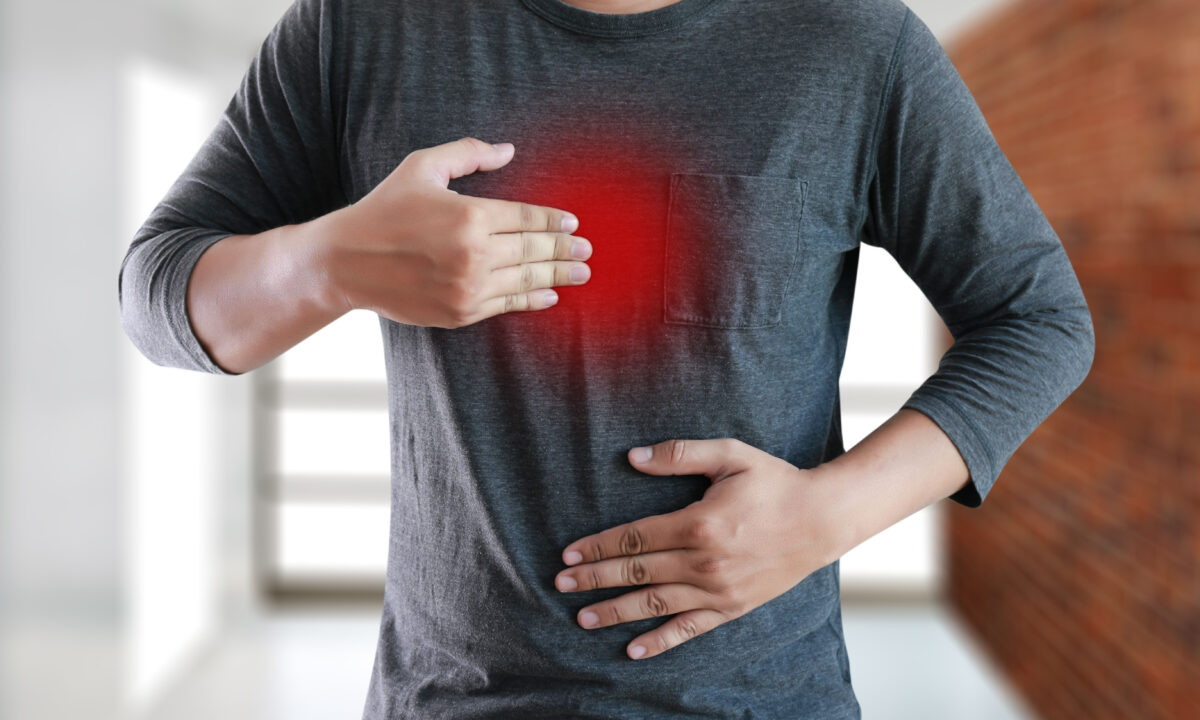
Chest pain is one of the most frequent causes of emergency department (ED) visits in high-income countries. It is responsible for more than 8 million visits to EDs in the United States each year, making it the second most frequent cause of emergency visits after stomach and abdominal pain.
Chest pain can stem from a heart problem, but other possible causes include a lung infection, muscle strain, a rib injury, or a panic attack. Some of these are serious conditions and need medical attention.
One main cause of noncardiac chest pain is gastroesophageal reflux disease, also known as GERD, which occurs when stomach acid or bile flows from the stomach back to the esophagus causing pain and discomfort in the chest and throat.
Symptoms of GERD
Chest pain or tightness may indicate heart problems, such as myocardial insufficiency, atherosclerosis, or arrhythmia. Rib inflammation and intercostal neuralgia may also cause chest pain. These symptoms should be considered when heart or chest pain arises.
Two common symptoms can indicate GERD—a painful burning sensation in the chest is one. In normal circumstances, the stomach produces acid for digestion. Acid is the prime mover to help us digest and break down food. If the acid refluxes or flows upwards to the esophagus, it irritates the mucous membrane of the esophagus causing burning pain in the area around the chest.
A second symptom is the feeling of regurgitation of gastric juice. People with GERD may feel fluid rushing up their esophagus, this can be worse at night or when lying down.
In addition, there are some atypical symptoms of GERD. For example, when reflux is chronic, pain in the throat or chronic pharyngitis may occur. Another symptom is bronchospasm. In some cases, gastric acid reflux will choke the bronchi, causing symptoms similar to asthma that stimulate the trachea and cause coughing.
People with GERD also tend to get hiccups caused by irritation of the gastric acid in the esophagus. When some people hiccup, food, and gastric acid may rise together, irritating, a hoarse voice, difficulty swallowing, and other symptoms.
Causes and Consequences of GERD
Certain foods are more likely to stimulate gastric acid production. For example, pasta and sugar can increase gastric acid reflux symptoms.
The symptoms may worsen for people who eat close to sleep time, and food is not yet digested. Overeating may also cause GERD.
If GERD becomes chronic it will gradually damage the mucous membrane of the esophagus, resulting in ulcers and bleeding, and may even develop into esophageal cancer.
Ways to Cope With GERD
What should you do if you suffer from gastric acid reflux?
- Pain caused by GERD may be alleviated by drinking warm water to flush out the acidic gastric juices left in the esophagus.
- When you sleep, try to lie on your left side. In this posture, gastric acid is less likely to flow upwards to cause reflux.
- You need to adjust your diet by not overeating and avoiding caffeine, chocolate, and foods high in sugar, fat, and spices.
- Quit smoking. Smoking will weaken the tension of the esophageal sphincter, causing gastric acid to reflux easily, and reduce the secretion of saliva, which will aggravate the condition.
- Maintain appropriate body weight. Obesity can increase the pressure on your stomach, making you prone to chronic diseases.
- When eating, chew slowly, and avoid lying down too soon—try not to eat within two or three hours before going to bed so that the stomach is in a relatively empty state.
- You can also reduce your chances of gastric acid reflux by elevating your pillow while you sleep.
- Wear loose clothing to reduce pressure on the stomach.
- Relax your body and mind, relieve mental stress, and reduce anxiety and worries about life through exercise, meditation, muscle relaxation exercises, and, if necessary, get some psychological counseling.
The human body is a whole integrated energy system with a directional energy cycle. The energy in the stomach should move downward so that food can be digested, absorbed, and metabolized. But if the energy in the stomach moves upward instead, it will cause symptoms of esophageal reflux, flatulence, and even gastric hernia.
According to traditional Chinese medicine (TCM), this kind of phenomenon is the “qi” (vital energy) in the stomach moving in the opposite (wrong) direction. And this is mainly caused by energetic imbalances and blockages.
In TCM, the energetic forces that cause the stomach qi to move upward are related to the Liver and the Gallbladder meridians. The liver oversees catharsis and regulates the direction of movement of qi and blood throughout the body. The ascension of stomach qi is often related to liver qi stagnation.
In TCM, qi (vital energy), blood, and body fluids are the essential substances for life activities, all originating from the internal organs and flowing constantly inside the body. Ensuring these essential substances are sufficient and circulating throughout the body is very important for health and well-being. Illnesses or other conditions are caused by the stagnation or lack of these substances.
Two Emotions Affect GERD
What affects liver qi and stomach qi? The answer lies in two emotions—anger and anxiety. Anger can hurt the liver and will cause stagnation of liver qi, which will then affect the stomach. The stomach itself is affected by feelings of anxiety and depression. The spleen and stomach are connected, so worry also affects the spleen.
In TCM, emotions and physical health are intimately connected. This integrated mind-body approach to health and healing operates in a dynamic loop where emotions impact the health of the body and vice versa.
The seven emotions in TCM are grief, melancholy, fear, fright (sudden and unexpected, unlike fear), anger, joy, and worry (anxiety). They are naturally occurring emotions without pathological consequences in many instances. However, abrupt, severe, or chronic occurrences may cause pathophysiological consequences. This excess leads to disruption of qi and blood, directly affecting the internal organs. For this reason, the seven emotions are major factors in the cause of endogenous illness.
According to TCM, excessive emotions result in specific effects on the internal organs: grief and melancholy injure the lungs; fear and fright injure the kidneys; anger injures the liver; joy injures the heart; worry/anxiety injures the spleen (stomach).
Tempering one’s emotions to relieve the liver qi and smooth the stomach qi, the problem of GERD can be resolved. At the same time, we can combine acupoint massaging to relieve gastric acid reflux. Acupoints such as the Hegu on the large intestine meridian, the Zusanli on the stomach meridian, and the Zhongwan, Neiguan, and Taichong are all worth the effort.
TCM has discovered that there is a “meridian” system in the human body that is responsible for transporting “qi” and “blood” throughout the body. The two substances of qi and blood circulate to maintain balance and stability in various tissues and organs. TCM can treat diseases by stimulating corresponding meridian acupoints through massage and acupuncture.
The above are the root causes and important prevention methods targeting GERD.