



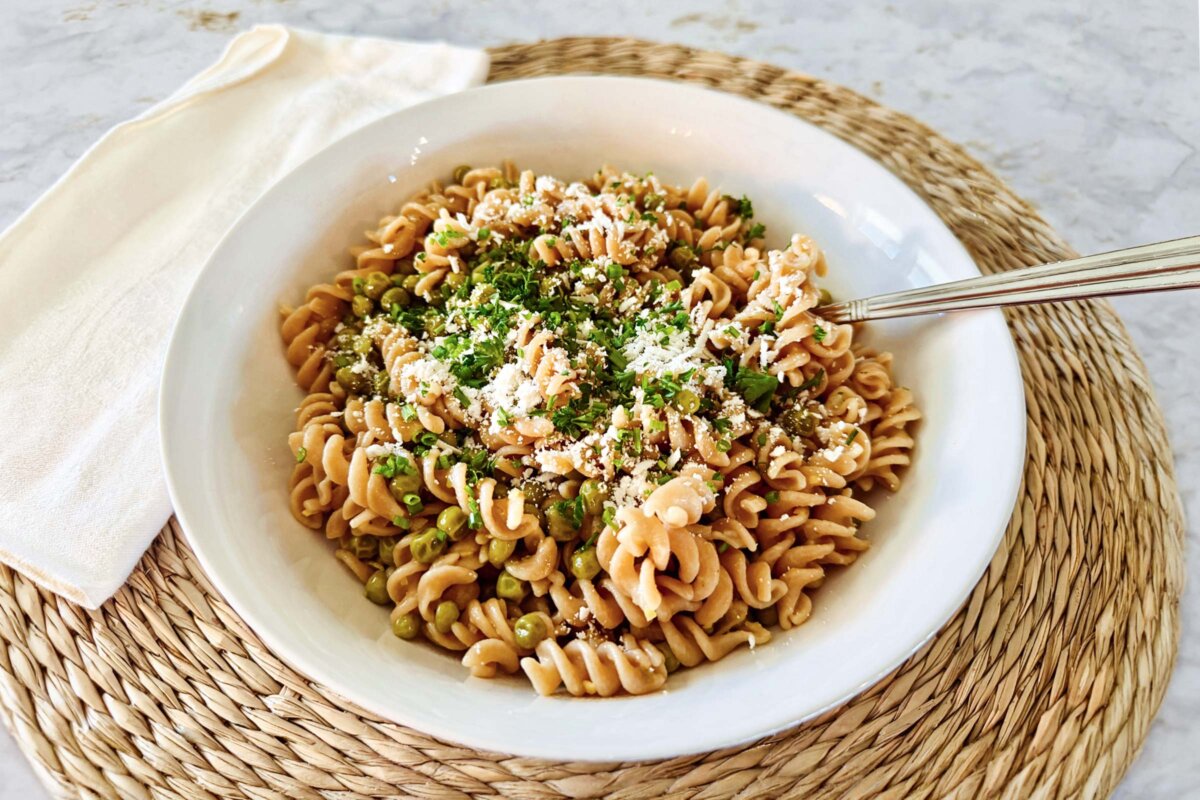
Most people don’t think of pasta night as a smart way to boost protein and fiber, especially when the pasta is gluten-free. Yet chickpea pasta can quietly turn a cozy bowl of pasta into something much closer to a balanced meal, without changing how you cook or sacrificing comfort.
Compared with regular pasta and many gluten-free options, chickpea pasta delivers more staying power in every serving. It’s what makes this otherwise simple, spring-inspired dish feel satisfying long after you’ve put your fork down, while still tasting like pasta you actually want to eat.
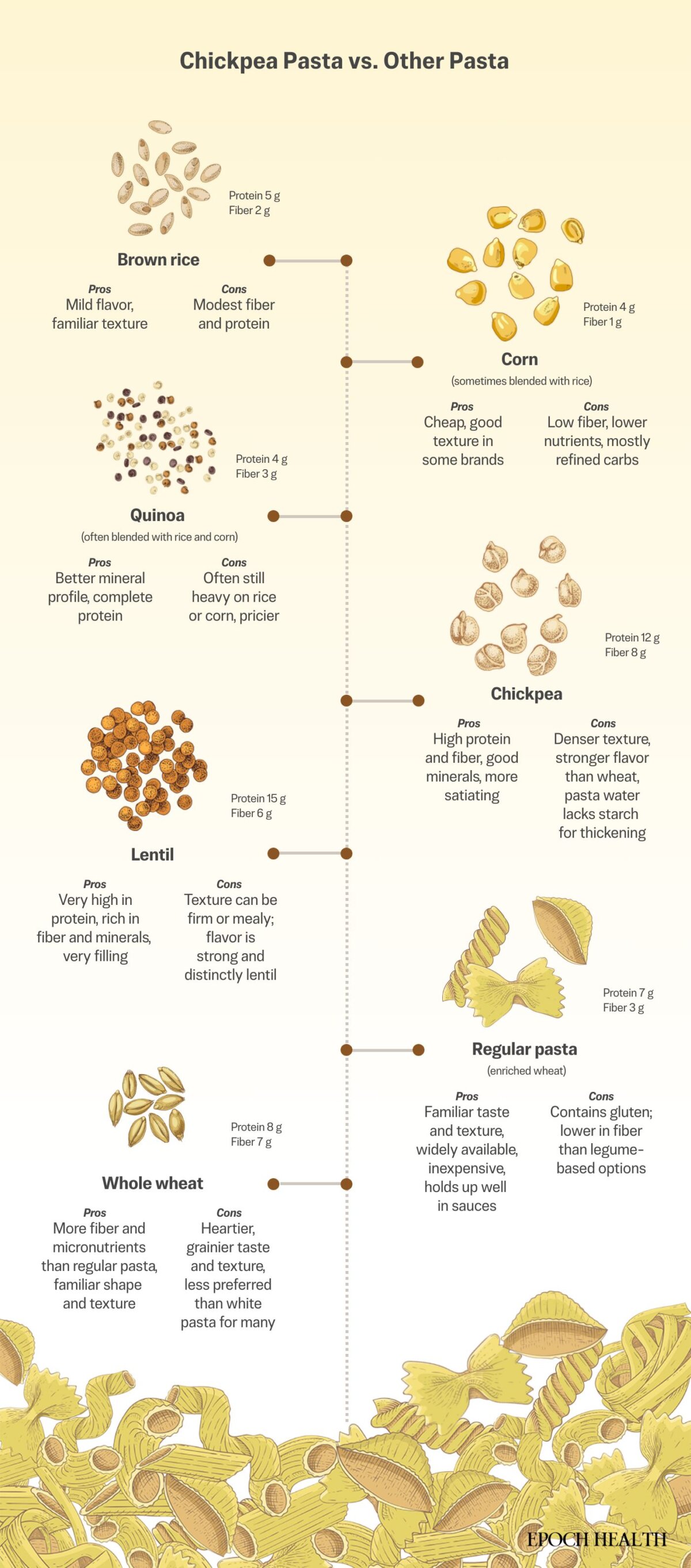
How Chickpea Pasta Compares
The following table shows how chickpea pasta stacks up against other common pasta options. Amounts are based on a sampling of products and will vary by brand.
Why Chickpea Pasta Is a Smarter Gluten-Free Choice
Gluten-free does not automatically mean healthy. Most gluten-free pastas are made from refined rice or corn flour, which lack the protein and fiber that help slow digestion and stabilize blood sugar. Chickpea pasta is different. As a legume-based pasta, it delivers substantial protein and prebiotic fiber that supports beneficial gut bacteria—nutritional advantages that rice- and corn-based pastas generally cannot match.
With chickpea or lentil pasta, prioritize organic whenever possible. Conventionally grown legumes are frequently sprayed with glyphosate before harvest. Research shows that glyphosate disrupts gut microbiota and increases intestinal permeability, which directly undermines the gut-health benefits chickpea pasta provides.
For an added gut-health bonus, cook the pasta ahead and refrigerate it overnight. Cooling converts some of the digestible starch into resistant starch, which is not absorbed in the small intestine. Instead, it travels to the large intestine, where it becomes food for beneficial bacteria and has less effect on blood sugar. To serve warm, briefly dip the chilled pasta in boiling water before tossing it with the sauce. Some resistant starch will be lost upon reheating, but a meaningful amount remains.
Chickpea Pasta With Spring Peas and Lemon Caper Sauce
This bright, spring-inspired pasta combines chickpea pasta, sweet peas, and a lemon caper sauce for a meal rich in protein and fiber and bursting with fresh flavor.
Prep Time: 10 minutes
Cook Time: 15 to 20 minutes
Total Time: 25 to 30 minutes
Serves 2 to 3
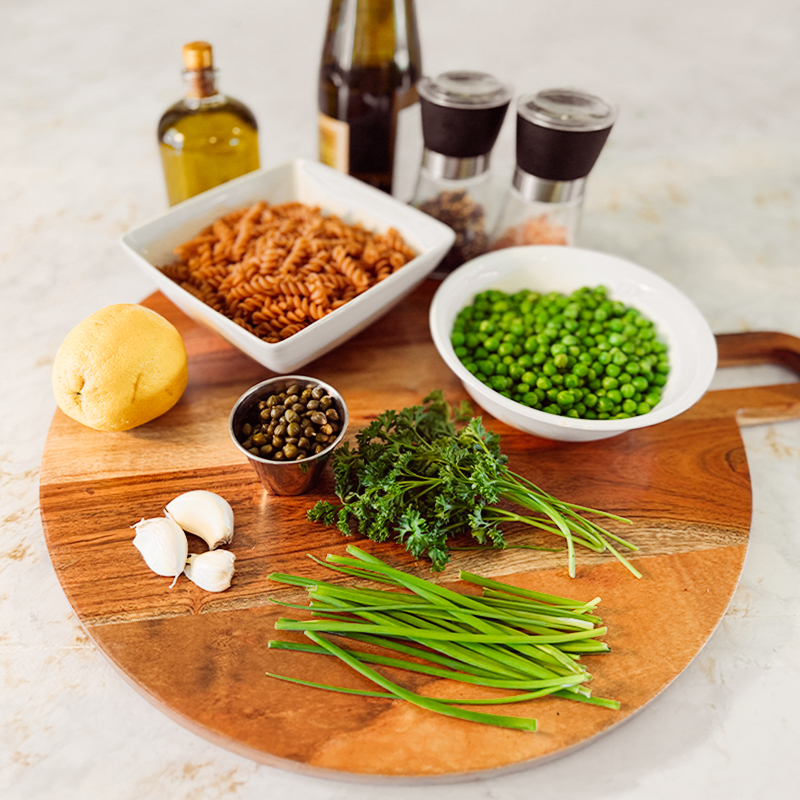
Ingredients
- Sea salt to taste, divided
- 8 ounces organic chickpea pasta (fusilli, penne, or farfalle)
- 2 tablespoons extra-virgin olive oil, plus more for drizzling
- 3 cloves garlic, minced
- 3 tablespoons capers, drained
- 1/3 cup dry white wine (or low-sodium chicken or vegetable broth)
- 1 lemon, zested (about 1 teaspoon lightly packed zest)
- 3 tablespoons fresh lemon juice
- 1 1/2 cups fresh peas or frozen peas, thawed
- Mizithra or Parmesan cheese, shredded
- 2 tablespoons chopped fresh Italian parsley
- 2 tablespoons chopped fresh chives
- Ground black pepper, to taste
Instructions
- Bring a large pot of well‑salted water to a boil. Add the chickpea pasta and cook according to package directions until al dente. Drain and set aside.
- While the pasta cooks, heat the olive oil in a large skillet over medium-high heat until hot but not smoking. Add the garlic and cook, stirring frequently, for 30 to 60 seconds, until fragrant and barely golden at the edges.
- Stir in the capers and cook for another 30 seconds. Pour in the white wine (or broth), scraping up any browned bits from the pan. Simmer about 3 minutes until reduced by about half.
- Add the lemon zest, lemon juice, and peas. Cook until the peas are crisp-tender, about 3 to 4 minutes for fresh peas, or 1 to 2 minutes for thawed frozen peas. Watch so you don’t overcook and lose the vibrant green color.
- Add the drained pasta to the skillet and toss with the lemon caper sauce and peas until evenly coated.
- Divide the pasta among warm bowls and drizzle with olive oil. Garnish with cheese, parsley, chives, and black pepper to taste before serving.
Ingredient Tip: Dry white wine such as chardonnay or sauvignon blanc, simmered for a few minutes, adds depth to the sauce but does not remove all of the alcohol. If you prefer to avoid alcohol, use 1/3 cup low-sodium chicken or vegetable broth instead, plus an extra squeeze of lemon juice for brightness.
Frequently Asked Questions
Here are a few common questions to help you get the best texture, flavor, and digestive benefits from this chickpea pasta dish.
Q: Does chickpea pasta taste like chickpeas?
A: Chickpea pasta has a mild, slightly nutty flavor that most people find similar enough to regular pasta once it’s coated in sauce. In lemon caper pasta with peas, the bright sauce and aromatics take center stage, while the pasta adds texture and substance without a strong bean flavor.
Q: Will chickpea pasta upset my digestion?
A: Because chickpea pasta is higher in fiber and contains prebiotic carbohydrates, it can feel a little heavy if you’re not used to legumes. If you’re sensitive, start with a smaller portion, chew well, and drink plenty of fluids. Taking a digestive enzyme containing alpha-galactosidase just before eating can also help. Most people tolerate it better over time as their gut adapts.
Q: Can I freeze leftovers of this pasta?
A: You can, but gluten-free pasta tends to turn soft and mushy after thawing and reheating. For the best texture, enjoy it fresh or within a few days after refrigerating.