



Later marriage and postponed parenthood are often observed in modern society, with pregnancies at 37 and above classified as advanced maternal age.
Speaking on key prenatal care priorities for older expectant mothers, Dr. Tsung-Han Chou, an attending physician at Taiwan’s Mingtang Traditional Chinese Medicine (TCM) Clinic, told The Epoch Times that women of advanced age typically have less stamina, muscle power, and recuperative ability than those in their 20s or early 30s. As a result, prenatal exercise goes beyond preserving body shape—it helps minimize discomfort, facilitate an easier vaginal delivery, and promote a faster postpartum recovery.
Because physical changes differ greatly between trimesters, exercise plans must be tailored and adjusted stage by stage, he said.
1st Trimester: Stability as the Primary Principle
The first trimester covers the first three months of pregnancy and is the critical period for embryo implantation and development—it is also the most unstable stage.
For older pregnant women, the principle during the first trimester is “move as little as possible,” Chou said, with a focus on maintaining a stable pregnancy. The reasons include:
- The first trimester is a vital time for embryo implantation and early development, when the fetus’s condition remains unstable.
- Older pregnant women have a higher likelihood of fetal instability or threatened miscarriage, so extra risks should be avoided.
- Some older women may have uterine fibroids without being aware of them, and these cannot be treated during the first trimester. If abdominal pressure becomes too high, it may affect uterine stability and increase the risk of miscarriage.
Therefore, for the first trimester, strenuous exercise and movements that increase abdominal pressure should be avoided, with rest and quiet recuperation as the priority.
2nd Trimester: Stretching and Relaxation
The second trimester refers to the middle three months of pregnancy. As the abdomen gradually enlarges, many older pregnant women begin to experience lower back soreness, knee weakness, and pubic pain. The main cause is increased abdominal pressure, which compresses the lumbar spine and pelvic structures, Chou noted.
Chou suggests the following methods for relief:
Stretching and Prenatal Yoga
Prenatal yoga, which emphasizes rhythmic breathing and controlled exhalation, helps relax the fascia and smooth muscles, reducing tension and discomfort. However, hot yoga or overly strenuous routines should be avoided.
Acupuncture for Relaxation
Acupuncture on the head or ears can help relax the fascia in the back and improve lower back discomfort.
Heat Therapy for Relief
Applying heat is a relatively safe method for pain relief. However, the use of medicated pain-relief ointments or patches is not recommended, as their ingredients may not be entirely confirmed as safe for fetal development.
3rd Trimester: Strengthen Core and Pelvic Floor Muscles
After entering the third trimester, if a natural vaginal delivery is expected, core and pelvic floor muscle strength become especially important.
Many older expectant mothers tend to have weaker pelvic floor muscles, Chou said. If pushing strength is insufficient during labor, the likelihood of requiring a cesarean section may increase. Therefore, gentle core weight-bearing activities, such as walking on an incline or climbing stairs, can be incorporated to help strengthen the pelvic floor muscles.
Exercise during the third trimester not only helps with natural delivery and post-cesarean recovery but also promotes lymphatic circulation and reduces the risk of obesity, he said.
Why Postpartum Recovery Needs to Be Planned Early
Many new moms notice their pelvis widening and their hips expanding after giving birth, often resulting in a classic pear-shaped silhouette, Chou said. This is related to changes in the pelvic structure and poorer circulation in the lower limbs.
Moreover, some older women conceive through in vitro fertilization, a process that often involves higher doses of estrogen and ovulation injections, which can lead to fluid retention—further complicating postpartum weight loss. Therefore, older mothers need to plan their postpartum recovery ahead of time if they want to regain their pre-pregnancy shape.
Postpartum rest does not mean staying in bed all day, Chou noted. Getting up and engaging in moderate activity promotes better recovery.
How to Prevent Edema and Stretch Marks
Edema (swelling) during pregnancy is quite common, and the key to managing it is to reduce fluid retention.
Avoid High-Sodium, High-Salt Foods: A high-sodium diet can worsen edema and may also increase the risk of pregnancy-induced hypertension.
Avoid Microwaved and Processed Foods: These foods are often high in sodium, and long-term consumption is not favorable for circulation.
Another common concern for pregnant women is stretch marks, which result from rapid skin stretching without sufficient elasticity. Starting from the time the abdomen begins to protrude, apply moisturizing oils or creams and incorporate gentle stretching exercises to maintain the elasticity of the fascia and skin.
2 Exercises to Improve Lower Limb Edema
In addition to Chou’s recommendations, here are two simple foot exercises to help promote venous return in the lower limbs and reduce fluid retention.
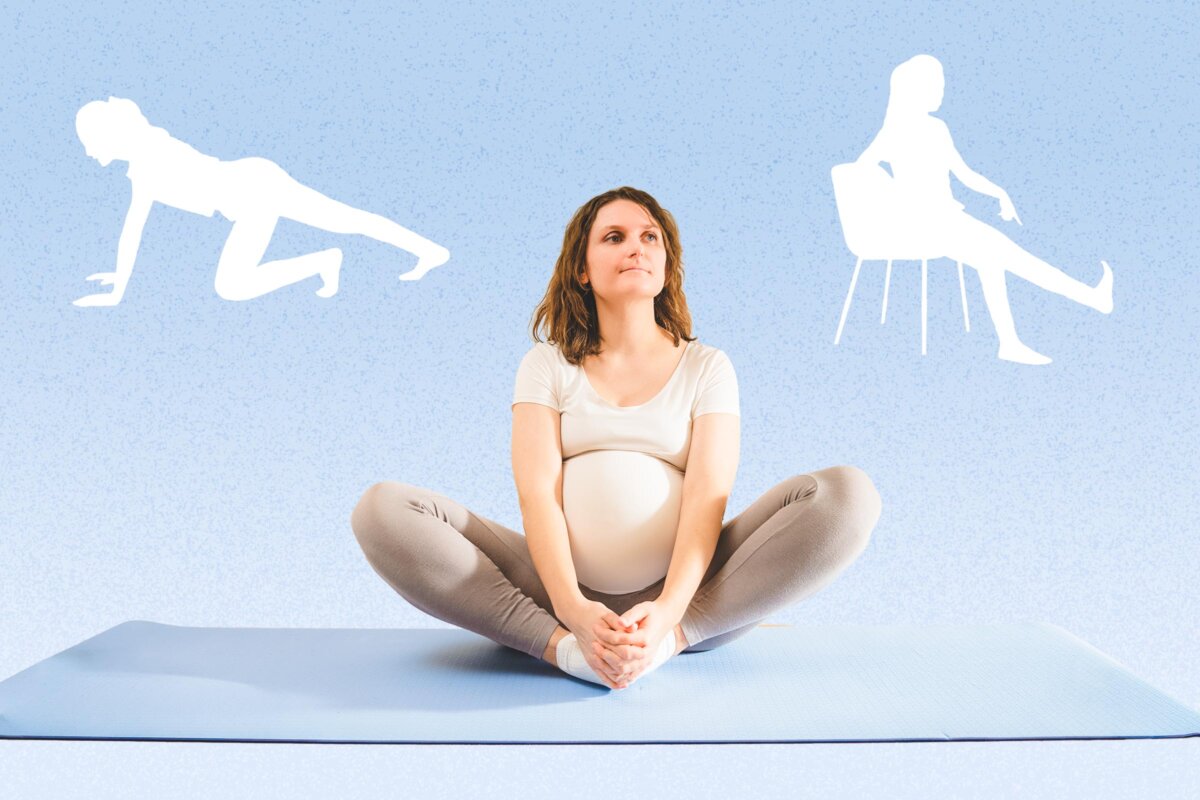
Seated Point-and-Flex
Sit with one leg lifted and extended straight out. Alternate between flexing your foot downward and upward.
This exercise help stretch the leg fascia, promotes blood circulation in the calves, and reduces edema.
Kneeling Foot Push
Start in a four-point kneeling position with your back flat. Extend one leg backward, pressing the heel toward the ground, and alternate pushing it back and pulling it forward.
This exercise helps stretch the leg fascia, improve lower-limb circulation, and reduce fluid retention.
Remember that an advanced maternal age pregnancy does not mean exercise is off-limits; it simply requires adjusting the type and intensity according to the stage of pregnancy. Only engage in safe activities after a physician’s evaluation. Gentle exercise helps relieve discomfort, supports labor, and promotes better postpartum recovery.