



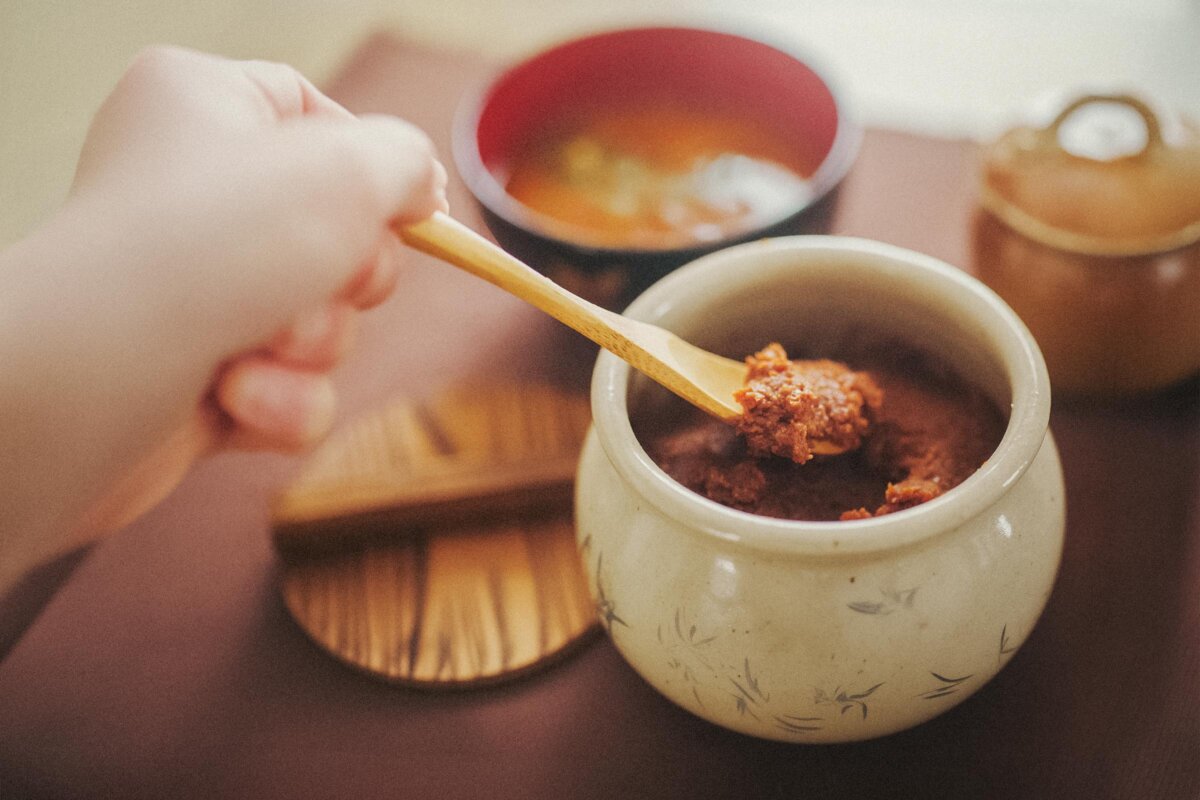
Soothing ginger miso soup comes together with rich bone broth, fresh ginger, and soft egg “noodles” (thin egg strands) to create a warm, easy-to-digest meal. Each ingredient is chosen to help calm inflammation while gently supporting the gut’s protective barrier.
Miso soup has deep roots in Japanese cooking, where it has been a daily staple for centuries, and for good reason—although for years, I avoided it. Soy and I do not get along, and most miso is made from soybeans. Then I discovered chickpea miso with the same rich, fermented flavor—but no soy. Suddenly, miso soup was back on the table, and I started building a version designed specifically to calm inflammation and support a leaky gut.
If you have been dealing with bloating, food sensitivities, brain fog, joint pain, or autoimmune flares, your gut lining may not be as strong as it should be.
Stress, medications, imbalances in gut bacteria (dysbiosis), infections, excess alcohol, and a highly processed diet can all damage the gut’s protective barrier or make it more permeable. In medical research, this is known as increased intestinal permeability or gut barrier dysfunction.
When the gut lining becomes compromised, particles that are normally kept within the digestive tract—such as partially digested food and bacteria—can pass into the bloodstream, triggering an immune response and promoting inflammation. Over time, that inflammation can further weaken the gut lining, creating a vicious cycle that is difficult to break.
Although a bowl of ginger miso soup won’t fix everything overnight, it provides nutrients that help support the gut lining and calm inflammation.
Why This Ginger Miso Soup Works
Every ingredient in this recipe was specifically chosen to support gut healing.
- Chicken Bone Broth: Provides minerals and amino acids, including glutamine, that the intestinal lining uses to maintain and repair the gut barrier. A good bone broth simmers long enough to extract these components as well as collagen from the bones, which turns into gelatin as it cools and gives the broth its slight gel.
- Collagen Peptides (Optional): Dissolve easily into the broth without changing the flavor and add an extra dose of collagen and amino acids.
- Miso Paste: A fermented food that contains beneficial microbes to help support gut balance and strengthen the intestinal barrier.
- Fresh Ginger: Contains natural compounds that help reduce inflammation, support digestion, and soothe the gut lining.
- Egg “Noodles”: Made by drizzling beaten eggs into hot soup to form soft, silky ribbons without gluten, which can increase intestinal permeability and inflammation. Eggs provide choline, a nutrient that helps build and maintain healthy gut cell structure and function.
- Carrots: Rich in antioxidants and beta‑carotene, which help regulate immune responses and lower intestinal inflammation.
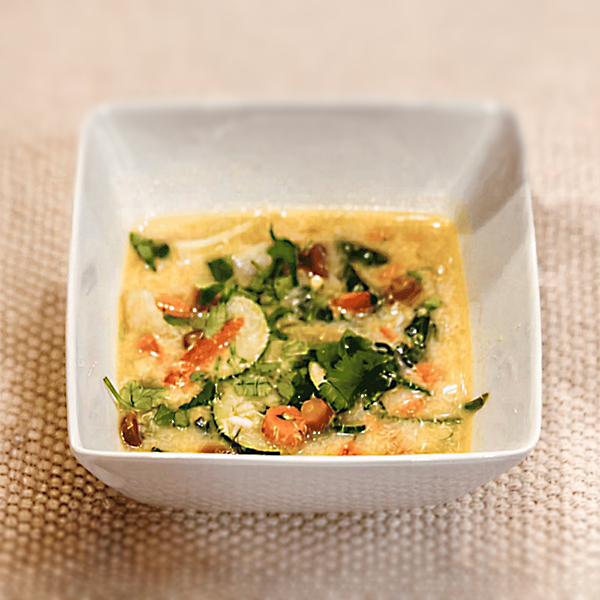
Ginger Miso Soup With Vegetables and Egg ‘︁Noodles’︁
Fragrant ginger miso soup layers a rich bone broth, tender vegetables, and silky egg noodles into a comforting bowl that tastes as healing as it feels.
-

Prep & Cooking Time: 30 minutes
Serves: 4
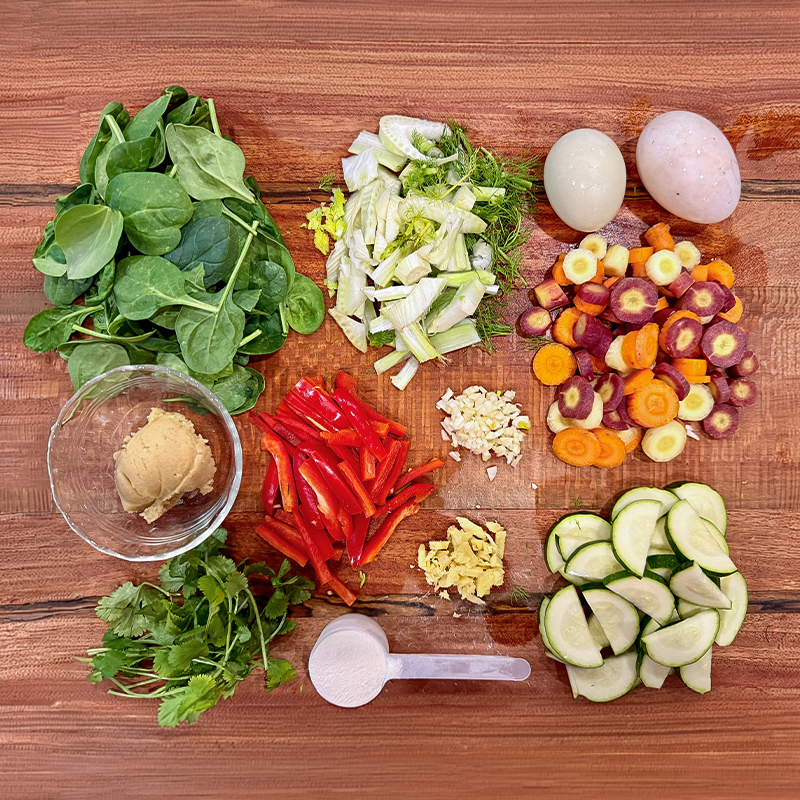
Ingredients
- 1 1/2 tablespoons avocado oil or olive oil
- 3 small rainbow carrots, sliced 1/4-inch thick
- 1 cup roughly chopped fennel (bulb, stalks, and fronds)
- 2 red mini sweet peppers, cut into strips
- 1 tablespoon minced fresh ginger
- 1 tablespoon minced garlic
- 1 quart chicken bone broth
- 1 small zucchini, cut into half-moons
- 2 cups baby spinach
- 2 tablespoons collagen peptides (optional)
- 2 tablespoons miso paste (chickpea, rice, or soy)
- 2 large eggs, beaten
- 1/3 cup chopped cilantro or green onion
Instructions
- Heat the oil in a large saucepan over medium heat until hot but not smoking. Add the carrots, fennel, peppers, ginger, and garlic, and sauté for two to three minutes until softened and lightly caramelized.
- Pour in the chicken bone broth. Bring to a boil, then reduce the heat and simmer for 10 minutes, until the vegetables are tender but not completely soft.
- Add the zucchini and cook for two to three minutes, until tender-crisp.
- Ladle about one cup of hot broth into a small bowl and set aside. Stir the spinach and collagen peptides (if using) into the pot and cook for one to two minutes, until the spinach is fully wilted. Remove the saucepan from the heat.
- Whisk the miso into the reserved broth until completely dissolved, then stir it back into the soup. This helps preserve the beneficial microbes in the miso.
- While gently stirring the soup, slowly drizzle in the beaten eggs in a thin stream to form noodle-like strands.
- Serve immediately, garnished with cilantro or green onion.
Note: Using fennel stalks and fronds adds plenty of flavor to the soup if you would like to reserve the bulb for another dish.
Frequently Asked Questions
Here are a few common questions to help you adapt the recipe and get the best results.
Q: Can I use store-bought bone broth?
A: Yes. Just read the label to avoid added sugar or fillers. If a broth gels slightly when refrigerated, that is a good sign that it contains real collagen.
Q: What if I cannot tolerate soy?
A: Swap regular miso for chickpea miso or rice miso. Those varieties are still fermented to deliver live microbes that may support gut microbes and barrier health, and will provide umami depth without the soy.
Q: What if I need the soup to be egg-free?
A: For those avoiding eggs, soft rice noodles can be used as a substitute.
Q: Can I add chicken to make it more filling?
A: Absolutely. Bone-in thighs or drumsticks, simmered directly in the broth before adding the vegetables, will add even more collagen to the soup. Alternatively, you could add pre-cooked chicken, such as canned or lightly seasoned rotisserie chicken.
Q: Does cooking miso kill the probiotics?
A: It can. That is why it is important to add the miso after the soup is removed from the heat. Whisking it into a small amount of warm broth first helps it dissolve without exposing it to boiling temperatures.