



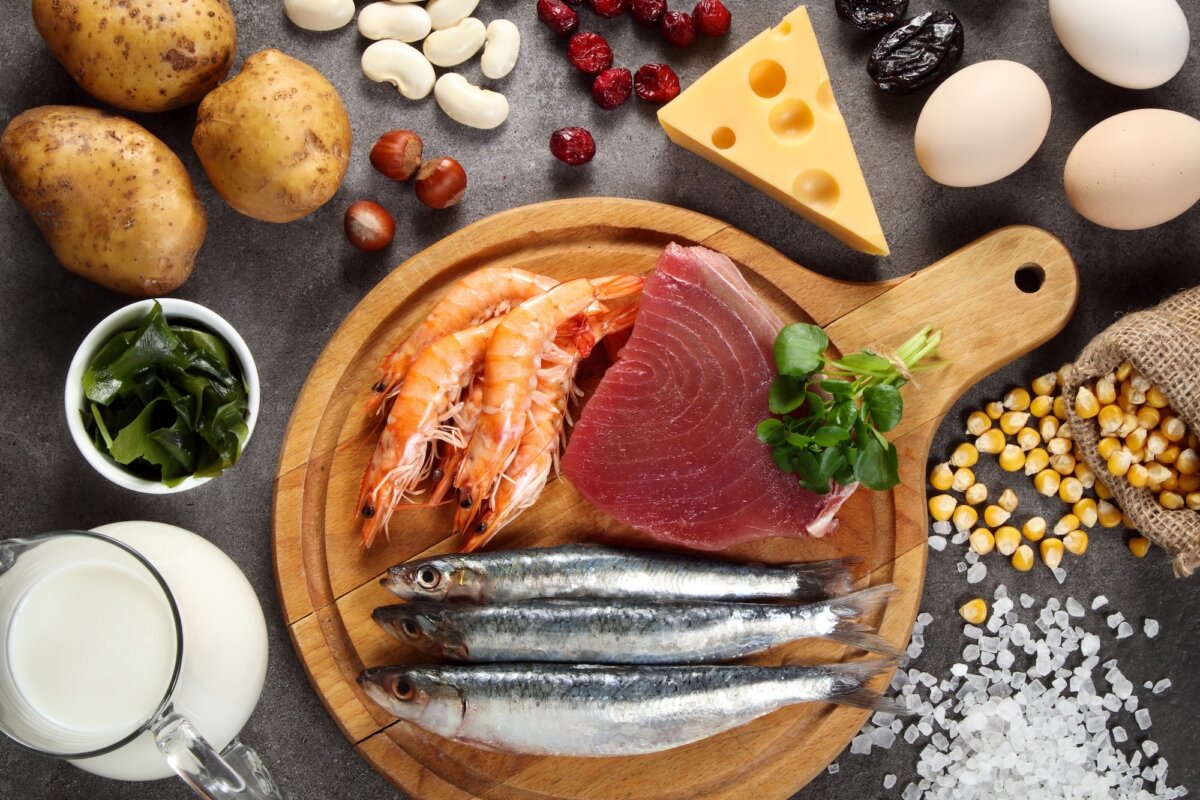
Iodine is a trace mineral that plays a crucial role in several physiological functions within the body. Because our bodies do not produce iodine naturally, we must get it through food or supplements. Iodine deficiency can have serious health consequences, so it is important to get enough.
How Much Iodine Should You Have in a Day?
The National Institutes of Health (NIH) recommendeds a daily dose of 150 micrograms (mcg) for adults. This recommendation is the same for both men and non-pregnant women. For pregnant or breastfeeding women, that recommendation increases to between 220 and 290 mcg per day. For perspective, one-quarter teaspoon of iodized table salt contains approximately 78 mcg of iodine.
What Does Iodine Do in Your Body?
Healthy levels of iodine are essential for the proper function of several organs within the body, including the thyroid, brain, liver, and kidneys. Within the brain, iodine plays a key role in developing cognitive function in fetuses and young children, including gross motor function, memory, and comprehension.
Approximately 70 to 80 percent of the body’s iodine is stored inside the thyroid gland. Within the thyroid, iodine is needed to make thyroid hormones thyroxine (T4) and triiodothyronine (T3). Thyroid hormones are responsible for metabolism regulation, protein synthesis, and enzyme production.
Iodine plays a crucial role in fetal development. During early pregnancy, fetuses depend entirely on the mother’s supply of iodine, because their own thyroid gland is insufficient. Iodine is a key component in the fetus’s neurological and skeletal development, as well as its organ and tissue development and functionality. In fact, researchers have found that iodine deficiency is one of the most prominent causes of intellectual disabilities in infants and children. Even mild iodine deficiency in a mother can irreparably harm the growth and development of the fetus.
Examples of Iodine-Rich Foods
Iodine in food varies by the conditions in which the food is grown, raised or prepared, so getting accurate iodine information is difficult. For example, foods made with iodine-enriched salt are going to have more iodine that the same food made without iodized salt. Foods grown in iodine-rich soil are going to have more iodine than the same foods grown in iodine-deficient soil. The following are some foods that, according to the NIH, are higher in iodine than most other foods:
-
Dried kelp (~2,984 mcg per 1 whole sheet, dried)
-
White or whole wheat bread made with iodate dough conditioner (~296 mcg per 2-slice serving)
-
Cod (~146 mcg per 3-ounce serving)
-
Seaweed (nori) (~116 mcg per 5 gram serving)
-
Oysters, cooked (~93 mcg per 3 ounce serving)
-
Greek yogurt (non-fat, plain) (~87 mcg per 3/4 cup serving)
-
Milk (non-fat) (~84 mcg per 1 cup serving)
-
Iodized table salt (~78 mcg per 1/4 teaspoon serving)
-
Baked potato (~60 mcg per 1 medium-sized potato)
-
Fish sticks (~57 mcg per 3 ounces)
-
Hard-boiled eggs (~31 mcg per large egg)
-
Beef liver, cooked (~14 mcg per 3 ounce serving)
-
Shrimp, cooked (~13 mcg per 3 ounce serving)
-
Tuna, canned in water, drained (~8 mcg per 3 ounce serving)
“Seafood, especially saltwater fish, and seaweed are the richest sources of iodine in the diet. Common saltwater fish that are readily available in the grocery store include salmon, tuna, cod, flounder, and swordfish,” Laura Ali, a culinary nutritionist based in Pittsburgh, told The Epoch Times in an email.
There are also iodine supplements that can be taken if someone is deficient, but caution is advised because too much iodine can have adverse health affects. Some multivitamin supplements contain iodine, usually in the form of potassium iodide or sodium iodide. It’s best to check with your doctor before taking iodine supplements.
Consequences of Iodine Deficiency
Iodine deficiency occurs when the body does not have enough iodine to meet its needs. This usually occurs when a person’s daily iodine intake falls below 10 to 20 mcg, which in turn, causes the body to produce inadequate levels of thyroid hormones.
While now considered uncommon in North America, iodine deficiency remains a serious public health concern in approximately 25 countries around the world. People who do not use iodized salt, who eat a vegan diet, pregnant women, and people who live in regions with iodine-poor soil are considered some of the most at-risk groups for developing iodine deficiency.
Ali warned that not all salt sold in stores contains iodine and that “people who only use kosher salt, Himalayan salt, and some sea salts may be at risk for iodine deficiency.”
Iodine deficiency has been linked to several negative health impacts, including an increased risk for cancer. It can also cause various thyroid conditions, including goiter (enlargement of the thyroid) and hypothyroidism (underactive thyroid gland).
The risks of inadequate iodine levels for pregnant women and their unborn children are particularly grave. Iodine deficiency can cause intellectual disabilities, birth defects, deafness, and even stillbirth or fetal death. It may also increase the risk of perinatal death for the mother.
Causes and Symptoms of Iodine Deficiency
Iodine deficiency is most often caused by inadequate iodine intake via food or supplements. However, Sarah Herrington, a nutritionist based in Phoenix, Arizona, told The Epoch Times that there are other potential causes, as well.
“Fluoride can inhibit iodine transport in the body, so excess fluoride consumption can also potentially contribute to an inability to effectively absorb iodine. A deficiency in vitamin A may also reduce iodine uptake in the thyroid,” Herrington said.
Symptoms of iodine deficiency, according to Cleveland Clinic, often align with those of hypothyroidism and may include:
-
Goiter (often the first sign of iodine deficiency)
-
Difficulty swallowing
-
Choking
-
Trouble breathing
-
Confusion
-
Fatigue
-
Puffy skin
-
Hoarseness
-
Infertility
-
Coarse, thinning hair
-
Scaly, dry skin
Is Too Much Iodine Bad for You?
Iodine is a micronutrient, meaning your body needs it, but only in relatively small amounts. Generally, the highest tolerable intake of iodine for a healthy adult is approximately 1,100 mcg per day. Ingesting more than that can lead to iodine toxicity, which can be just as harmful as iodine deficiency and also have many of the same symptoms. Goiter, hyperthyroidism, and hypothyroidism are all be downstream conditions of high iodine. Despite these undesirable consequences, iodine toxicity is rarely fatal.