



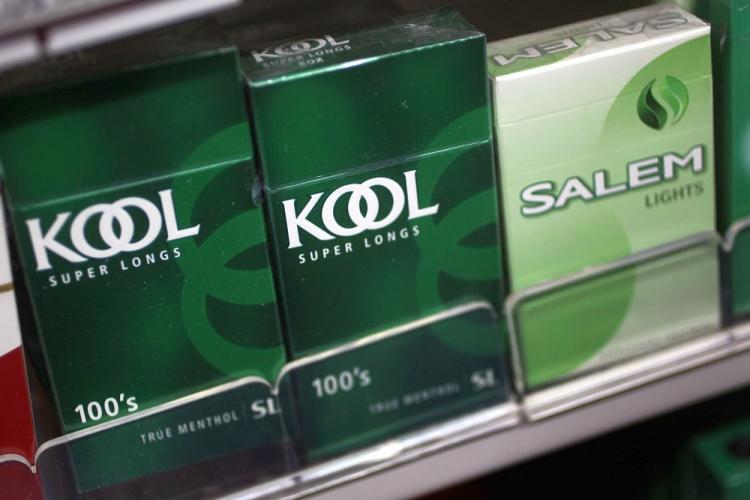
The White House has again delayed passing a ban on menthol-flavored cigarettes. Considering all other flavored tobacco was pulled from the market in 2009, why hasn’t this particular variety joined the rest? That question continues to go unanswered, leaving health groups and advocates to wonder if authorities will follow through with their proposed agenda.
FDA Recommended Ban Over a Decade Ago
Just when it looked like the menthol cigarettes would be pulled from shelves this month, the U.S. Food and Drug Administration (FDA) announced a delay in the ban’s implementation until at least March 2024.
It’s important to remember that it was Congress that banned all other flavors of cigarettes except menthol, Erika Sward, national assistant vice president of advocacy at the American Lung Association, told The Epoch Times.
“And they did that in the initial law that gave the Food and Drug Administration authority over tobacco products,” she added. “So [it was] Congress [that] did not act on menthol cigarettes.”
In 2011, the FDA’s Scientific Advisory Committee completed an analysis and recommended removing all menthol cigarettes from the market. They should have ended the sale of menthol cigarettes then, Ms. Sward said.
The three administrations that have been in office since the recommendation was released have not acted. During the Trump administration, then-FDA Commissioner Scott Gottlieb tried to move a ban forward but was rebuffed by the White House, Ms. Sward said.
Following a recent lawsuit from some health groups, the White House announced it would move forward on a rule. However, it announced a further delay in early December.
Unique Risks of Menthol Cigarettes
While menthol and traditional cigarettes share many similar health hazards, menthol poses unique risks that help build the case for its removal from store shelves.
1. May Make It Harder to Quit
Menthol cigarettes differ from unflavored cigarettes due to the addition of menthol, a cooling agent that provides inhaled smoke a cool, soothing sensation. Research suggests that menthol flavoring alters smoking behavior in ways that could worsen its overall impact on health.
Menthol enhances the effects of nicotine on the brain to make tobacco products significantly more addictive, according to the U.S. Centers for Disease Control and Prevention (CDC). This can promote more intense smoking and reduced success in quitting.
2. May Make You Smoke More Often
Both menthol and regular cigarettes contain toxic chemicals and carcinogens linked to diseases like lung cancer, heart disease, chronic obstructive pulmonary disease (COPD), and stroke. Both also deliver nicotine, the addictive chemical in tobacco.
However, menthol may uniquely impact the respiratory system. Studies suggest it enables deeper inhalation of cigarette smoke and increases smoking frequency by numbing the throat and overriding the body’s defense mechanisms.
3. People of Color at Higher Risk
Another factor that sets menthol cigarettes apart is their disproportionately high usage among certain groups, particularly communities of color.
The tobacco industry has historically targeted these communities through cultural marketing strategies, resulting in higher rates of menthol cigarette consumption. This exacerbates existing health disparities, as these groups already suffer higher tobacco-related disease burdens, including higher mortality rates.
4. Young Smokers Are Less Deterred by Cigarette Harshness
Menthol is on the market because it helps “make the poison go down easier,” Ms. Sward said. “So, for example, if you have a kid who is picking up a cigarette and experimenting, as kids do, it will mask a lot of that harshness,” she added.
Children who experiment with menthol are much more likely to go on to become addicted to smoking. Currently, 40 percent of all middle and high school students who smoke smoke menthol cigarettes.
White House Faces Minefield of Opposition
The Biden administration faces significant lobbying and political and public opinion obstacles to moving forward on a menthol ban.
These challenges could ultimately end up in court, leading to lengthy legal battles that further delay implementation or could potentially overturn the ban altogether.
Another issue is the potential for a black market peddling illegal menthol tobacco, much like prohibition and the war on drugs did.
Besides the health risks potentially associated with buying uncontrolled cigarettes, law enforcement could be ill-equipped to tackle the issue.
Massachusetts already faces problems due to a menthol ban and a large tax increase on all tobacco products in 2020, ahead of any FDA action. A year after the ban went into effect, tobacco usage in the state had not changed. Sales simply shifted across the border to low-tax states like New Hampshire, which has no ban.
The American Lung Association wants the White House to act by the end of 2023 since there is no reason for any delay “beyond giving into the tobacco companies,” according to Ms. Sward. Ultimately, she added, this is the only way President Biden is going to achieve his Cancer Moonshot, an initiative to speed progress in cancer research and fight the disease.
“That is part of his legacy, and the question is, will it be a high spot that he has gone to save black lives, or will this be another failure adding him to the list of Obama and Trump when it comes to non-acting on ending the sale of menthol cigarettes?” Ms. Sward remarked.