



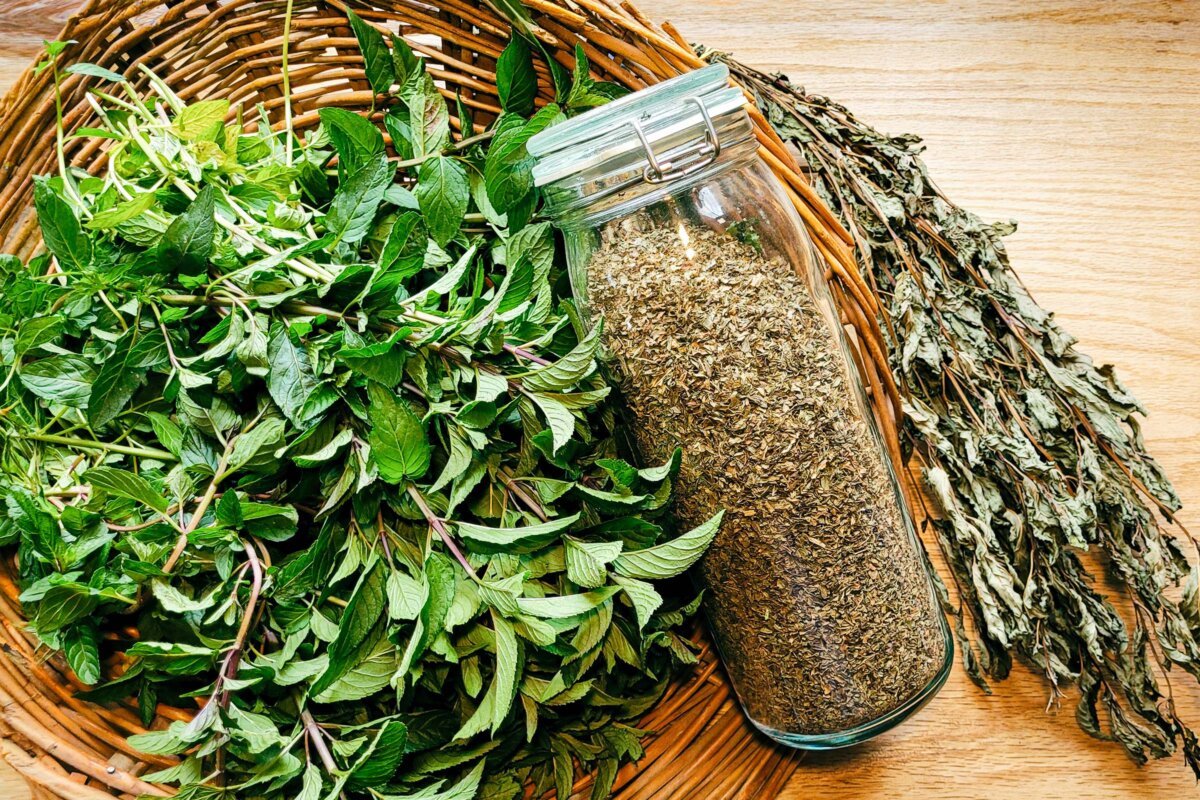
Peppermint is one of the strongest perennials in my garden. Although I am grateful that it is a resident herb, I get annoyed each year by its tendency to spread far and wide. It roams from where I plant it into my vegetable beds, the lawn, and even up the fences.
The plant’s medicinal compounds are just as strong as its wanderlust. Its essential oil is among the most potent, and even steeping the tea for longer than recommended can make its flavor too intense for many.
Nevertheless, peppermint is a popular scent—and for good reason. It enhances focus, maintains mental alertness, and promotes clarity. Using fresh or dried leaves is an easy way to bring the herb’s benefits directly into your cup of tea.
Feeling Burnt Out? Peppermint Can Help
Everyone experiences burnout at times. Feelings of mental fatigue, irritability, and difficulty concentrating are common and brought on by prolonged stress or a lack of rest.
When we enter this state of mind, it becomes difficult to make clear decisions, and daily tasks can start to feel overwhelming. Some people turn to prescription medications or sleep aids to help manage symptoms and restore focus.
However, if you prefer not to travel the pharmaceutical route, you might try peppermint as a natural remedy, which can be effective for managing mental fatigue.
Traditional Chinese medicine sees peppermint as an herb that clears the mind and enhances vision. It removes mental fog through its cooling qualities and disperses blocked energy.
In a small 2024 randomized trial, researchers tested the effectiveness of peppermint tea. After participants drank 200 milliliters of brewed peppermint tea, the scientists assessed their cognitive function. Results showed that the peppermint group improved in memory and attention span compared with the placebo group.
How to Grow Peppermint
Peppermint is one of the easiest herbs to grow, care for, harvest, and use.
In spring, you can find potted peppermint plants at garden centers nationwide. If you intend to plant it in your garden, heed my advice and choose its location carefully, as mint can spread aggressively if not contained. It also thrives in large pots.
Peppermint is a perennial herb that flourishes in U.S. Department of Agriculture zones five to nine. It’s a “cut-and-come-again” plant, meaning that you can continuously harvest it because of its vigorous growth.
How to Harvest and Dry Peppermint
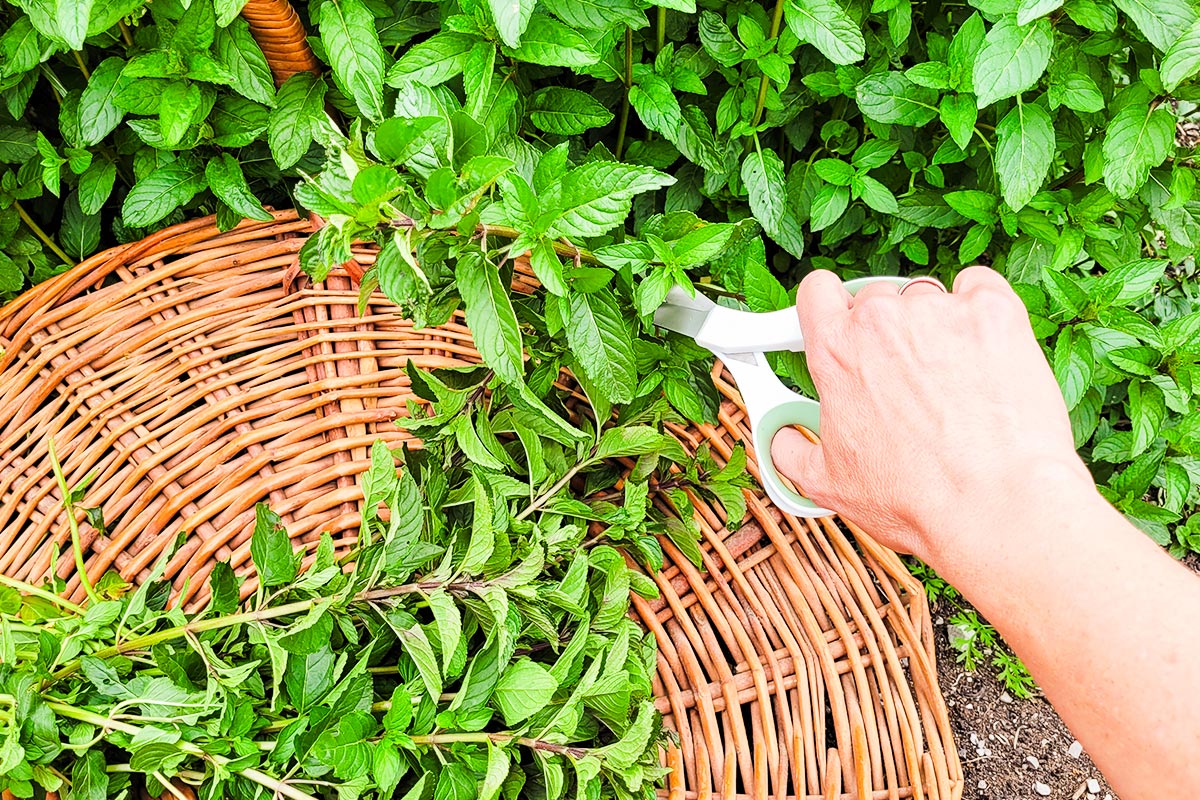
Peppermint is easy to harvest. All you need is a pair of scissors and a basket or bowl. Cut the stems about three inches off the ground, just above a leaf node, to encourage bushy regrowth. Try to harvest in the morning and before the plant begins to flower.
Peppermint tea can be made with fresh or dried leaves. Fresh mint imparts a brighter, more grassy flavor and requires a bit more plant per cup or pot. Drying peppermint lends a stronger, more traditional minty flavor and allows it to be stored for long periods and used over time.
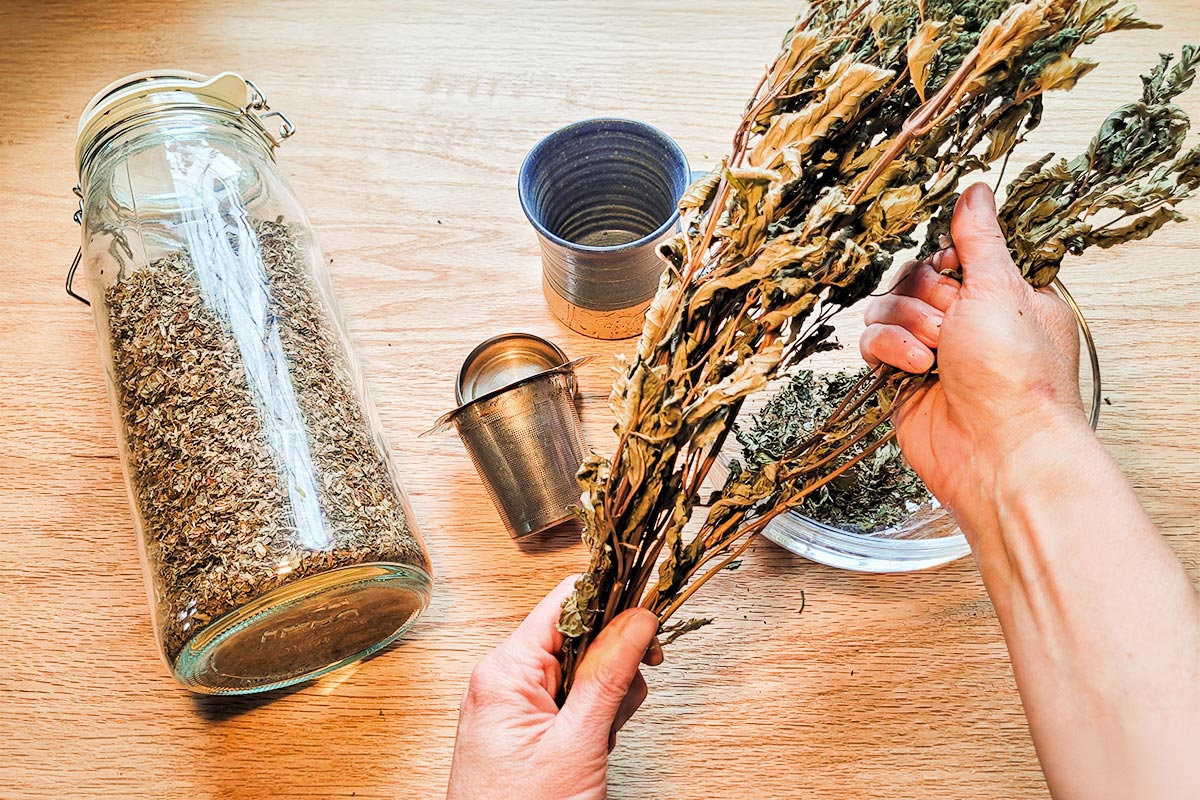
For harvesting to dry, a simple method is to gather a whole bunch of harvested stems, tie them together with a rubber band, and hang them upside down in a cool, shady, and well-ventilated area. The leaves are ready for tea when they crumble easily to the touch.
If you prefer a faster option, you can use a dehydrator. Set it to the lowest temperature and run it for four to six hours. Be sure to do a crunch test to check whether they are ready before removing them.
How to Make Peppermint Tea
Peppermint is often used as a flavoring agent in mixed herbal teas to harmonize or improve the taste. However, it also makes an excellent stand-alone tea. You can use either dried or fresh peppermint leaves, depending on what you have on hand.
Serves 1
Ingredients
- Peppermint leaves
- Hot water
- Honey, stevia, or agave nectar to taste (optional)
Equipment
- Teapot
- Tea strainer
Instructions
- If using fresh leaves, remove the leaves from the stem and wash them thoroughly, shaking off any excess water.
- Add approximately 10 fresh leaves, or 1 teaspoon of dried leaves, to 8 ounces of water in a teapot.
- Allow the mixture to steep for 10 minutes (or less if you prefer a milder peppermint flavor), then strain it as you pour the tea into a cup.
- If you like, you can add your favorite sweetener, such as a little honey, stevia, or agave nectar.
Peppermint tea can be comforting and help you regain mental strength after a stressful day or provide the focus needed during demanding situations.
A Summer Variation
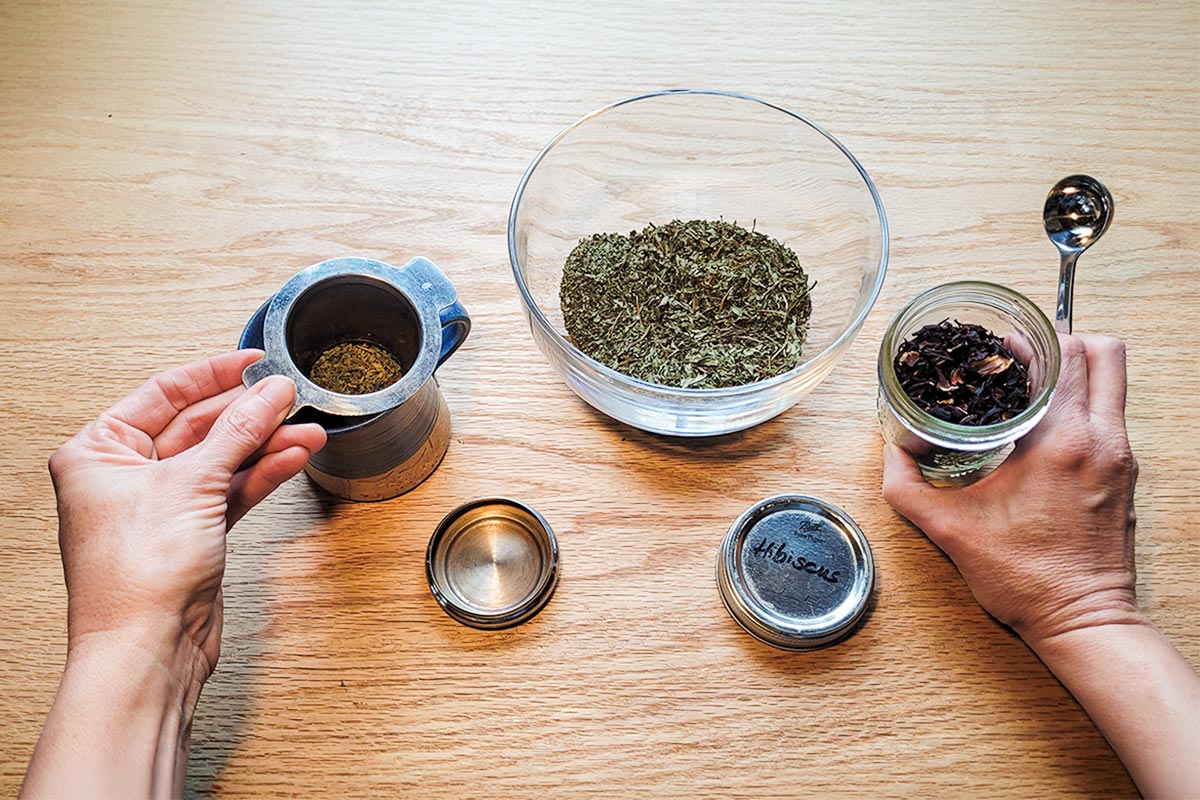
I enjoy adding hibiscus to my peppermint tea in the summer as it creates a refreshing iced tea, and adding a few lemon slices makes it even more appealing for hosting.
Hibiscus is rich in antioxidants, making it an excellent choice for a daily health regimen. Thus, it pairs perfectly with peppermint tea.
Peppermint Essential Oil
The smell of peppermint essential oil stimulates brain function and reduces mental fatigue, according to a 2023 review published in Molecules.
You can use the oil to combat fatigue and mental strain in four ways:
- Aromatherapy: Use a few drops in a diffuser.
- Topically: Apply it for a gentle massage by mixing it with a carrier oil, such as coconut, almond, or jojoba seed oil.
- In a Bath: Add a few drops to your bathwater or a foot soak.
- Added to Salves: Use it in a healing salve for topical application.
The United States is the world’s largest producer of peppermint essential oil, making high-quality products widely available. However, please be aware of a few safety precautions before you use essential oils in your home or on your body.
Safety Notes
Before using peppermint essential oil, it is important to keep a few basic safety precautions in mind.
- Some oils can irritate the skin in high concentrations. People with sensitive skin should patch test and dilute essential oils before use.
- To remove an irritating oil, use a base oil or whole milk; water is less effective. Those with sensitive skin may react more than others at the same concentration.
- Never take essential oils internally unless directed by a qualified healthcare provider.
In an intriguing Greek myth, Pluto fell in love with the beautiful nymph Minthe. Out of jealousy, his wife, Persephone, transformed Minthe into a low-lying plant to be trampled upon. To preserve Minthe’s memory, Pluto bestowed a sweet scent upon the plant, which we now know as mint.
Invigorating to the mind and uplifting to the spirit, these qualities were said to enchant Pluto. Roman and Greek physicians also recognized peppermint’s remarkable capabilities.
Today, you can harness the same herbal power in your own kitchen. Whether brewed as a soothing tea or enjoyed through its refreshing aroma, peppermint offers a simple, natural way to restore focus, clear mental fog, and revive both mind and spirit.