



Karlie Barge has been laser-focused on avoiding muscle loss ever since she began taking weight loss drugs more than a year ago.
“Especially as a woman in my 30s, when you’re already starting to lose muscle, I just knew I didn’t want that to happen to me,” she told The Epoch Times.
Her plan for offsetting muscle loss includes a high-protein diet and exercise. She started with walking, then added running, and eventually incorporated resistance training. Barge, who began her weight loss journey at 251 pounds, also tried to avoid rapid weight loss; she has shed 82 pounds in 15 months on a glucagon-like peptide-1 (GLP-1).
One regret Barge has: She did not test her muscle mass before losing weight. Since she does not know how much muscle she lost initially, she has become even more muscle-minded.
“I know that I’m in this next stage where building muscle is now the intent, so I’ve started weightlifting consistently,” she said.
Although muscle loss is a potential side effect of popular weight-loss drugs such as Ozempic and Wegovy, losing varying amounts of muscle is associated with rapid weight loss by any means. However, muscle can be preserved with a strategic approach much like the one Barge has adopted.
Muscle Wasting
Early studies have shown that loss of lean muscle accounts for between 15 percent and 40 percent of total weight loss in those taking GLP-1s. That’s enough muscle loss to concern most experts.
Authors of a meta-analysis published in Obesity noted that muscle loss associated with weight-loss drugs is comparable to that of bariatric surgery. However, as the popularity of weight-loss drugs soars, more studies are needed regarding muscle loss linked to the type of GLP-1, the duration of drug treatment, and lifestyle factors.
“The field is ripe for studies identifying and evaluating interventions that maximize fat loss while minimizing fat-free mass loss,” the authors wrote, noting that strategies to offset muscle loss could include doctors prescribing exercise and protein supplements, as well as identifying pharmacologic solutions that can protect muscle mass during weight loss.
A recent study published in The Lancet Diabetes and Endocrinology showed that use of the newer GLP-1 tirzepatide was associated with a more muscle-friendly weight loss comparable to dieting. Of note, newer GLP-1 receptor agonists are specifically used for weight loss, whereas earlier versions are meant for Type 2 diabetes.
Body composition researcher Grant Tinsley told The Epoch Times that more data are needed before firm conclusions can be made about whether the type or usage of drugs affect muscle loss.
It is worth noting, he said, that limitations in body composition assessments can confound research findings. Most studies use more economical DEXA scans that measure “lean mass,” which lumps muscle mass together with other connective tissue, organs, and water.
“That’s a little caveat that we don’t have very many studies that are truly assessing skeletal muscle,” Tinsley said. “We don’t have as much high-quality information as we’d like.”
Lose Weight Gradually
“We know skeletal muscle is incredibly important for physical well-being, functionality, daily living,” Tinsley said. “Also, muscle is very important metabolically. It functions like an organ. That’s why I hesitate to ever say it’s no concern if you lose some muscle.”
Slower weight loss may also protect muscle, he said, and could potentially prevent rebound weight gain, although the evidence is mixed and possibly dependent on other factors such as age, exercise, and diet.
Sarcopenia, the age-related loss of muscle mass, has been linked to many causes, such as changing hormones, chronic diseases, insulin resistance, fat loss, and lack of muscle use. Sarcopenia can confound GLP-1-related muscle loss.
When weight loss includes a great deal of muscle loss, it can make you a sitting duck for regaining fat and experiencing yo-yo weight fluctuations, Tyna Moore, a naturopathic physician and expert in GLP-1s, told The Epoch Times. Losing about a pound per week is ideal and, alongside other strategies, can help patients retain muscle.
“Our muscle is what keeps us insulin sensitive,” Moore said. “Our muscle and our liver are the biggest sources of glucose uptake and storage.”
Muscle-Protecting Exercise
Virtually any exercise, including aerobic exercise, is better than none when it comes to maintaining skeletal muscle, according to Tinsley, who is chief science officer for Vineyard, a virtual health clinic for metabolic health, and an associate professor at Texas Tech University.
“But in the head-to-head comparisons, typically resistance training is our best bet in terms of a single intervention to help maintain muscle,” he said. “This certainly doesn’t mean every patient needs to train like a bodybuilder or a powerlifter.”
Two days of resistance training per week is consistent with American College of Sports Medicine guidelines for physical activity in adults. Until specific research on GLP-1 drugs and resistance exercise is published, Tinsley said, that recommendation is a good place to start.
“Some is better than none, so if someone is not currently exercising, one day a week is better than zero days a week; two days a week is better than one day a week,” he said.
Moore tells her patients who are taking GLP-1 drugs that exercise, including resistance training, is a non-negotiable. This is especially important for women, who are more likely to lose muscle than men as they age because of lifestyle factors and because estrogen levels drop during menopause, accelerating muscle breakdown.
“When we say lift heavy, that’s what’s heavy for you, and it’s different than what’s heavy for me,” Moore told The Epoch Times.
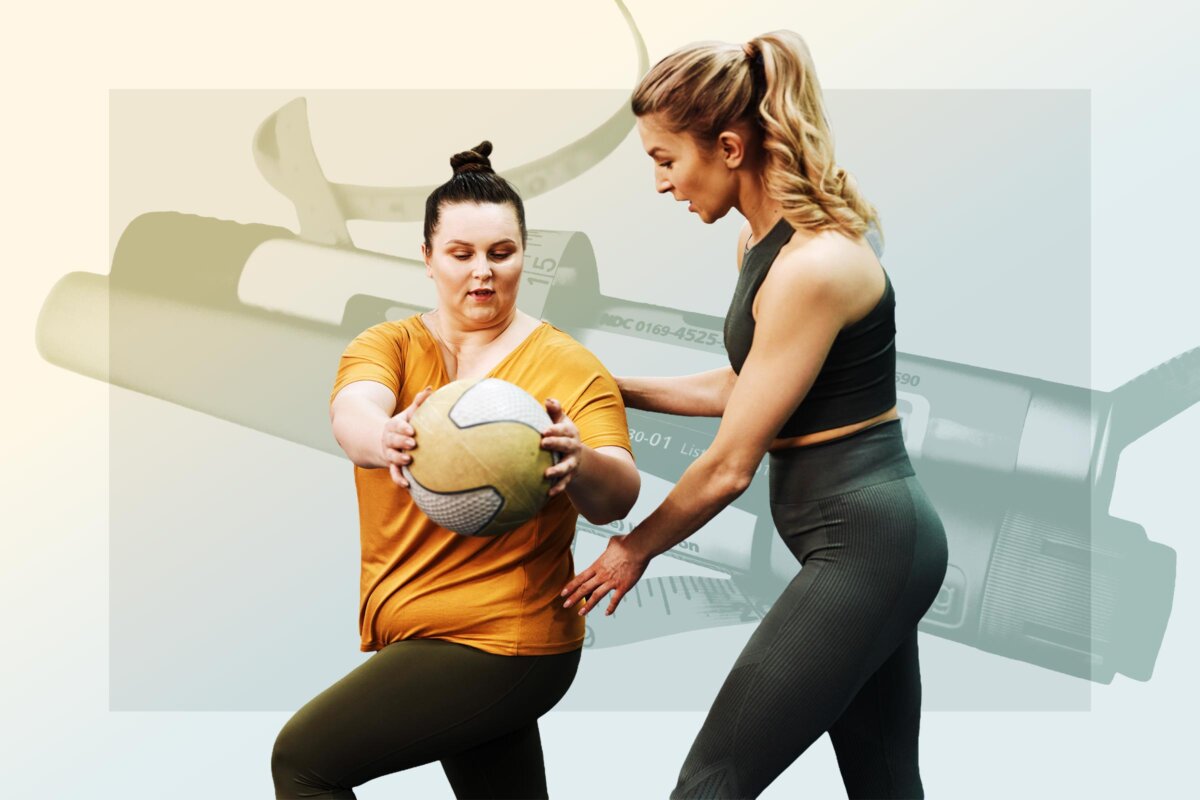
She recommended personal or small group training for those who can afford it, as it can help you determine the right amount of resistance while preventing injury and making the gym less intimidating.
Resistance training can be simple, according to Moore. She suggested including one each of these types of exercises:
- Squats
- Hip hinges such as deadlifts
- Hip thrusts or kettlebell swings
- Push exercises such as bench presses or shoulder presses, chest flys, tricep dips, or push-ups
- Pull exercises such as bent-over rows, hammer curls, bicep curls, cable rows, or pull-ups
- Unilateral exercises for balance such as lunges, pistol squats, or step-ups
- Planks or side planks
Plenty of research shows that even a small amount of resistance exercise can preserve lean body mass during calorie-restriction weight loss, according to Donald Layman, a metabolism expert with a doctorate in nutrition science.
The research includes a study he authored two decades ago examining the relationship between different types of exercise and diets. The study found that a high-carbohydrate, low-protein diet combined with minimal walking resulted in less fat loss but more muscle loss compared with a high-protein, low-carbohydrate diet with walking and resistance exercise.
Eat More Protein
Simply eating less—particularly if you eat a diet with a lot of ultra-processed food—shouldn’t be the sole strategy for preserving muscle mass when you are attempting to lose weight.
Layman has found that among people eating the same number of calories, those who ate more protein—equating to about 300 calories per day—lost weight.
“If you don’t learn a new lifestyle while you’re losing weight, chances are you’ll go back to what you did before,” he said.
Some tips he suggested:
- Eat about 1 gram of protein for every pound of ideal body weight daily.
- Breakfast should include at least 30 grams of protein.
- If you eat a plant-based diet, you should eat at least 120 grams of protein daily in order to derive enough essential amino acids.
Protein stimulates GLP-1 production, which helps with satiety, slows gastric emptying, and increases insulin to help with blood sugar levels.
For these reasons, Layman said, it makes sense to increase dietary protein and decrease carbohydrates to see whether that leads to weight loss before trying a GLP-1 drug, especially since high-protein diets are increasingly recommended when you are taking medication.
“That’s the natural GLP-1,” he said. “And you get it meal to meal.”
Oftentimes, those who are taking GLP-1 drugs struggle to eat sufficient protein because of appetite suppression, according to Tinsley. He said these people should focus on exercise, which is the biggest lever for preventing muscle wasting.
“Of course, exercise has many benefits beyond body composition,” he said.
“It’s inherently health-promoting. It beneficially affects most systems in the body. It’s certainly something we want to encourage for everyone.”