



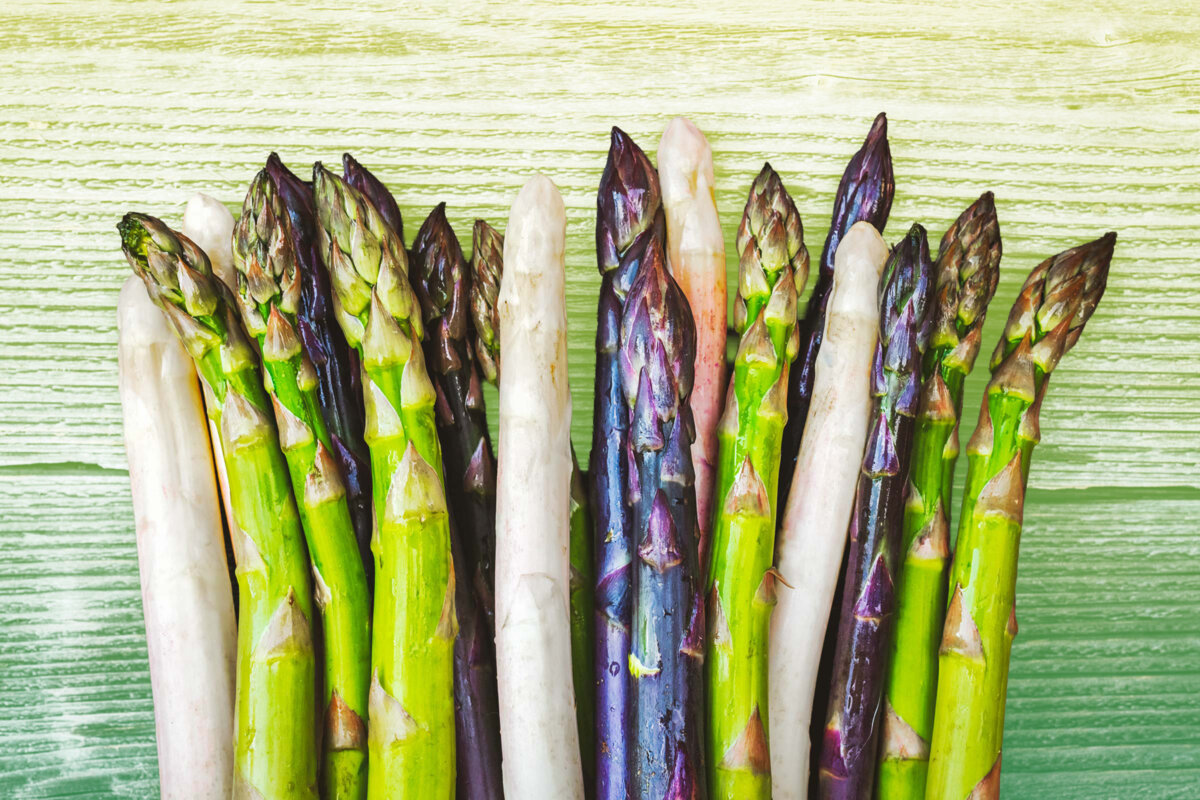
Green asparagus may dominate grocery shelves, but it’s only one version of the vegetable. Many people may not realize that asparagus also comes in white and deep purple varieties, each with its own flavor, growing method, and nutritional profile.
“In food chemistry terms, the difference is really about which pigments are being produced, and that mostly comes down to genetics and light exposure during growth,” Abbey Thiel, who holds a doctorate in food science, told The Epoch Times in an email.
Green Asparagus: The Nutrient Powerhouse
Green asparagus owes its distinct flavor and high nutrient density to its time in the sun.
The green variety develops its color when the spears grow above ground and are exposed to sunlight, activating the production of chlorophyll, the green pigment in plants that makes photosynthesis possible.
“When the shoots grow above the soil and get sunlight, the plant starts producing chlorophyll through photosynthesis,” Thiel said.
“Green asparagus tends to contain more of certain phenolic compounds and sulfur-containing molecules, which contribute to the slightly bitter or grassy flavor people associate with asparagus,” she said.
Beyond flavor, light exposure also increases the production of beneficial plant compounds.
“While chlorophyll itself isn’t usually highlighted as a dietary antioxidant in the same way anthocyanins are, green asparagus still contains a variety of other antioxidant compounds, including phenolics and flavonoids,” Thiel said.
These chemical differences have a measurable impact on the vegetable’s health benefits. A 2024 study published in Natural Product Communications found that green varieties grown in sunlight contained higher levels of flavonoids and other nutrients than white asparagus, showing roughly twice the antioxidant activity.
“Green also builds up more vitamin C and K because photosynthesis is actively driving those processes,” Olivia Hamilton, a registered dietitian, told The Epoch Times.
At the height of the season, green asparagus can grow up to 10 inches in a single day, fast enough that farmers sometimes harvest it daily.
When it comes to cooking, green asparagus is the most versatile of the color varieties and can be roasted, grilled, sautéed, or steamed with little prep.
White Asparagus: The ‘Vampire’ Vegetable
White asparagus, on the other hand, is grown in complete darkness. Thiel did her postdoctoral work in the Netherlands, where white asparagus is more popular.
“I saw farmers would just create these long mounds of soil in their gardens that kept the asparagus entirely underground,” she said. “Because the plant never sees light, it remains a pale white.”
These pale spears have earned the nickname the “vampire” vegetable and develop a milder flavor and more delicate texture than green varieties, although the stalks are often thicker and more fibrous.
The absence of light also alters the plant’s internal chemistry.
“Because it hasn’t been exposed to sunlight, the plant also produces fewer phenolic compounds, which are part of the plant’s natural defense system and contribute to flavor and antioxidant activity,” Thiel said.
Despite lower levels of light-driven phytonutrients, the foundational nutrients such as folate and B vitamins remain intact.
“The nutritional makeup of white asparagus is pretty much the same as green asparagus,” Sara Riehm, registered dietitian and certified specialist in obesity and weight management, told The Epoch Times in an email.
Often compared to precious metals for its rarity and short growing season, this “white gold” is a seasonal delicacy in Europe. In Germany, the arrival of the spring harvest, known as Spargelzeit, is celebrated with festivals, special menus, and even regional “asparagus queens.”
Because it’s thicker and more fibrous, white asparagus typically needs to be peeled before it is enjoyed and fares better with gentler cooking methods such as boiling or steaming.
Purple Asparagus: The Sweetest of the Bunch
Purple asparagus varieties produce their color through anthocyanins, the same antioxidants found in blueberries.
“Purple asparagus varieties have slightly different metabolic pathways because they produce anthocyanins, compared to white or green,” Thiel said. “Those metabolic differences can influence how the plant partitions carbon between pigments, phenolic compounds, and sugars during growth.”
A 2024 genetic analysis published in Plant Physiology and Biochemistry found that purple asparagus varieties produce higher levels of anthocyanins, with at least 15 to 16 types identified. These pigments are largely absent in green and white varieties.
A 2019 study published in Food Chemistry also found that light plays a key role in pigment production. When asparagus was grown in darkness, anthocyanins did not form, and the genes responsible for producing them became far less active.
The findings suggest that both genetics and sunlight help determine how much anthocyanin pigment asparagus develops, giving purple varieties their distinctive color.
Originally developed in Italy, purple asparagus is prized for its striking color, tenderness, and noticeably sweeter flavor.
“Purple varieties contain higher concentrations of simple sugars like glucose and fructose than typical green asparagus,” Thiel said.
Increased sugar content makes the stalks sweeter and can even reduce the brain’s perception of bitterness, making them more palatable.
Purple asparagus also offers a different antioxidant profile.
“Green builds up more vitamin C and K because photosynthesis is actively driving those processes,” Hamilton said. “Purple adds anthocyanins on top of that.”
Anthocyanins, part of the flavonoid family, have been studied for their anti-inflammatory and heart-health benefits, with some research suggesting that they may also support brain health and healthy blood pressure, Riehm said.
However, purple asparagus’s vibrant hue is delicate. Heat can break down the pigments, causing the stalks to turn green during cooking. Thiel noted that although food companies are increasingly interested in using anthocyanins as natural colorants, the pigments can degrade when exposed to heat, oxygen, or changes in pH, making them challenging to work with.
Popular varieties of purple asparagus, such as Pacific Purple and Erasmus, are known for their size and deep color, while Purple Passion is often eaten raw to preserve its green-speckled crowns and purple stalks.
Because purple asparagus is slightly sweeter, it’s well-suited for light cooking or simply eating raw, shaved into salads or served as crudité. Quick cooking methods help retain its vibrant hue.
Which Asparagus Color Is Best?
Although green, purple, and white varieties each offer unique phytonutrients, the foundational nutritional differences are relatively small.
“The base profile is essentially the same across all three—folate, fiber, B vitamins,” Hamilton said.
All asparagus varieties also contain asparagine, a natural diuretic; rutin, a bioflavonoid studied for its role in circulation; and glutathione, one of the body’s key antioxidants.
If you’re targeting specific health goals, certain colors offer slight advantages: Green is the stronger option for folate and vitamin C, while purple varieties are an excellent source of anthocyanins for those who don’t eat many other red or purple plant foods.
Asparagus is a highly seasonal vegetable, with spring offering its peak flavor and nutrient content. Although stores carry it year-round, off-season imports may be less sweet or tender.
No matter which color you choose, preparation may ultimately matter more.
“A quick roast retains far more nutrients than boiling it in a large pot of water,” Hamilton said.
If you’re weighing your options at the market, Riehm suggested thinking broadly: “They do differ in the types of phytonutrients they contain, and these phytonutrients all serve different purposes in the body. It’s still worthwhile to eat the rainbow of asparagus.”
Thiel put it simply: “My overall advice is to eat any asparagus you can get your hands on.”