



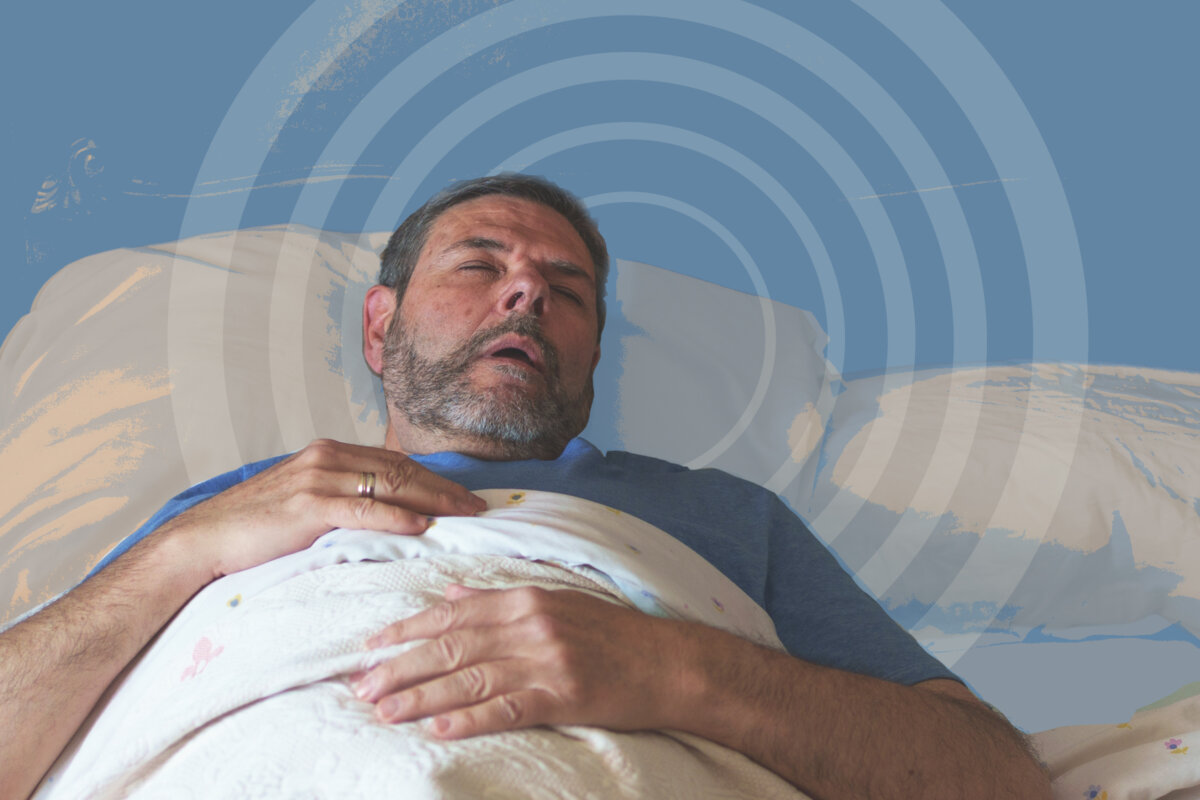
It starts softly—as a flutter in the dark. Over time, the flutter grows into a steady rumble.
Snoring has long been treated as a harmless annoyance, but that may be a mistake. In many cases, it can be an early warning sign of obstructive sleep apnea—a condition rooted in the natural design of the human airway, which can narrow as the throat relaxes during sleep.
“Because of how the throat is built, everyone has some risk of airway vulnerability at night,” Dr. Allison Wilson, a dentist who treats sleep-related breathing problems, told The Epoch Times. “So snoring really exists on a spectrum of sleep apnea—it’s often the first sign that the airway is starting to narrow more than it should.”
At its core, snoring is the sound of air struggling to move smoothly through the airway. That resistance can signal that the airway is struggling and that the heart and brain are working harder than they should.
The most common types of snoring are often linked to sleep apnea, particularly those involving the soft palate and the base of the tongue.
The 3 Types of Snoring
If you could shine a flashlight into the back of the throat while someone snores, you wouldn’t see a wide open tunnel. It would look more like a bent garden hose—narrowed, uneven, and lined with soft tissue that vibrates as air moves through.
Part of the reason is human design. The same flexible airway that allows us to speak and swallow also makes the throat more likely to narrow during sleep.
Sleep specialists often group snoring into three main anatomical patterns:
Nasal
Nasal snoring often starts with a deviated septum or chronic congestion that forces air through a narrowed nasal passage, creating whistling, grunting, or high-pitched sounds. Short-term nasal snoring is generally caused by allergies and is considered benign, but long-term nasal snoring can disrupt sleep quality and may need treatment. Nasal snoring is usually not related to sleep apnea, but the other two types are.
Tongue-Based
Tongue-based snoring occurs when the tongue falls backward toward the throat during sleep and partially or fully blocks the airway. This type is typically associated with harm, as it is more closely linked to obstructive sleep apnea and often occurs with mouth-open breathing.
Palatal Flutter
However, the most common type of snoring is palatal flutter, which many people begin to develop in midlife. It occurs when the soft tissues at the back of the mouth lose some of their firmness and begin to vibrate during sleep. It can happen with either mouth or nose breathing.
The structure of the roof of the mouth helps explain how palatal flutter occurs. In the front, the hard palate is bone—“completely and utterly supported,” Wilson said. However, the soft palate at the back is not and is supported only by muscle.
“Muscle is not very good at supporting soft tissue,” she said. “Over time, the collagen that gives the soft palate structure breaks down, and those tissues get loosey-goosey.” As air passes over them during sleep, they vibrate, creating the sound of snoring.
As palatal snoring worsens, the airway can narrow further or begin to collapse during sleep. When collapse happens repeatedly, it is called obstructive sleep apnea, a condition in which breathing repeatedly slows or stops during the night and the body briefly shifts into lighter sleep to reopen the airway.
When Does Snoring Become Apnea?
On its own, palatal snoring does not appear to be a medical problem.
“It’s a nuisance for the person in bed with you,” Wilson said.
However, as snoring worsens, restricted airflow can disrupt sleep quality, having far-reaching consequences for your long-term health.
There are several ways to know when snoring crosses into sleep apnea. The most common tool is the apnea-hypopnea index (AHI), which counts how many times breathing slows or stops per hour of sleep.
An AHI under five is considered normal, five to 15 is mild, 15 to 30 is moderate, and 30 or above is severe.
However, AHI doesn’t capture how long or how deeply oxygen levels drop during the night. Increasingly, specialists are using “hypoxic burden” calculations to assess the total strain low oxygen places on the body, and to better gauge health risk.
Your AHI and hypoxic burden can be measured using a home sleep test—a small, wearable device prescribed by a doctor and used overnight to track breathing patterns, oxygen levels, heart rate, and airflow. A sleep specialist then interprets the results.
There are other signs you can track at home. Red flags for sleep apnea include loud, habitual snoring most nights; pauses in breathing, gasps, or choking sounds reported by a partner; waking unrefreshed despite sufficient time in bed; excessive daytime sleepiness; morning headaches; trouble concentrating; or high blood pressure that’s hard to control.
“If a partner hears someone stop breathing or gasping for air—not just the sound of the snore—that’s the biggest warning sign,” Wilson said.
Daytime exhaustion is another key clue.
“Snoring doesn’t make you tired,” she said. “Tired is about missing deep sleep because you have apneas.”
When these patterns show up, it may be time to seek a doctor’s opinion. A primary care physician, sleep specialist, or dentist trained in sleep-related breathing disorders can help determine whether a home sleep test or an overnight study is appropriate.
An in-lab overnight study can offer a closer look, monitoring brain waves, breathing effort, oxygen levels, heart rhythm, and body movements while you sleep.
Who Is at Risk?
Snoring doesn’t affect everyone equally. It’s more common among people who are overweight, men in midlife and beyond, and postmenopausal women.
Some people seem to be “born snorers,” even if they’re thin, young, and otherwise healthy. The size and shape of the jaw, tongue, tonsils, and soft palate all influence how much space is left at the back of the throat for the passage of air. A smaller jaw, larger tongue, or enlarged tonsils can crowd that space, making the airway more prone to vibrate or collapse during sleep.
Pediatric sleep specialists note that children should not snore; when they do, anatomical factors—especially enlarged tonsils, adenoids, or a narrow palate—are often part of the explanation. In such cases, treating enlarged tonsils and adenoids or expanding the jaw while it’s still developing can help open the airway and reduce snoring under the guidance of an ear, nose, and throat specialist and an orthodontist or pediatric dentist.
Aging adds its own gradual push toward snoring. The same loss of collagen that softens skin and deepens wrinkles also affects tissues in the mouth and throat.
“Everything that’s pink and unsupported by bone in the mouth—the uvula, the arches, the tonsils—can get more flexible and floppy with age,” Wilson said. That helps explain why someone who slept silently in his 20s may become a habitual snorer in his 40s, even if his weight and habits haven’t changed much.
Lifestyle Fixes and Treatments
Snoring is affected by several everyday factors. Targeting these factors can improve your snoring and sleep apnea.
Weight: Extra weight around the neck and upper body can thicken tissues surrounding the airway, leaving less room for air to move.
Alcohol: Evening drinks relax the muscles that help hold the soft palate and tongue in place, so tissues sag more as you fall asleep.
Sleep Position: Lying flat on the back allows the tongue and soft palate to fall toward the back of the throat. Wilson calls this a “pure gravity” setup for snoring and airway obstruction—many people snore loudest on their backs and quieter on their sides.
Factors often overlap. Alcohol, a late meal, and back sleeping can turn a mild snore into a louder, more stubborn one—and they are also some of the easiest things to change and see what helps.
Practical steps include cutting back on alcohol before bed, working toward a healthy weight if weight is a factor, training yourself to sleep on your side, or slightly elevating the upper body if reflux or congestion worsens snoring.
Some people find success with myofunctional therapy, which involves exercises to help train facial muscles to stay in position during sleep.
Simple tools such as nasal strips can help open the nasal passages and make breathing easier, especially if congestion is part of the problem. Some people also try mouth taping—placing a small piece of medical tape over their lips before bed—to encourage nasal breathing.
Chin straps are used for a similar purpose, helping keep the mouth closed during sleep. Check with a health care professional before trying devices that restrict airflow at night.
Other interventions include oral appliances, continuous positive airway pressure machines, and, in select cases, surgical procedures.
In her clinic, Wilson offers laser treatments to stiffen the soft palate to prevent vibration.
“We’re just breaking collagen bonds and asking the body to reform them in a very non-invasive way,” she said.
“If someone says, ‘I’m still exhausted,’ that’s not a snoring problem anymore. That’s when we have to ask whether there’s apnea underneath.”