



The regional leader of Spain’s Canary Islands said on May 6 that he would not allow a cruise ship hit by a deadly hantavirus outbreak to dock on the archipelago, putting the autonomous community at odds with the national government.
“This decision is not based on any technical criteria, nor is there sufficient information to reassure the public or guarantee their safety,” Canary Islands President Fernando Clavijo told radio station COPE.
Clavijo said on X that he had requested a meeting with Spanish Prime Minister Pedro Sánchez “due to the lack of coordination and information regarding the cruise ship affected by a Hantavirus outbreak.”
‘Without Sufficient Information’
Clavijo, who leads a coalition with the conservative People’s Party—the main opposition to Sanchez’s Socialists—added that the Canary Islands “always acts with responsibility, but it cannot accept decisions taken behind the backs of the Canary Islands institutions and without sufficient information to the population.”
The Spanish Ministry of Health said on the evening of May 5 that it would allow the luxury ship to dock in the Canary Islands “in accordance with international law and humanitarian principles.”
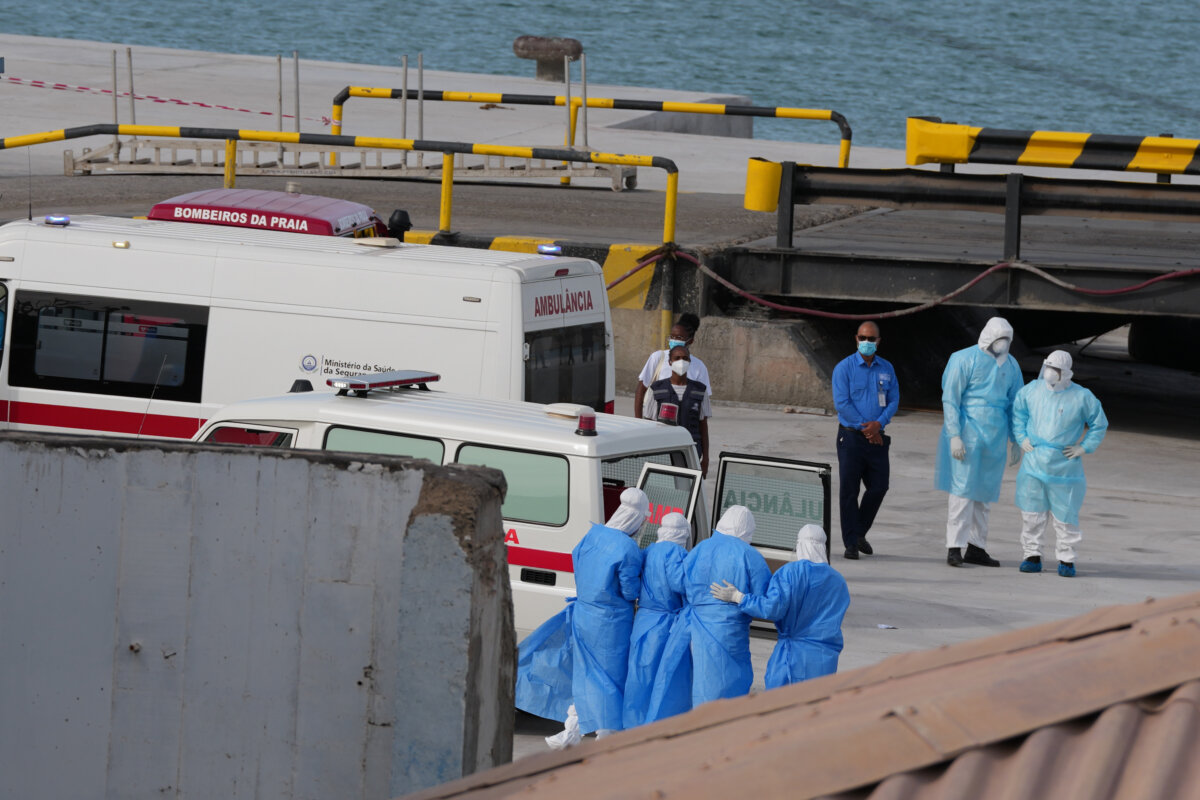
The ship remained anchored off the west African archipelago of Cape Verde, where three patients were medically evacuated on May 6.
3 Deaths Confirmed
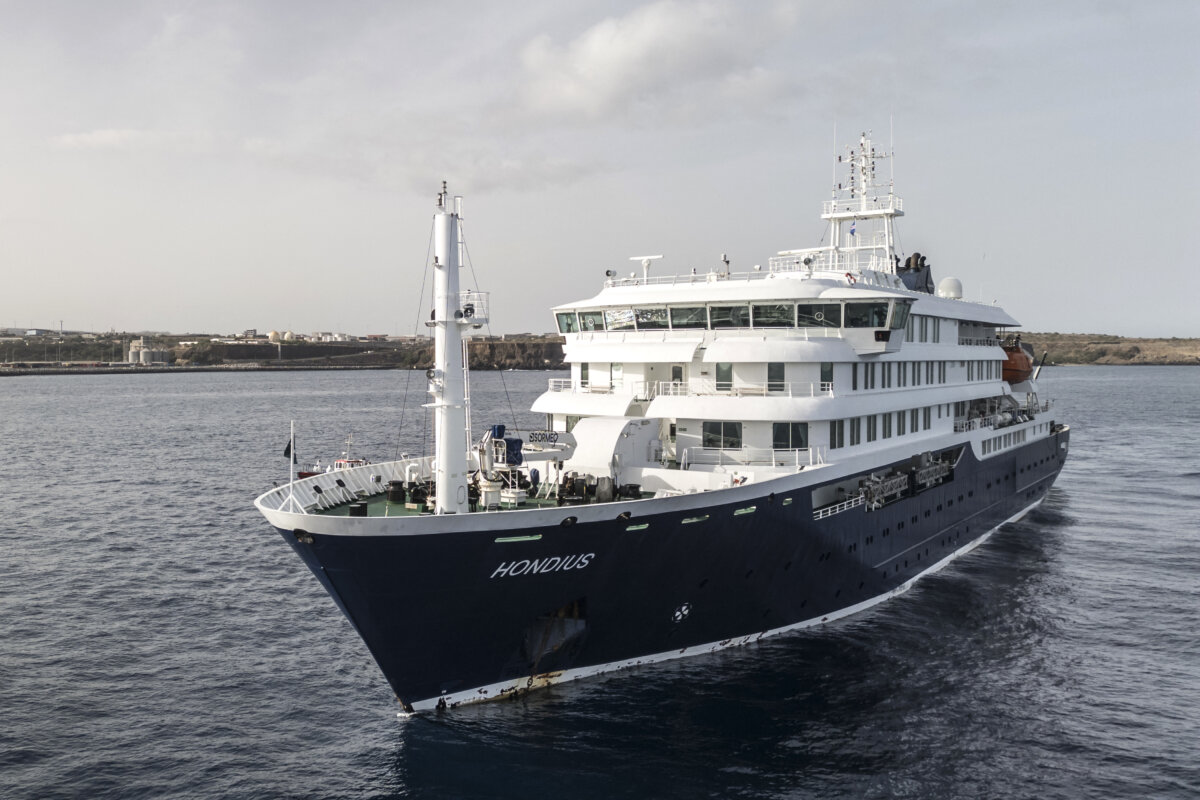
Three people are confirmed to have died as a result of the outbreak on the ship, the MV Hondius, run by Dutch operator Oceanwide Expeditions.
World Health Organization (WHO) Director-General Tedros Adhanom Ghebreyesus said on X on the morning of May 6 that another three passengers suspected of being infected with the virus had just been evacuated from the ship and were on their way to receive medical care in the Netherlands.
He said the evacuation was carried out in coordination with the WHO, the ship’s operator, and national authorities from Cape Verde, the UK, Spain, and the Netherlands.
“WHO continues to work with the ship’s operators to closely monitor the health of passengers and crew, working with countries to support appropriate medical follow-up and evacuation where needed,” Ghebreyesus’s post reads. “Monitoring and follow-up for passengers on board and for those who have already disembarked has been initiated in collaboration with the ship’s operators and national health authorities.”
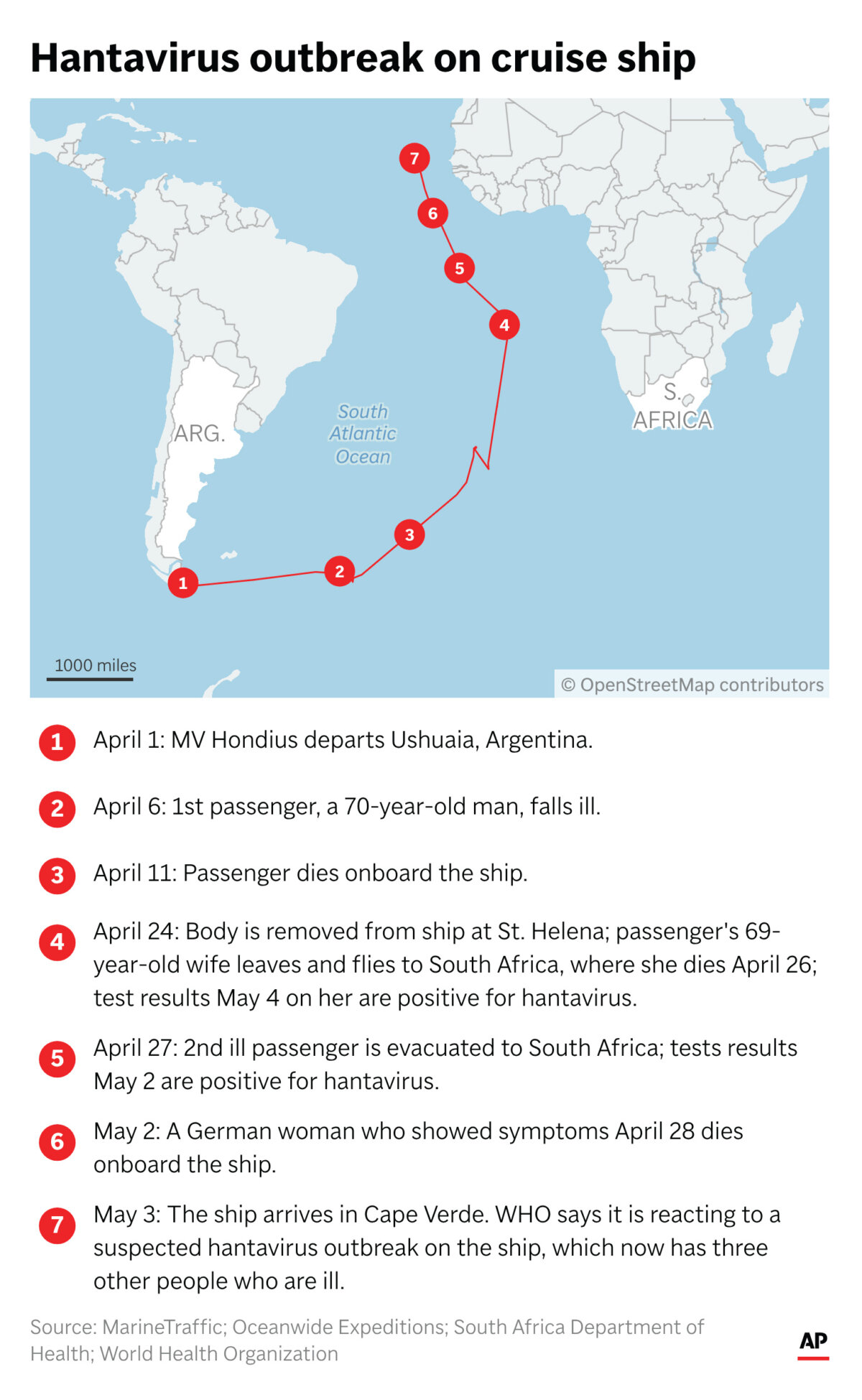
The first person to die on board was a 70-year-old man from the Netherlands. He developed symptoms on April 6 and died on April 11 after experiencing respiratory distress.
His body was removed from the vessel on the remote southwest Atlantic island of Saint Helena on April 24.
The second death was the 69-year-old wife of the first casualty. She was taken ill aboard the ship and disembarked at Saint Helena.
The woman was flown to South Africa on April 25. She had intended to fly back to the Netherlands, but collapsed at the airport in Johannesburg and died at a nearby hospital on April 26.
The third death was a German woman who died on the ship on May 2, after developing symptoms five days earlier.
A British man fell ill on board the ship after it left Saint Helena and disembarked at Ascension Island, where he received treatment and was medically evacuated to South Africa on April 27.
He remains hospitalized in isolation in an intensive care unit in Johannesburg.
Hantavirus has a mortality rate of 30 percent to 50 percent and its symptoms can include difficulty breathing. According to a WHO statement from May 4, there were seven confirmed or suspected cases of the virus by that date. The ship had a total of 147 people on board.
The cruise operator, Oceanwide Expeditions, said on May 5 that evacuation was being prepared for two passengers requiring urgent medical care and another guest “associated with” the German national who died aboard the ship on May 2.
Andes Strain Identified
South Africa’s health ministry said on May 6 that it had identified the Andes strain of hantavirus, which spreads human-to-human, in the two passengers who were tested in the country.
“This is the only strain that is known to cause human to human transmission, but such transmission is very rare and as said earlier, only happens due to very close contact,” the ministry said in a report.
The Andes virus is found in South America, primarily in Argentina and Chile, according to the WHO.
Other strains of hantavirus are more commonly transmitted to humans through contact with infected rats and mice, or their urine, droppings, or saliva, according to the WHO.
The ship embarked from Argentina on April 1 on an Atlantic cruise and was scheduled to include stops in Antarctica, the Falkland Islands, and other locations.
Among the patients is the ship’s doctor, according to Spain’s health ministry. Remaining passengers are isolating themselves, according to the WHO.
Authorities in Switzerland announced on May 6 that a man who has returned to the country from a trip to South America and was a passenger on the cruise ship has tested positive for the virus and is receiving treatment.
The public health office said there is “currently no risk” posed to the Swiss public.
The WHO said the ship’s itinerary included stops across the South Atlantic Ocean, encompassing mainland Antarctica and the remote islands of South Georgia, Nightingale Island, Tristan da Cunha, St. Helena, and Ascension.
The cruise company has not said if other people left the cruise ship at the stops the ship has made.
Reuters and The Associated Press contributed to this article.