



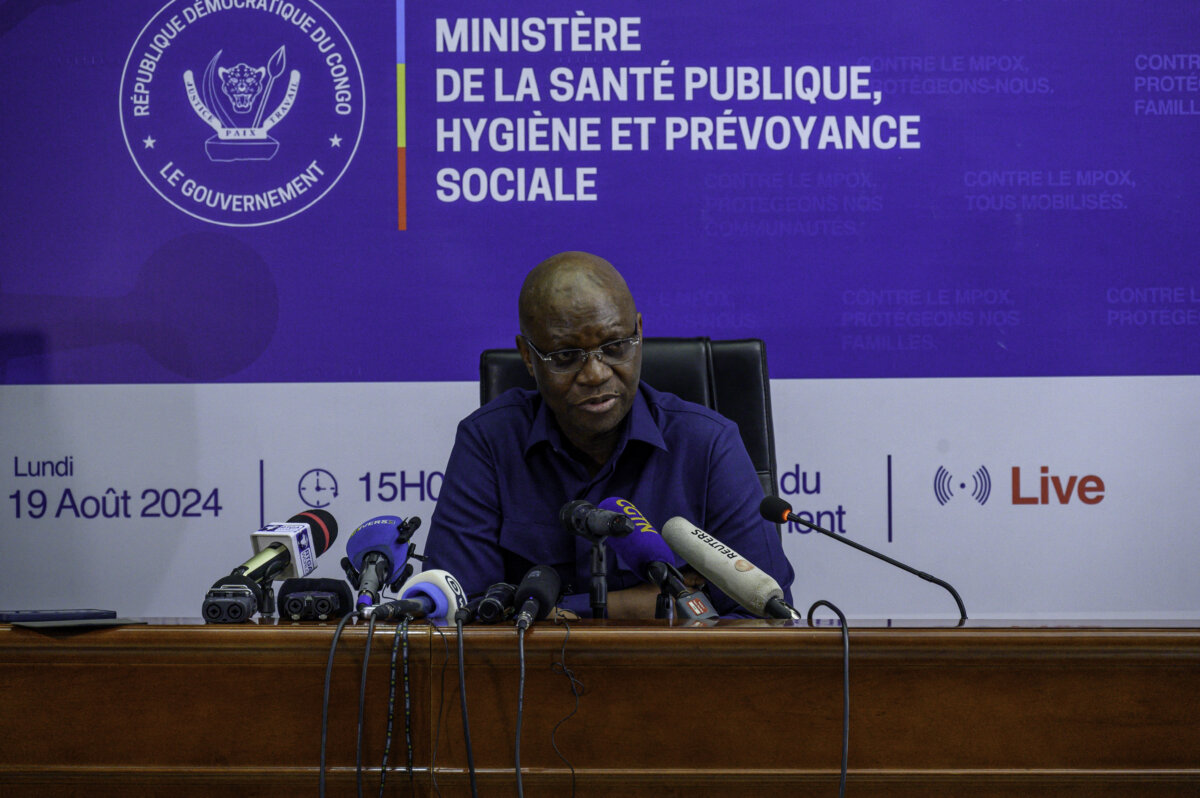
It could take up to six months to contain the Ebola outbreak in central Africa, Congo’s health minister said on May 26.
“We’re giving ourselves between four and six months,” Dr. Samuel Roger Kamba told reporters during a briefing. “That’s my point of view, and that’s the point of view of the response team, and in our plan, considering that this is a major epidemic, we’re giving ourselves perhaps six months to be able to end it.”
The outbreak of the Ebola disease was confirmed in Congo, which is in central Africa, in mid-May. The Bundibugyo virus, responsible for the outbreak, kills about 30 percent of people who contract it.
Authorities have not yet identified the first patient, but have been tracking the spread of the illness. They have confirmed 101 cases and suspect some 900 others. There are 200 to 220 deaths officials think are linked to the outbreak.
“We’re still at the beginning of the epidemic,” Kamba told the press conference.
He said that “the effectiveness of our response is what will determine how long it lasts.”
Congo is focusing on having people avoid contact with suspected and confirmed patients and making sure they properly handle dead bodies. Officials are also tracing patients’ contacts and isolating confirmed cases.
About 3,600 people are being monitored after contact with patients, and 230 are being treated in medical facilities.
The World Health Organization’s Africa office said in a May 27 report that transmission in the outbreak “appears to be driven by highly mobile mining and transport networks, delayed detection, and incomplete contact follow-up, while insecurity, incidents at health facilities with patients refusing care, and community resistance are challenging response efforts.” It said that the low follow-up rate for contacts and continued transmission in various hubs “suggest a risk of undetected transmission chains.”
Tedros Adhanom Ghebreyesus, the organization’s director-general, on Wednesday urged parties engaged in conflict in Congo to secure a ceasefire so that medical teams can safely identify and treat patients.
Congo has had 16 Ebola outbreaks previously. The most recent started in September 2025 and ended several months after 53 confirmed cases and 43 deaths.
The deadliest outbreak began in 2018 and left more than 2,200 dead. It did not end until mid-2020.
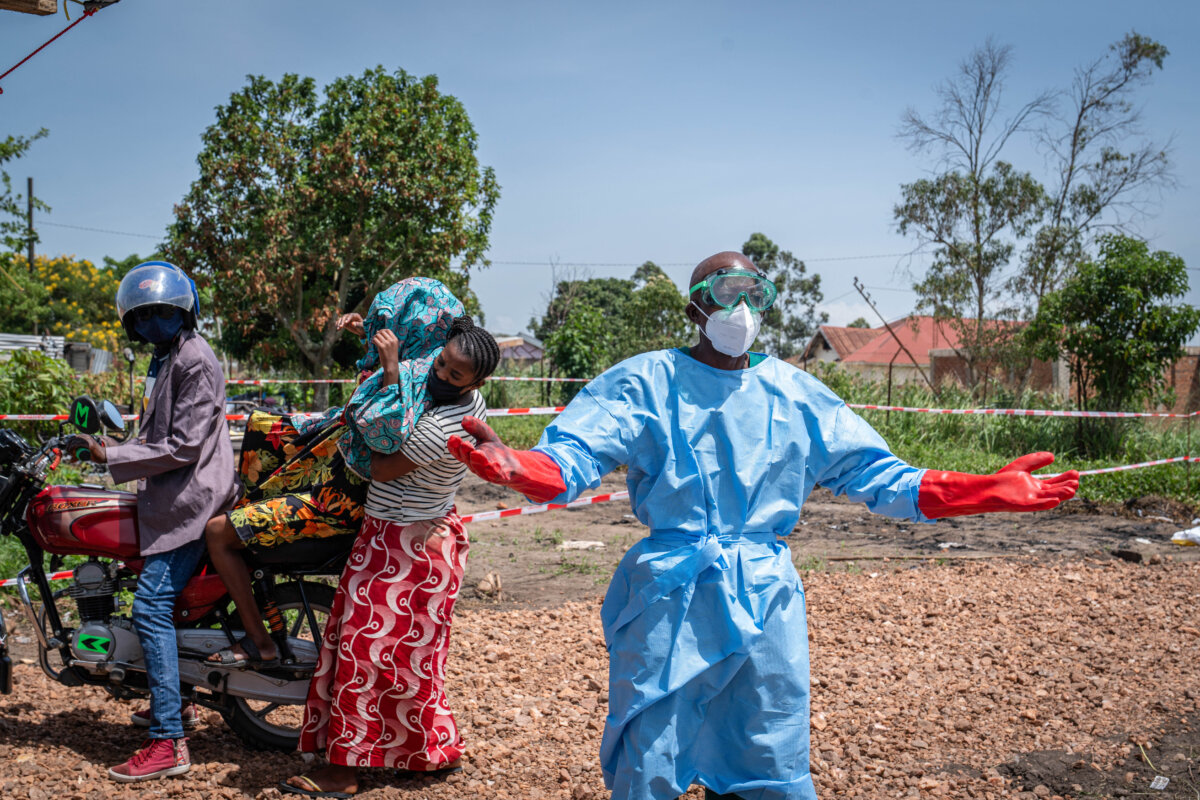
Confirmed cases in Congo are all in the provinces of Ituri, North Kivu, and South Kivu. Doctors from other areas have reported cases, and they are being monitored, but as of May 26, there are no cases outside those three provinces, according to Kamba.
Uganda has also confirmed seven cases, primarily among people who traveled from Congo or who cared for patients.
Congolese authorities have learned from prior outbreaks, including preparing health care systems and workers to handle Ebola patients and educating the population on early signs of Ebola, Kamba said. If an outbreak does crop up, then quick isolation of sick people is important.
Authorities have said the delay in detecting the current outbreak stemmed in part from early tests failing to detect the Bundibugyo virus, which has only caused a few of the past outbreaks. Kamba said that Congo is building more laboratories and must be ready in the future to detect all the viruses that cause Ebola and produce vaccines that are developed for the virus.