



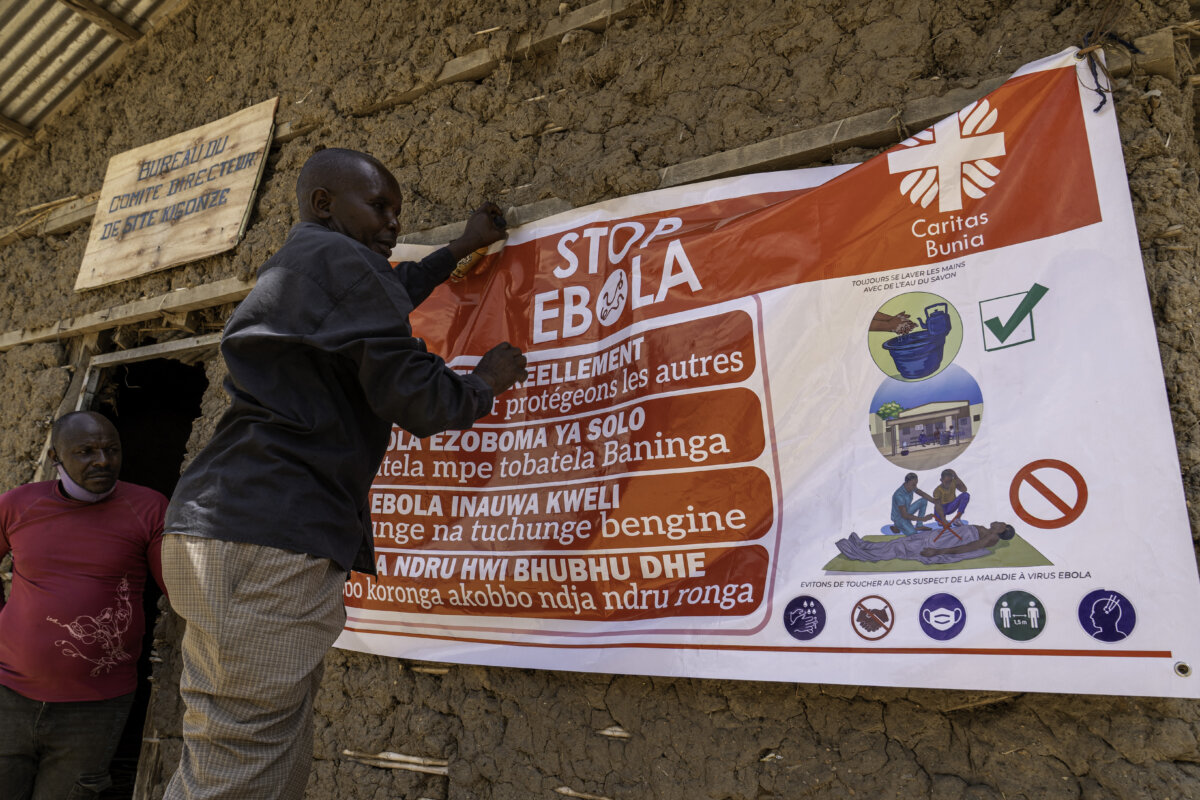
An Ebola patient has been discharged from medical care in Congo, the first such recovery in the current outbreak, officials said on May 29.
The unidentified patient was discharged from a care center after two negative tests, Anais Legand, with the High Threat Pathogens Team of the World Health Organization (WHO), told reporters during a press conference in Geneva.
Five other people are likely to recover, and there may be other patients who have already recovered but are awaiting test results to be cleared for discharge, she said.
The outbreak is centered in Congo and has grown to 125 confirmed cases, 906 suspected cases, 17 confirmed deaths, and more than 200 suspected deaths, according to the WHO.
The outbreak is caused by the Bundibugyo virus. It’s just the third time that the virus has caused an Ebola outbreak.
The case fatality rate, the percentage of people who die out of those who became sick, in previous outbreaks caused by the virus has ranged from 30 percent to 50 percent, Legand said.
“It means that up to five out of 10 people are likely to die,” she said.
It’s too early to calculate that rate for the current outbreak because of the high number of suspected cases and some reported deaths that have not yet been confirmed, she told reporters.
There are no vaccines or specific treatments for the Bundibugyo virus, although clinical trials are expected to start soon.
The WHO is working with partners to scale up intensive care, perform early testing on people showing symptoms, and provide treatment to the ill, which could lower the rate, officials said.
Tedros Adhanom Ghebreyesus, the WHO’s director-general, traveled to Congo “to really show to the community that they’re not alone,” he told reporters after landing on Thursday.
“Pushing orders from my comfortable office in Geneva is easy, but if I’m asking my colleagues to work with the community and I am asking communities to protect themselves … the best way would be to come and be in the same place,” he said, adding later that the outbreak “can be stopped.”
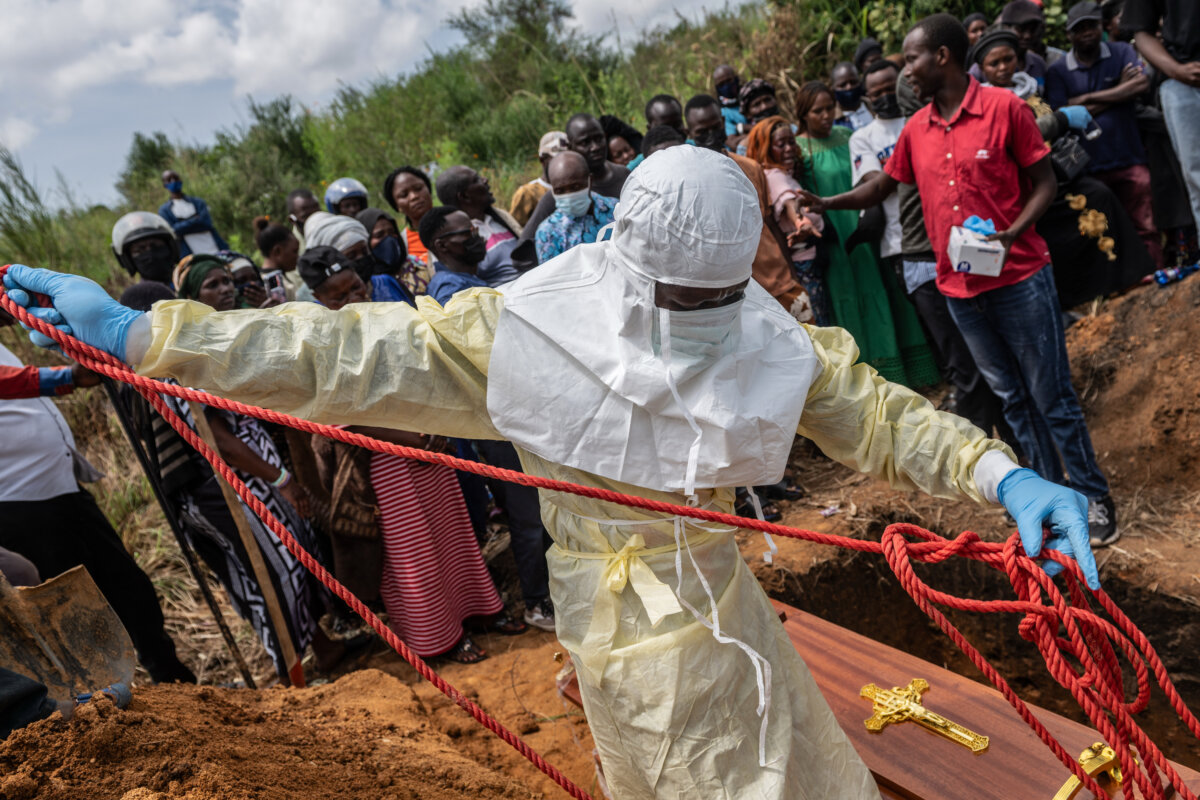
Authorities first detected the outbreak in the Ituri province in northeastern Congo in mid-May, but believe it started weeks or months earlier. Initial testing could not detect the Bundibugyo virus, so they cleared people who actually had Ebola.
Cases have since been confirmed in two other provinces and in Uganda, a neighboring country.
Uganda’s Ministry of Health said Friday that it has confirmed two additional cases, bringing the total to nine. One of the nine has died.
Authorities have called on people showing Ebola symptoms, such as fever and unexplained bleeding, to get tested and seek early treatment.
Testing capacity is improving, and suspected cases are being assessed to determine whether they are actually Ebola infections, Legand said on Friday. That primarily involves waiting for testing results. If the results are positive, suspected cases are shifted to being confirmed; if they are negative, the cases are marked as non-cases.
“As for whether the peak has passed, investigations are still ongoing,” she said. “I don’t think we can say that at this stage.”