




Psoriatic arthritis (PsA) is a systemic type of arthritis that presents much like rheumatoid arthritis. It’s a “hot,” burning arthritis that causes joints to become inflamed, stiff, and painful. Like rheumatoid arthritis, PsA is an autoimmune condition characterized by immune system hyperactivity.
In other words, your immune system pounces on your own body, especially your tendons and ligaments.
Although anyone can get PsA, it’s most common in adults and appears to equally affect men and women. About 30 percent of people with the skin condition psoriasis eventually develop PsA, which often occurs about seven to 10 years after skin symptoms appear. Those with severe psoriasis tend to have a higher risk of developing PsA, often triggered by stress, joint or bone trauma, or an infection.
5 Types of Psoriatic Arthritis
The following are the five general types of psoriatic arthritis:
- Asymmetric psoriatic arthritis: As one of the most common forms of PsA, it accounts for at least 60 percent of PsA cases. Symptoms develop on only one side of the body and can be mild to severe. It typically affects fewer than five joints (e.g., knee, feet, ends of toes and fingers, or large joints) and can progress to symmetric PsA over time.
- Symmetric psoriatic arthritis: As opposed to the asymmetric form, this type of arthritis tends to simultaneously affect five or more of the same joints on both sides of the body. It occurs in about 15 percent to 61 percent of individuals with PsA and is more common in women.
- Distal interphalangeal predominant (DIP): This type of PsA mainly affects the distal interphalangeal joints—the joints closest to the ends of the fingers and the toe joints near the nails, resulting in a “clubbed” appearance. DIP affects about 10 percent of people with PsA and can be either asymmetrical or symmetrical.
- Spondylitis: Characterized by pain and stiffness of the spinal cord from the cervical region down to the lumbar level, spondylitis occurs in about 7 percent to 32 percent of PsA cases.
- Arthritis mutilans: This most severe and rare form affects about 5 percent of PsA cases. It often results in deformities in the small joints of the fingers and toes.
Because psoriatic arthritis causes joint pain, you may be less inclined to exercise. However, research shows that certain types of regular exercise can decrease pain and improve joint flexibility, strength, and range of motion. The following low-impact exercises can contribute to overall better health and functioning for individuals with psoriatic arthritis. As always, seek medical advice before starting if you have concerns.
[series_posts_list][/series_posts_list]
Exercises to Help Manage Psoriatic Arthritis
Bird Dog Crunches
This exercise focuses on movement and muscular activation along the posterior muscles of the body—from your posterior neck muscles to your thighs. It targets the erector spinae muscle, which allows you to extend, flex, and rotate your spine. It will pay big dividends in helping to reduce arthritic pain along the back of your body.

Step 1: Start on your hands and knees on a supportive surface.
Step 2: Extend your left arm straight in front of you while simultaneously extending your opposite leg behind you, forming a straight line from your hand to your foot. This is the “bird dog” portion of the exercise. When extending your arms and legs, be sure to keep your back straight, your abs engaged, and your head facing the floor to prevent neck strain.
Step 3: Bend your elbow and knee, bringing them toward each other until they touch. This is the “crunch” portion of the exercise.
Each completed crunch counts as one repetition. Try to perform three sets of 12 repetitions on each side. You can alternate from side to side as you go or perform all sets on the same side before moving to the other side.
Dead Bug
This classic exercise activates your core muscles for a deep, thorough activation of muscles throughout your body.

Step 1: Lie on your back with your arms extended toward the ceiling directly above your shoulders. Bend your knees and hips to form a right angle with your toes pointed up. You now look like a dead bug.
Step 2: Slowly extend your left arm behind you and your right leg in front of you simultaneously while keeping your back flat the entire time. Hold the position for one second.
Step 3: Return your arm and leg to the starting position and repeat the movement on the other side. Be sure to keep your core engaged with your spine in a neutral position and your lower back on the mat throughout this exercise.
Moving each arm and leg into position counts as one repetition. Try to perform 20 repetitions per set and three sets while modifying as needed.
Dead bug exercises can be challenging at first, but you’ll grow stronger and more capable with consistent practice.
Standing Toe Touches
This classic exercise provides excellent joint and muscle mobility in addition to cardiovascular benefits. It’s particularly beneficial for those with the spondylitis form of psoriatic arthritis.
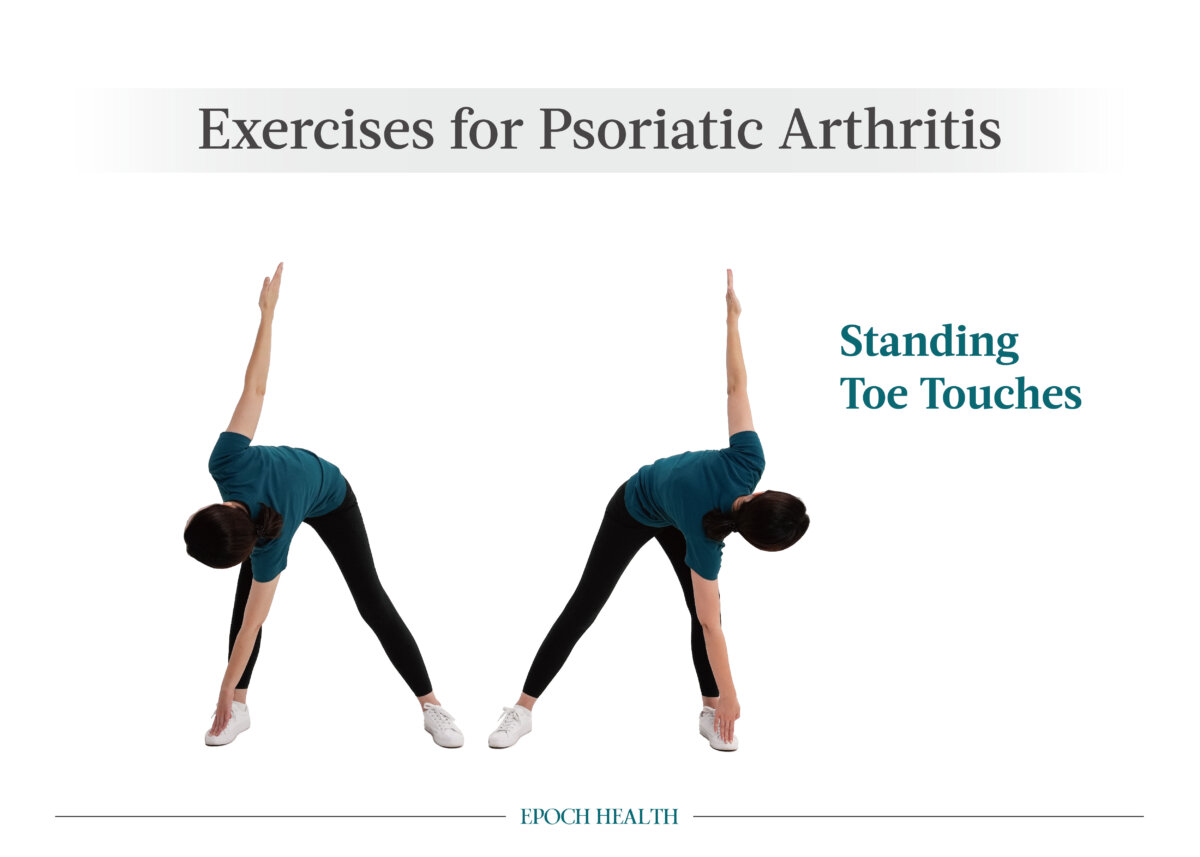
Step 1: Start in a standing position in an area that allows you to fully extend your arms.
Step 2: Stand with your feet spread wider than your shoulders. Hold your arms straight out to your sides.
Step 3: Bend your knees slightly and bend at the hips, then touch your left foot with your right hand while keeping your left arm extended.
Step 4: Slowly return to an upright position and repeat the movement on the opposite side.
Touching your foot on each side is considered one repetition. Try to complete three sets of 12 repetitions, adjusting sets and repetitions as needed.
Be sure to move slowly through these exercises to maintain control and balance and prevent unnecessary strain on your body.
Touch Toes/Touch Sky
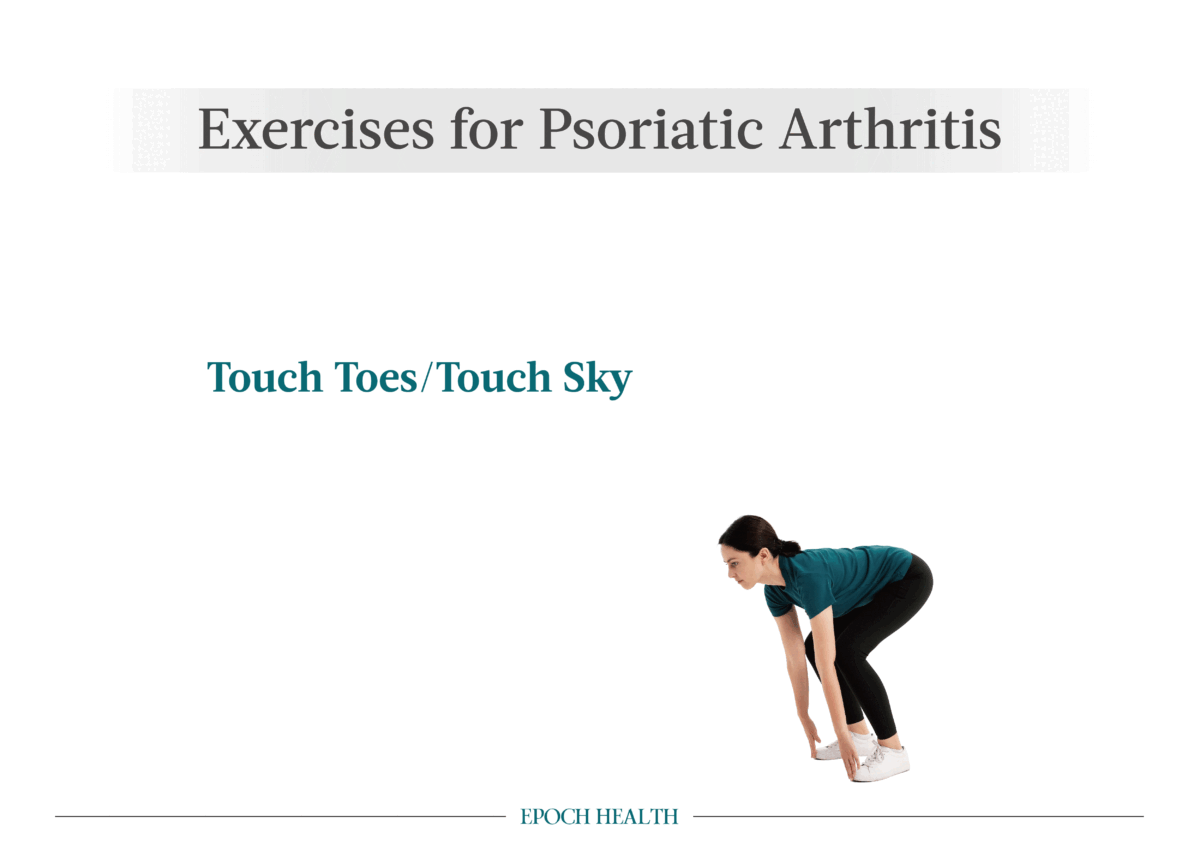
Step 1: Start by standing as upright as possible over your center of gravity with your feet approximately 12 inches apart and arms by your sides.
Step 2: Slowly sweep your arms forward, raising them above your head while simultaneously pushing your hips forward and pulling your shoulders back as if trying to touch the sky. Hold this pose for two seconds.
Step 3: Slowly lower your arms while bending your hips to reach down as far as possible while trying to touch your toes. Keep your head down, and don’t round your back. By slightly bending your knees, you can take pressure off your back and hamstrings. Hold for two seconds, then slowly stand up and reach back over your head.
Reaching down and then up is considered one repetition. Try to perform three sets of at least 15 repetitions, making adjustments as needed.
These are legitimately challenging, so don’t be discouraged if you find them difficult. They’ll get much easier as you become stronger.
Standing Marches
Although this exercise may seem simple, it can provide core strengthening and balance with subtle movements throughout the spinal cord.

Step 1: Stand with your arms by your sides and your feet slightly apart.
Step 2: March slowly in place by bringing each knee up as high as you can. Be sure to involve your arms in the movement.
March for two minutes per set and try to do three sets, adjusting your speed if desired.
When performed daily, these exercises can help you manage psoriatic arthritis pain, increase your movement and independence, and enhance your overall well-being.
*If you have health or mobility issues that may present problems, consult your physician before commencing exercise activity.
[note label=”Next” title=”Part 7″ hyperlink=”” description=”Lupus can leave you tired and out of energy, but a well-chosen regimen of thoughtful exercises can help you recover and maintain your strength.”][/note]
Views expressed in this article are the opinions of the author and do not necessarily reflect the views of The Epoch Times. Epoch Health welcomes professional discussion and friendly debate. To submit an opinion piece, please follow these guidelines and submit through our form here.