

Nonstick pans, aluminum cookware, melamine tableware, and plastic wrap are everyday items found in the kitchen. However, if misused, they can emit plasticizers, melamine, and heavy metals, posing risks to the kidneys and bladder and potentially leading to cancer. Dr. Yen Tzung-Hai, a nephrologist and director of the Toxicology Laboratory at Chang Gung Memorial Hospital in Linkou, Taiwan, provides guidelines for correctly using kitchenware.
1. Plastic Wrap (Saran Wrap)
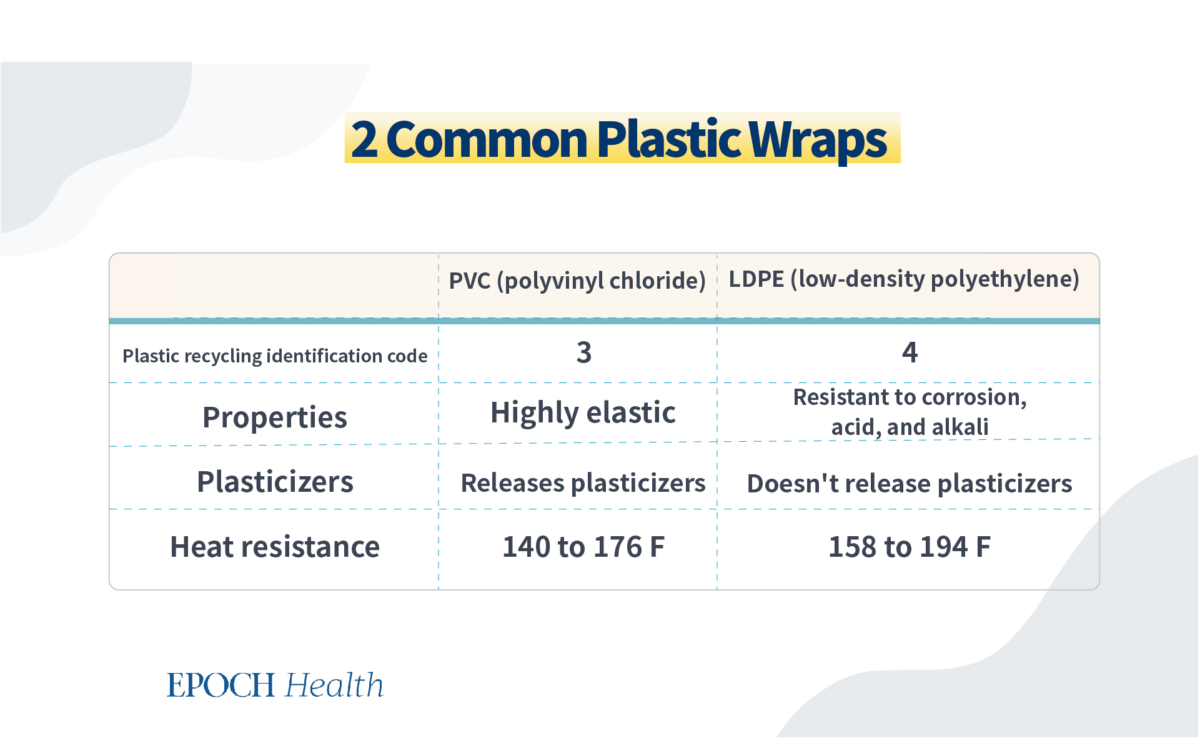
Two main types of plastic wrap are used to store food. Plastic 4 (its recycling number), or LDPE plastic wrap, is made of low-density polyethylene and can withstand temperatures between 158 to 194 F (70 to 90 C). Plastic 3 is made of polyvinyl chloride (PVC) and can withstand temperatures between 140 to 176 F (60 to 80 C). When exposed to high temperatures, PVC plastic wrap releases plasticizers, disrupting the body’s endocrine system, leading to feminization in males, early puberty in females, and an increased risk of breast cancer.
How to Use It
Dr. Yen emphasized plastic wrap is not heat- or oil-resistant. Therefore, when using it, remember to:
- Let leftover food cool before wrapping it in plastic.
- Remove plastic wrap before reheating leftovers. Plastic wrap is primarily used to guard against particles or smells and doesn’t do much to preserve food. Leftover food should be refrigerated to keep it fresh. Dr. Yen recommends using glass containers instead of plastic to store food. Glass has a more stable chemical structure and is safer for food storage.
2. Melamine Foam
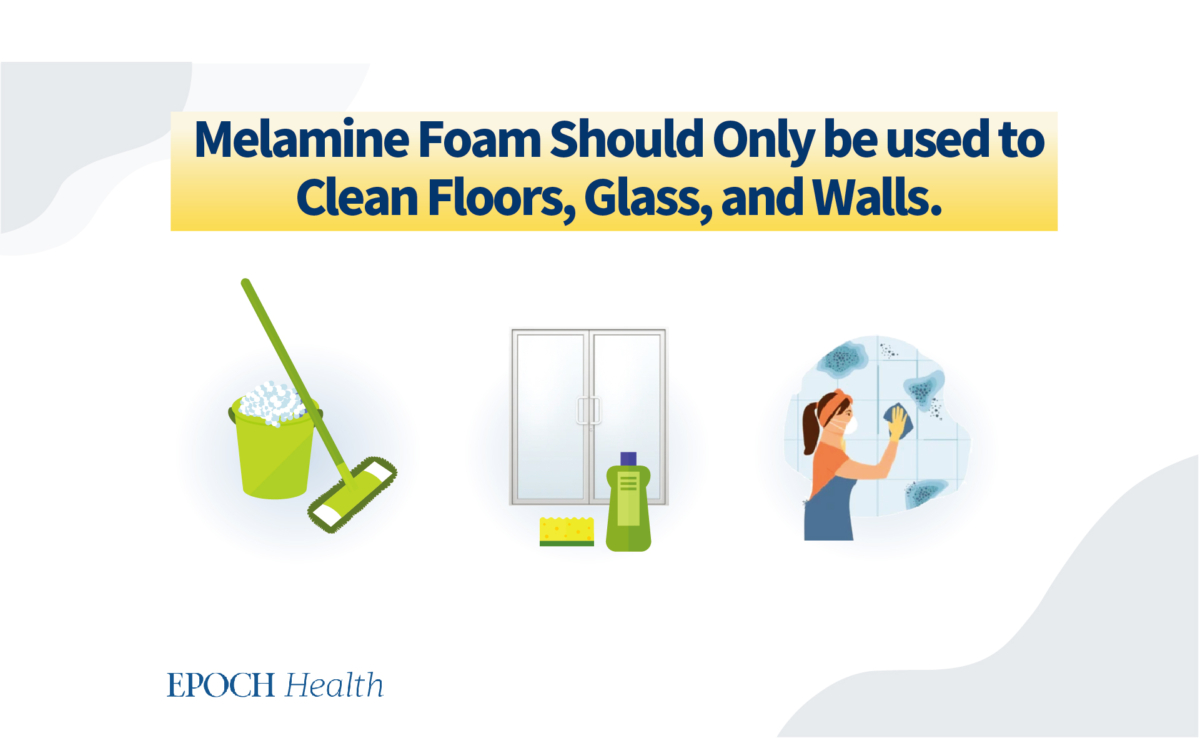
White melamine foam, like that used in the Magic Eraser, is known for its powerful cleaning capabilities. However, Dr. Yen warns against using these to clean tableware because they contain melamine and formaldehyde polymers. During use, these sponges gradually break down and release toxins. Formaldehyde is a known Group 1 carcinogen that increases the risk of nasopharyngeal cancer and leukemia. Melamine can harm the urinary system and has been infamously associated with kidney failure and stones in tainted milk powder incidents in China.
How to Use It
Keep two things in mind when using synthetic sponges:
- Do not use them to wash tableware or produce, as residual melamine may be ingested.
- Avoid using warm water to clean with synthetic sponges, as they can dissolve and release harmful melamine.
3. Melamine Tableware
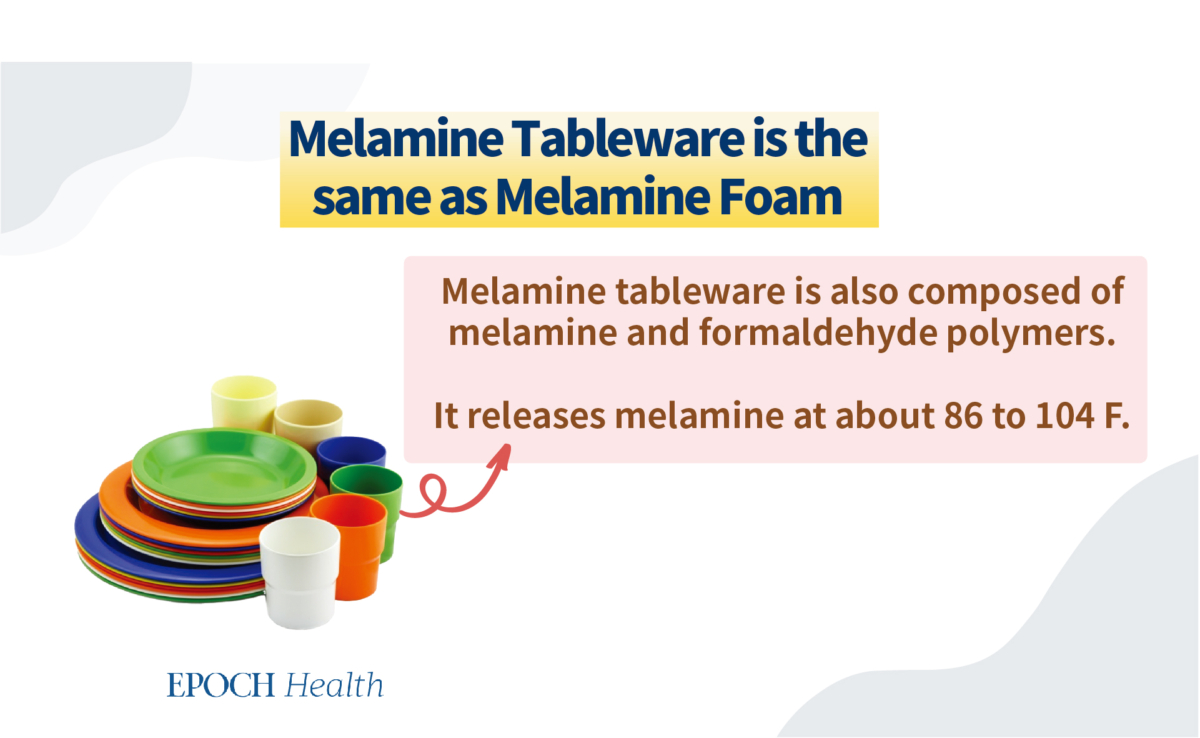
A top choice for Japanese restaurants and children’s tableware, melamine tableware is popular because it is lightweight, inexpensive, durable, and attractive. However, like synthetic sponges, melamine tableware comprises melamine and formaldehyde polymers. Although the industry claims melamine can withstand temperatures up to 212 F (100 C), Dr. Yen recommends avoiding it altogether.
Research published in the Journal of Hazardous Materials indicates melamine tableware can release melamine when holding liquid only as warm as 86 to 104 F (30 to 40 C). Animal experiments have also shown an increased risk of bladder and urinary tract tumors associated with melamine tableware. Hence, it is inadvisable to put melamine tableware in rice cookers or microwaves or use it with hot food.
How to Use It
Dr. Yen suggests taking the following precautions when purchasing or using melamine tableware:
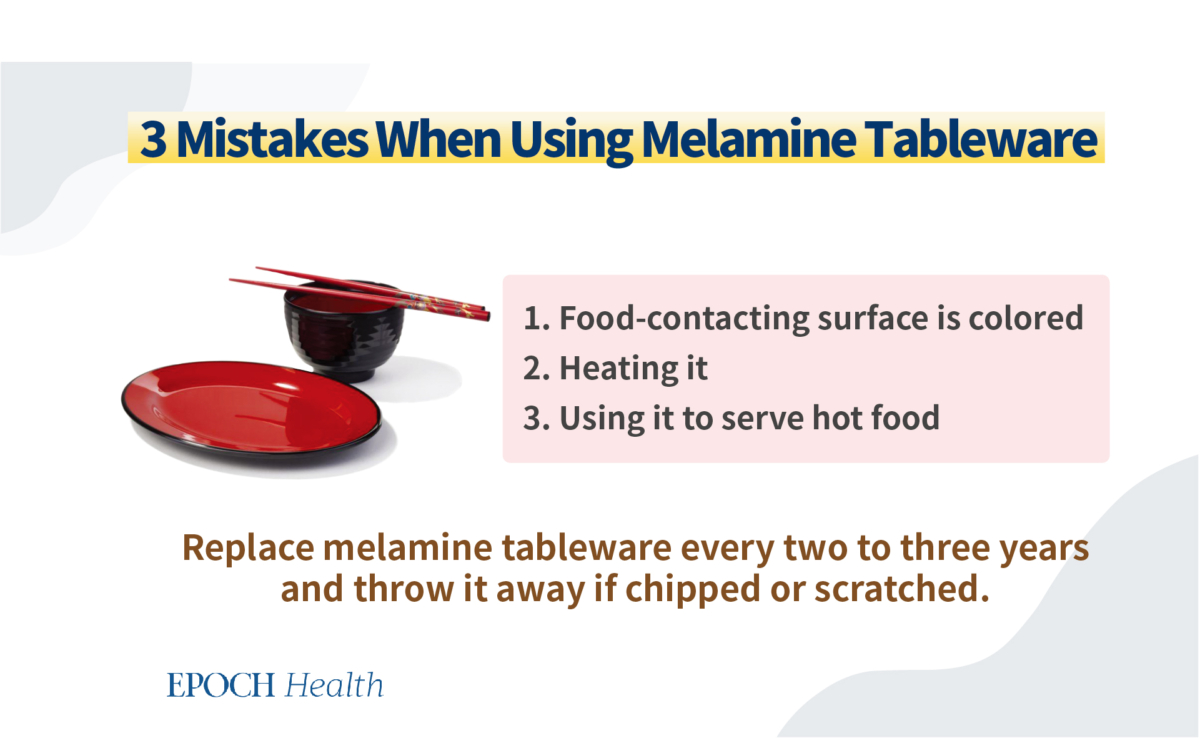
- Ensure the surface that will touch the food is white. Some colored coatings may contain heavy metals such as lead and cadmium.
- Do not heat it (microwave, rice cooker, dishwasher, etc.), as it cannot withstand high temperatures and may release melamine at 86 to 104 F.
- Avoid using it with hot food.
4. Nonstick Pans
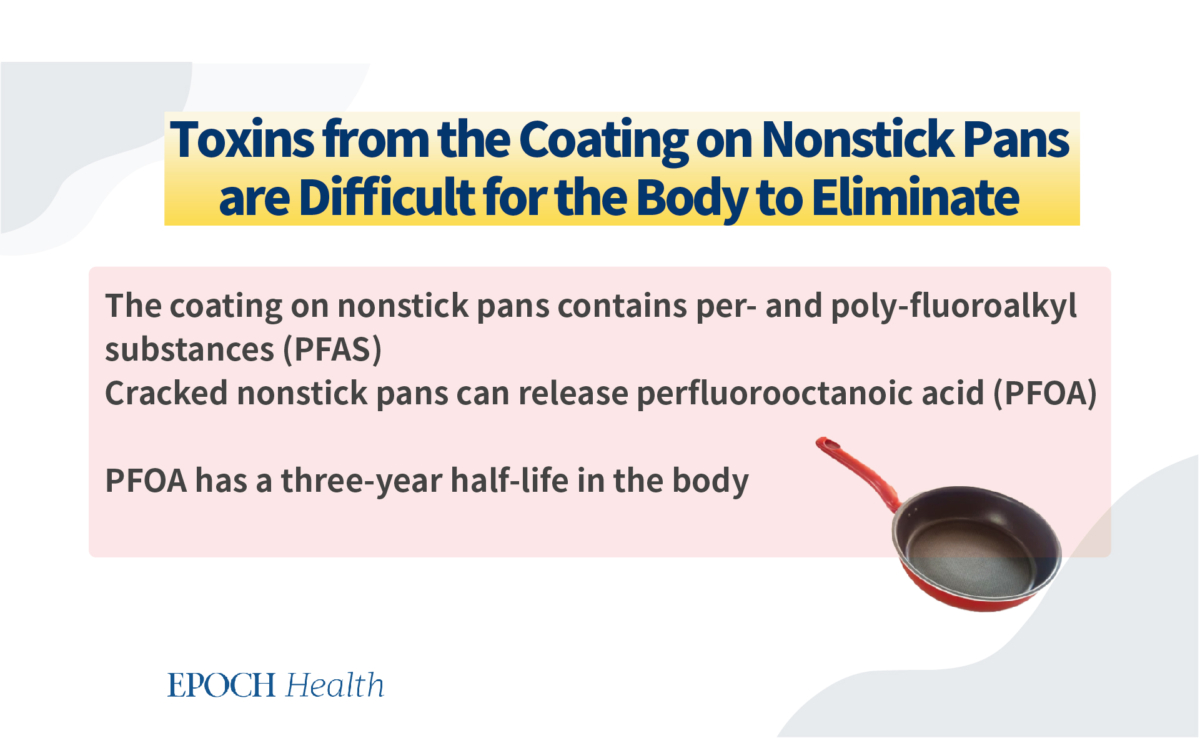
Nonstick pans are often favored because they are lightweight and easy to clean. However, their coating contains per- and poly-fluoroalkyl substances (PFAS), harmful environmental hormones. PFAS are widely used as a surface coating in various products, including nonstick pans, fast-food packaging, grease-resistant paper bags for fried chicken, popcorn boxes, and waterproof and oil-resistant outdoor sports apparel.
PFAS exposure is widespread. A report by the U.S. Centers for Disease Control and Prevention (CDC), which used data from the National Health and Nutrition Examination Survey (NHANES), found that 97 percent of Americans have PFAS in their blood.
Dr. Yen advises replacing nonstick pans if they develop cracks or scratches. Cracked nonstick pans can release perfluorooctanoic acid (PFOA), a chemical component in the PFAS system. PFOA has a half-life of up to three years in the human body, meaning it takes three years to metabolize the PFOA by half.
What are the health risks of PFOA? Prolonged exposure can lead to the following conditions:
- Thyroid dysfunction.
- Cardiovascular diseases such as heart disease, hypertension, and stroke.
- Liver function abnormalities.
- Increased cancer risk in animal experiments (Dr. Yen pointed out a lack of evidence in humans).
How to Use It
Dr. Yen recommends the following safe usage methods for nonstick pans:
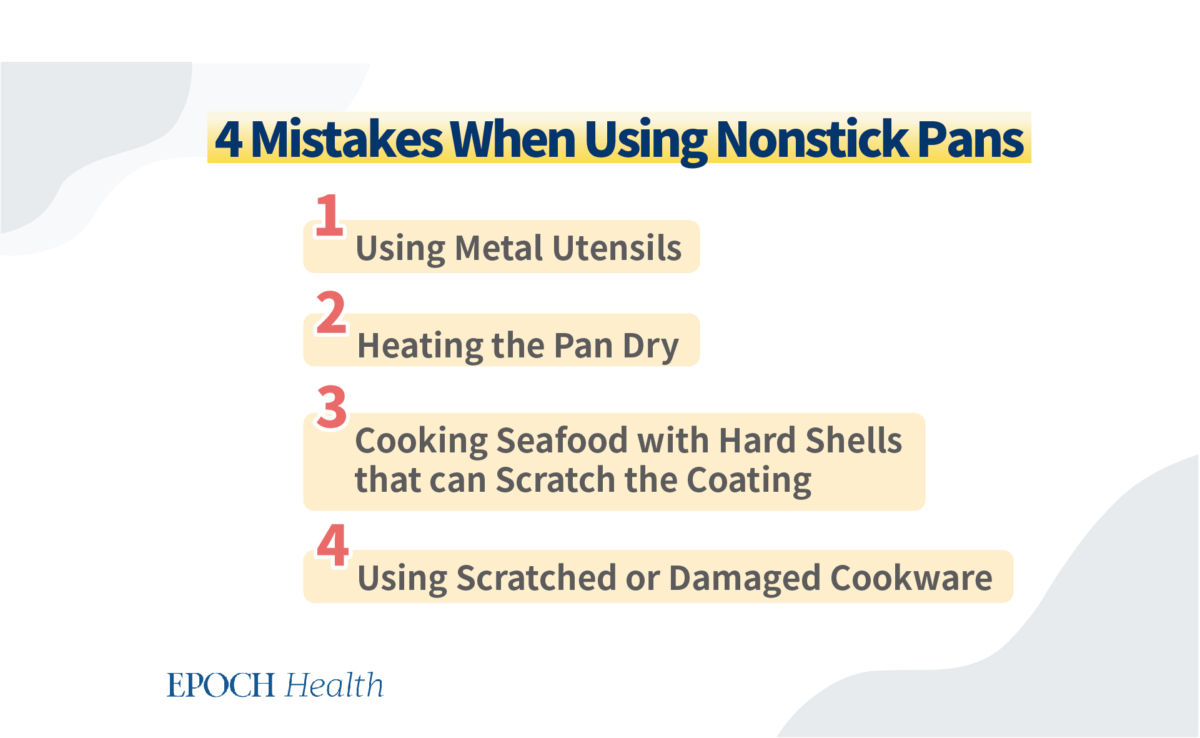
- Avoid using metal utensils as they can easily scratch the coating.
- Avoid dry-heating the pan, as it can damage the coating.
- Be cautious when using seafood with hard shells that may scratch the coating.
- Replace the nonstick pan if it becomes scratched or cracked.
5. Aluminum Cookware
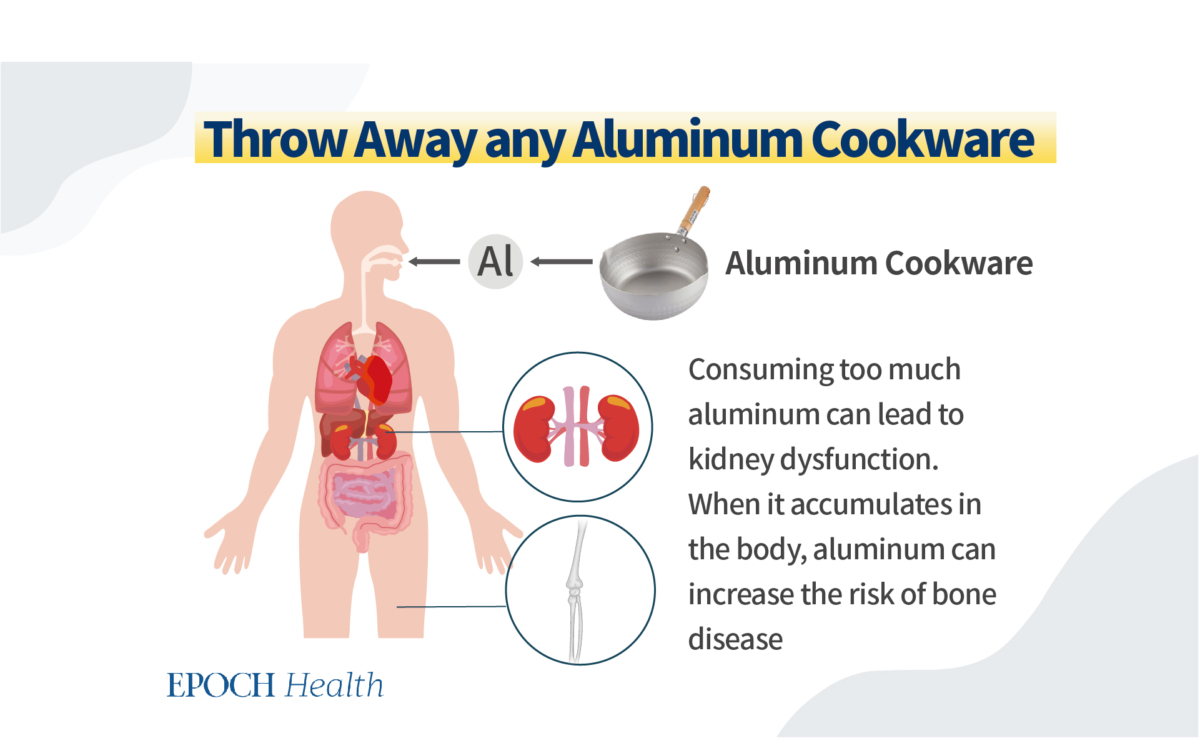
Dr. Yen recommends against using aluminum cookware as it can contaminate food, leading to bone diseases. Use stainless steel or cast iron cookware instead.