



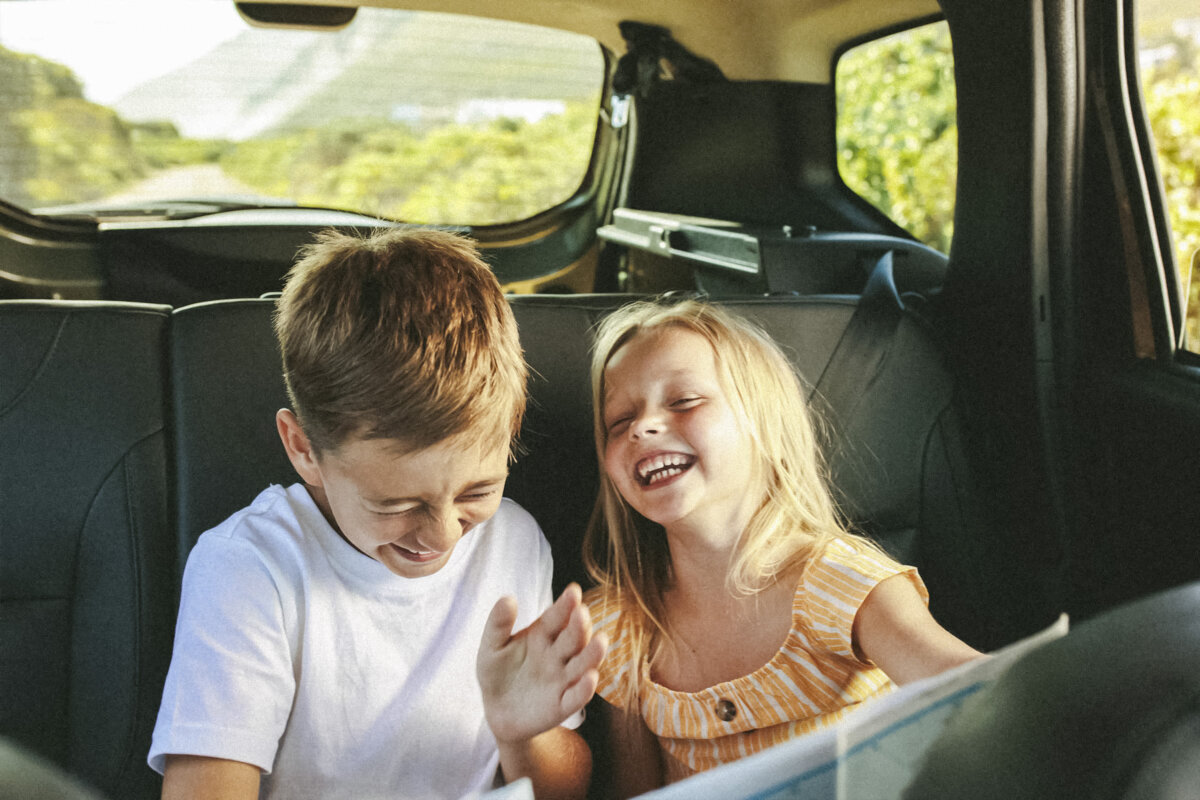
For Sarah Van Horn, a Minnesota-based surgical nurse, growing up as a twin and as one of six siblings came with its share of rivalries as well as memory-making good times.
“We got along on some days and other days bickered,” Van Horn said. “My middle brother and I fought a lot over the dumbest things such as looking at each other or making a noise that annoyed each other. For my twin brother and I, we were best friends growing up.”
While her childhood was marked by both playful camaraderie and inevitable squabbles, it reflects a broader reality about the intricate nature of brotherly and sisterly bonds.
While parents come before us and partners come later, our siblings are there for life’s entire journey—sharing every triumph, embarrassment, and milestone along the way. And they influence both our physical and psychological development from earliest childhood into adulthood.
Healthier Childhood Diets, Less Obesity
From early on, the presence of siblings influences not only a child’s personality and character development, but also lifestyle habits. A cross-sectional analysis, published in 2019 in the Journal of Nutrition Education and Behavior, examined the differences in children’s diets and eating patterns via questionnaires and dietary logs among 68 mother-child pairs. In this analysis, 41 participating children had siblings and 27 did not.
Researchers found that the sibling groups practiced healthier eating behaviors than the singleton children did, including eating more family meals and consuming fewer sugary beverages and other empty calories.
Having siblings may also provide a protective effect against childhood obesity. A 2022 German study of 1,932 children, published in PLOS-ONE, found that children with siblings generally had healthier body mass indices than only children, especially after the age of 9, and that children with siblings also tended to have higher levels of physical activity than their singleton peers (after all, you can’t play tag or wrestle by yourself).
The researchers also found that singleton children tended to be breastfed for a shorter amount of time than their sibling peers, and suggested that this also contributed to increased body mass index in older childhood and adulthood. Children with siblings also seemed to watch less television.
More Likely to Stay Married
Your sister or brother may also, inadvertently, be helping you stay married.
A 2022 study published in Journal of Family Issues examined the relationship between the number of siblings during childhood and social outcomes in adulthood, and found that with each additional sibling, the probability of divorce was reduced by 3 percent.
Why might this be? Those childhood fights with your brother, the treats that were split and shared, and the empathy that was shown when your sister broke her arm all provided a rich training ground for your adult relationships.
The study authors noted that the opportunity for siblings to “understand other people’s emotions and viewpoints, to learn to manage anger and resolve conflict, and to provide nurturance themselves” are all skills that are vital for marriage relationships.
May Ward Off Loneliness and Depression
Loneliness and social isolation are commonly reported among older adults, especially among those living alone, not working, or in poor physical or mental health.
While sibling contact tends to decline during early adult life as brothers and sisters go through major life transitions such as going to college, starting careers, or getting married, it often stabilizes in midlife and even increases after age 70.
A 2020 study published in the Journal of Family Psychology, which examined the relationship between sibling relationships in older adulthood and loneliness, found that sibling warmth was negatively associated with (or reduced) loneliness.
“In later life, sibling relationships may become increasingly important as sources of support and may mitigate feelings of loneliness and contribute to well-being,” the authors wrote.
Warm sibling relationships in older adulthood have also been shown to help stave off symptoms of depression, possibly as a result of reducing the loneliness that has been strongly linked to depression in adults older than 50.
On the other hand, a 2024 study published by the American Psychological Association found that warmer sibling relationships before age 23 predicted lower levels of both anxiety and depression at age 41, while sibling hostility at age 23 predicted “anxiety, depressive symptoms, and hostility.” As the study authors from the Journal of Family Psychology study noted, “sibling conflict and parental favoritism were positively correlated with measures of loneliness and symptoms of depression, anxiety, and hostility” in adulthood.
Support for Cognitive Health
If you typically win at Scrabble, complete multistep problems with ease, and remember where your car keys are, you may have your siblings to thank for that, too. Your interactions with each other may be helping you stay mentally sharp as the years go by.
Researchers from the University of Wisconsin–Madison and Boston College recently studied the associations between sibling relationships across the lifespan and cognitive function in later adulthood. They found that even though other social engagements and relationships tend to decline with age, positive sibling relationships tend to endure, offering the opportunity for mental and emotional stimulation. Positive childhood sibling relationships were associated with more frequent sibling contact between age 50 and 70, and to higher cognitive scores after age 80.
Researchers found that, interestingly, while the “mere presence” of siblings benefited cognitive development during a person’s younger years, frequency of contact, whether in person or via phone or electronic means, was key to supporting cognitive health in later adulthood.
They suggested that “siblings play a crucial role in providing companionship for older adults through regular, frequent contact and interactions, potentially compensating for the decline in their overall social engagement,” and therefore offering potential cognitive benefits along the way.
Conflict Management
All of these benefits come with an important caveat—they apply to sibling relationships that are primarily characterized by warm or positive interactions.
All siblings fight sometimes—or often. Young children have, on average, 7.3 disputes with their siblings per hour, according to Laurie Kramer, a professor of applied psychology and director of the University Honors Program at Northeastern University, and Megan Gilligan, associate professor of human development and family science and a fellow of the Gerontological Society of America. The two discussed this in a 2022 episode of the “Speaking of Psychology” podcast, sponsored by the American Psychological Association.
This is not necessarily a bad thing.
“[Children] learn a lot by fighting with their siblings, and it’s a very safe relationship for them to figure out how to do this, right?” Gilligan said.
“[We must help] children to develop the skills and competencies they need … so that they can have reasonable disagreements with a sibling, stand their ground, talk about their point of view, not necessarily give in to a more powerful sibling, and to do that in the midst of also having very positive interactions with their sibling,” she added.
Since young children generally don’t have the skills to manage conflict on their own, Gilligan recommended that parents step in and help them resolve the problem instead of letting them “fight it out.” She has even created a program called “More Fun with Sisters and Brothers” to help parents and their children get along and foster positive relationships.
The Harm of Playing Favorites
As every parent knows, children are acutely aware of whether something is “fair” or not—and ongoing perceptions of unfair preferential treatment among siblings can lead to ongoing conflict into adulthood.
“I have studied parental differential treatment or favoritism in middle age, into people’s 60s, a much different stage of a life course,” Gilligan said. “What we find is very consistent. Children, adult children in this case, often perceive favoritism. … [If] they feel that it’s just or fair, it doesn’t seem to be as consequential.
“But if they do not perceive that it is just or fair, it has large consequences for their relationships with their sibling and also their psychological well-being.”
She said those negative memories and feelings will likely be carried with them for decades.
What Parents Can Do
Keeping kids from fighting with their siblings may be as possible as snow in August, but there are a few tools parents can use to help their children successfully navigate conflict.
Not taking sides when siblings argue, encouraging open communication, sharing details of each others’ lives, and being intentional about creating positive, shared family experiences (such as game nights or family trips) can help foster a warm and positive environment in which sibling relationships can grow.
“One thing we did a lot as kids was board games and very limited TV,” Van Horn said. “While the board games caused a number of fights, we also had a lot of good times together. Today we still do a lot of board games or cards when we gather—except with less fighting!”
Never Too Late
Researchers have observed that sibling relationships tend to have high levels of “durability,” meaning that the patterns and relationships that are established during childhood and adolescence—whether positive or negative—are likely to continue into adulthood, unless some type of significant intervening event occurs. This makes it all the more important to nurture and encourage warm sibling relationships from early on—but also throughout life.
When it comes to nurturing sibling relationships, “better late than never” applies—efforts to strengthen these relationships at any time, even in adulthood, carry the possibility of benefits later in life.
“We carry those early relationships with us on our well-being outcomes,” Gilligan said on the podcast. “These are relationships we carry with us in adulthood and we carry the consequences with them.”
Van Horn said that in adulthood, her appreciation for her siblings has deepened.
“As we all left for college, we came home with a greater appreciation of our siblings and were greater friends,” she said. “Today when we gather together, we tend to have a lot of laughter and joking around as siblings. We enjoy our times together and look forward to holidays or other gatherings.”