



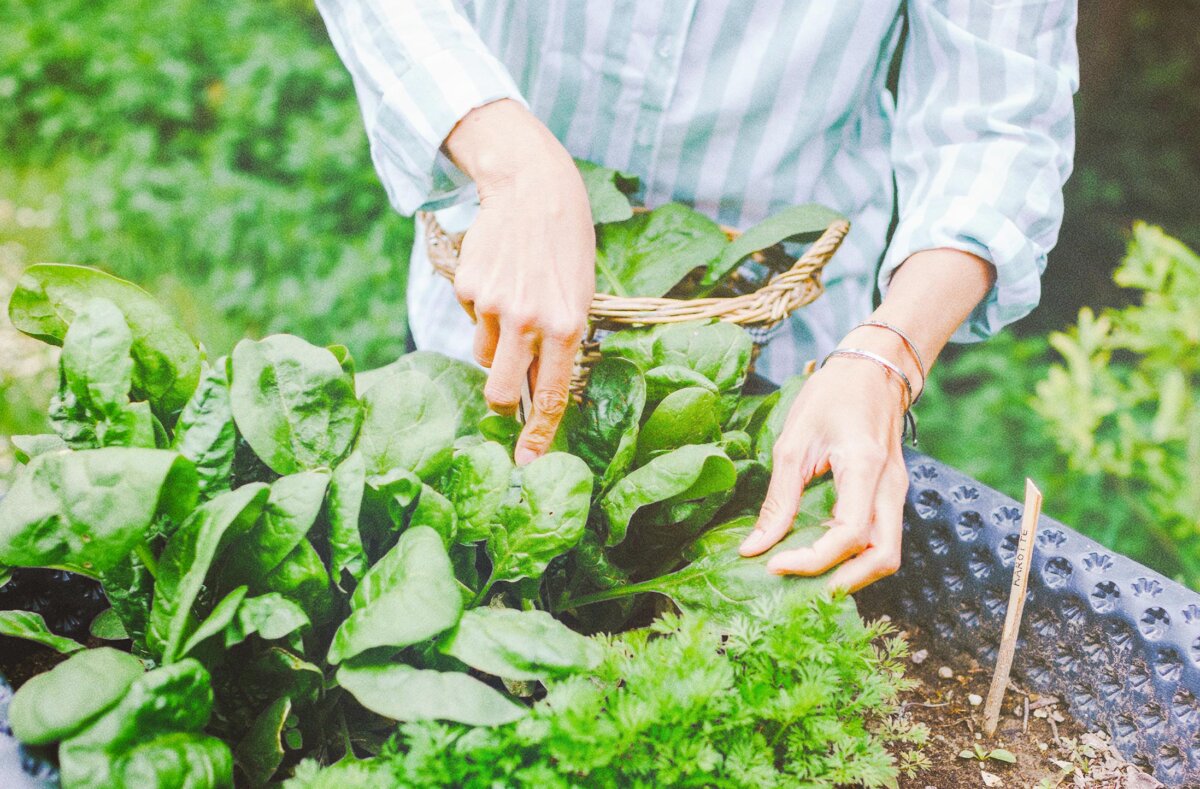
Summer is coming to an end, and cool evenings are a reminder that autumn is just around the corner. Fortunately, the end of August does not mean that you need to put your green thumb to rest. In many parts of the country, it is not too late to put in a fall garden—even in September!
Besides a few tips and adaptations, frost, temperature, and sunlight will determine the fate of your autumn garden.
Plant now and you will not only harvest delicious winter vegetables after the first frost or when snow covers the soil, but also reap the benefits of their nutrients—as well as the outdoor activity that comes with growing them.
First Frost Date
To time your autumn crops successfully, it is essential to be aware of frost. To determine whether you can still plant a crop, you need to know your area’s first frost date. Visit the Almanac.com frost date calculator online, type in your ZIP code, and the website will give you the date.
The first frost date combined with the “days to maturity,” which you find on the back of any seed package, provides you with the necessary information for a simple calculation. Subtract the days to maturity from the first frost date, and you have the date by which you must plant your crop.
For example, if your first frost date is Oct. 25, and the crop has a 40-day maturity, the latest date to seed is Sept. 15.
Generally, the goal is to get the plant well established, preferably to maturity, before the first frost hits. Vegetables that mature quickly, called “short season crops,” are ideal for extending your growing season.
Some plants are more frost-tolerant than others and can survive a few frosts. Cabbage is a good example. Unfortunately, cabbage is not a quick crop to grow, but if you have it in the ground, you don’t have to pull it out before the frost comes.
For the short-season crops we’ll discuss, you can plant them now. You just need enough warmth and light for them to grow quickly.
Temperature and Light
“Plants generally become light-limited when the day length drops below 10 hours per day,” Krista Jacobsen, an associate professor in the horticulture department at the University of Kentucky, told The Epoch Times.

That means the “days to maturity” on your seed packet become less accurate as the days get cooler and light is limited. It also means you may need to plant your fall garden in an area that won’t get early shade.
“The further you get away from the main growing season, the more calendar days you add on—generally adding a minimum of 25 percent of additional days,” Jacobsen said.
“All bets are off when you get to Thanksgiving!”
Based on the above example, because 25 percent of 40 is 10, you will need to add 10 extra days to the “days to maturity,” resulting in a last seeding date of Sept. 5.
Therefore, selecting varieties with the shortest days to maturity possible, or crops that can be harvested as baby greens, is preferred. Of course, if you are a bit past the last seeding date, it’s still worth a shot. You never know how long the warmth will last, and you could enjoy a late frost.
Short Season Crops
Many leafy greens, such as spinach, arugula, kale, mustard, and collard greens, prefer cooler temperatures and can be harvested—typically as baby leaves—in four to six weeks.
Radishes, carrots, beets, and other root crops fall under this category as well.
| Vegetable | Variety | Days to maturity | Added 25 percent |
Days needed (days to maturity + 25%) |
| Radishes | Cherry Belle, French Breakfast | 20–30 | 5–7.5 | 25–37.5 |
| Carrots | Sprint | 44 | 11 | 55 |
| Beets | Kestrel, Red Cloud, Touchstone Gold | 50–60 | 12.5–15 | 62.5–75 |
| Kale | Hanover, Scarlet, White Russian | 30–60 | 7.5–15 | 37.5–75 |
| Spinach | Carmel, Space, baby leaves of other varieties | 25–50 | 6–12.5 | 31–62.5 |
| Arugula | 20–40 | 5–10 | 25–50 | |
| Collard greens | Flash F1 | 55 | 14 | 69 |
Sowing your seeds in early September will provide you with fresh produce as soon as October—and it will last.
At Merry Hall Farm, Jacobsen’s home farm in Lawrenceburg, Kentucky, seeding cool-season crops is still in progress.
“We do a lot of kale and leafy green mixes, and we will seed overwintering carrots. Those are the safest ones, depending on your latitude. Farmers or home-growers south of us can get away with a lot more.”
Tools to Extend the Growing Season
To keep tender crops protected from cold winds and cool temperatures, you can use cold frames or row covers to extend your growing season.
“These would ideally be put onto the beds before the first frost and taken off (or flipped back) during the warm hours and sunny time of the day, then closed again overnight,” Jacobsen, who has been farming for over two decades, said.
Ohio State University offers videos and information on how to grow spinach in winter under low tunnels or row covers. Growers can also use this system for arugula.
Create Your Own Winter Stew
One of the best dishes that comes out of my kitchen in winter is a hearty winter vegetable stew. You can be creative with the recipe and add any vegetables that you’ve just harvested or that store well throughout the season.
Beets, parsnips, turnips, or carrots will add an earthy flavor to the stew. Remember, root vegetables turn slightly sweet when cooked, which you can nicely balance with onion, garlic, tomato paste, or some dry red wine. Any leafy green, such as collards, kale, or spinach, will add a wealth of nutrients on the mineral side. Add vegetable, beef, or chicken stock for a more “saucy” version.
Recipe: Homemade Winter Stew
This hearty winter stew brings together root vegetables, greens, and your choice of extras for a comforting homemade meal.
Ingredients:
2 to 3 tablespoons olive oil
1 medium onion, chopped
Garlic, to taste, minced or pressed
1 teaspoon ground coriander, or to taste
1 to 2 tablespoons tomato paste
4 to 6 cups mixed vegetables, cut into 1-inch cubes
1 cup of mushrooms, sliced (optional)
1 cup dry red wine
4 to 6 cups stock (vegetable, beef, or chicken)
1 to 2 cups leafy greens, chopped
1 to 2 teaspoons herbs, such as rosemary, thyme, marjoram, or oregano
1/2 cup farro (optional)
1 to 2 cups cooked beef, chicken, or lamb, browned separately (optional)
Salt and pepper to taste
Fresh sourdough bread, for serving
Instructions:
- Wash and cut root vegetables. Chop leafy greens, slice mushrooms if using, and mince or press garlic.
- In a Dutch oven or large pan over medium heat, warm olive oil. Add onion and garlic, and cook until softened. Stir in coriander.
- Stir in tomato paste, then add vegetables and mushrooms if using.
- Pour in red wine to deglaze the pan. Stir, then add stock.
- Add leafy greens, herbs, salt, and pepper.
- Reduce heat and simmer 20 to 30 minutes, or until vegetables are tender.
- If using farro, add before simmering and add extra stock if needed. If using meat, brown in a separate pan and stir into the stew before resting.
- Let rest for 15 minutes before serving. Serve with fresh sourdough bread.
Harvest and Storage
Don’t be afraid to keep some root crops in the ground during the winter. Snow serves as an insulator, protecting them from harsh freezes. Carrots and potatoes can be stored in the ground this way. Above-ground vegetables, such as Brussels sprouts and kale, can withstand some frost and snow. Still, you need to check on them regularly to avoid missing their harvest deadline.
Other root vegetables, such as beets, should be pulled earlier due to the risk of rotting in the soil. You can store root crops in a cold, humid environment, such as a root cellar or the bottom drawer of your refrigerator, wrapped in a moist kitchen towel.
Harvesting Health Benefits
Beyond the benefits of the food itself, gardening offers numerous additional benefits. Gardening can improve cardiovascular health in older adults and reduce the risk of diabetes and mental illness, according to a study published in the Journal of the Academy of Nutrition and Dietetics in 2023.
A review published in the Journal of Environmental Horticulture demonstrated that a person’s overall mental health improves through gardening. Improvements include reduced stress, depression, and anxiety, as well as enhanced memory, productivity, creativity, and attention. Scientists saw an overarching improvement in life satisfaction and happiness among gardeners.
Therefore, planting, weeding, and harvesting your winter produce will benefit you in more ways than one.