



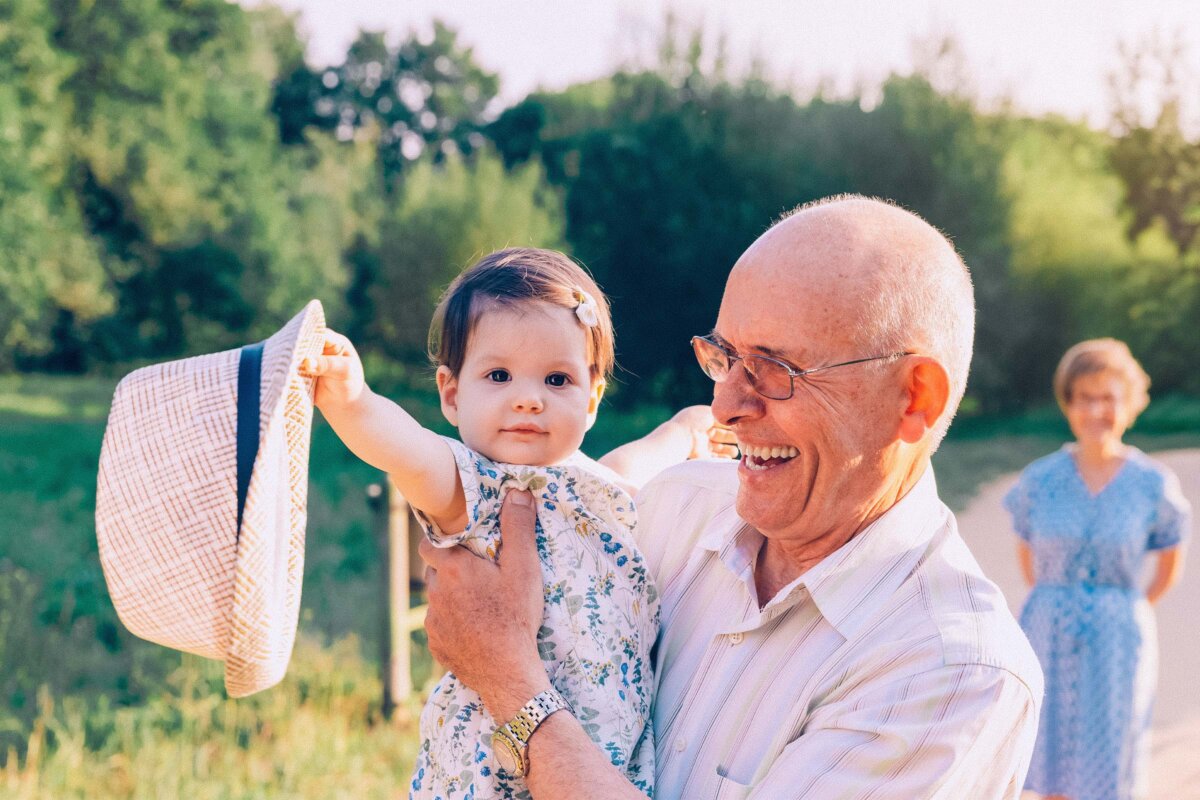
Ask any grandparent, and they will tell you: Keeping up with a 3-year-old is exhausting. It turns out, it may also be one of the best things they can do for their brain.
Backed by Research
A study, published in Psychology and Aging, used data from nearly 10,000 adults aged 50 and older in the English Longitudinal Study of Ageing, a long-running study that tracks the health and well-being of older adults in England. Researchers compared grandparents who helped care for their grandchildren—but were not primary caregivers and did not live with them—with similar grandparents who did not provide child care. A smaller group of about 1,700 participants was followed over time to examine changes in cognitive function.
At the beginning of the study, both caregiving grandmothers and grandfathers scored higher on cognitive measures than non-caregivers. Cognitive performance was assessed using verbal fluency—naming as many animals as possible in one minute—and episodic memory—immediate and delayed recall of a word list.
Over roughly five years of follow-up, however, only caregiving grandmothers showed slower cognitive decline, a difference researchers believe may reflect differences in caregiving roles and level of involvement rather than caregiving itself. Interestingly, caregiving frequency and specific tasks did not predict cognitive change, suggesting that engagement itself mattered more than intensity.
Overall, grandparents who engaged in a wider range of caregiving activities tended to have higher verbal fluency and memory scores, a pattern the researchers likened to “cross-training” the brain by drawing on multiple cognitive systems at once.
A previous study found that grandparents who provided moderate child care—up to 39 hours per week—had about 24 percent lower odds of developing dementia.
Why Grandparenting May Be Good for the Brain
Grandparenting may support brain health through several overlapping pathways that together create a brain-friendly environment in later life.
“Overall, grandparenting fits really nicely with what we know about the role of lifestyle factors in healthy cognitive aging,” Rodlescia Sneed, an assistant professor of gerontology and psychology at Wayne State University who studies the health effects of grandparenting, told The Epoch Times.
Grandparenting often brings together mental stimulation, social engagement, and physical activity in a single role—all well-established contributors to brain health, she said.
“Any caregiving grandparent will tell you that the children keep them on their toes—cognitively challenged, active in resistance and balance training, engaged, loving, and feeling loved,” Cassandra Szoeke, a consultant physician, neurologist, and director of the Women’s Healthy Ageing Program at Monash University, told The Epoch Times. “It’s also exhausting at times, leading to good sleep.”
Cognitive ‘Stretching’
Regular caregiving introduces structure and routines around waking, meals, play, and movement. Daily structure helps regulate sleep, mood, and attention while reducing the cognitive drift that can come with unstructured, isolated days.
Interacting with children also places ongoing demands on the brain. Everyday caregiving tasks provide a form of mental engagement that resembles what neuroscientists call environmental enrichment, a pattern of novel, stimulating experiences known to support neuroplasticity, or the brain’s ability to form and strengthen connections, according to Dr. Thomas Holland.
Holland is the assistant trial director and medical advisor for the Alzheimer’s Association U.S. POINTER study, investigating whether lifestyle factors such as exercise, diet, social interaction, and mental stimulation can help prevent cognitive decline.
“When grandparents help with homework, read stories, solve problems, or explain concepts, they activate executive function, working memory, language networks, and long-term memory retrieval,” Holland said. “These are the very systems that tend to weaken with age if they are not regularly challenged.”
What makes this kind of mental engagement especially powerful, Holland said, is that many of these skills—such as explaining multiplication tables or recalling historical events—may not have been used in years.
“In a very real sense, the brain is being asked to ‘stretch’ in ways it hasn’t in a long time,” he said, likening it to exercising an underused muscle. “That kind of cognitive effort promotes resilience.”
Over time, this mental engagement may help build cognitive reserve, the brain’s ability to cope with age-related changes and pathology, which aligns with the “use it or lose it” principle.
“To maintain brain health, you need to use all of your brain,” Szoeke said.
Caring for grandchildren does exactly that—challenging balance and movement, engaging the senses, and drawing on memory, planning, and problem-solving skills—not just verbal thinking.
The Helper’s High Is Real
For many grandparents, caring for grandchildren is a deeply altruistic act. Research shows that acts of helping and caregiving activate the brain’s reward circuitry and trigger the release of neurotransmitters such as dopamine and serotonin, neurotransmitters involved in mood, motivation, attention, and learning, often producing what researchers call a “helper’s high.”
One longitudinal study following 180 Brazilian older adults for four years found that those who routinely acted altruistically scored higher on memory, thinking, and executive function tests at baseline and continued to outperform their peers at two- and four-year follow-ups. The authors suggested that these benefits likely stem from a combination of mental stimulation, social engagement, stress buffering, and a stronger sense of meaning and purpose.
While researchers do not claim that higher dopamine or serotonin directly explains improved cognition, emotionally rewarding behaviors may help sustain the neurochemical systems that support attention and learning.
Grandparents may also benefit in more subtle, indirect ways. For instance, they often prepare healthier meals when cooking for grandchildren than they might for themselves.
“There hasn’t been enough work on this one, but ask a grandparent how often they finish off the last of the fresh cut fruit and veg the children leave,” Szoeke said.
Why Purpose May Be the Brain’s Best Protection
A sense of purpose appears especially important for the aging brain. In a study following more than 13,000 adults for up to 15 years, those who reported a stronger sense of purpose were 28 percent less likely to develop cognitive impairment or dementia.
The study did not examine why purpose was protective, but researchers suggested that people with a stronger sense of purpose may be more likely to keep learning, stay engaged in their communities, and remain mentally active—factors that may help build cognitive resilience over time.
Grandparenting can naturally provide that purpose—especially when it’s voluntary and appreciated. Holland noted that older adults are often driven not by abstract health goals but by deeply personal ones.
“They want to be stronger, more flexible, and more energetic so they can play with or hold their grandchildren longer,” he said.
That motivation often leads to improvements in exercise habits, diet quality, sleep patterns, and stress management—all of which are well-established pillars of brain health and cognitive resilience in later life.
One study found that grandparents who were actively involved in their grandchildren’s lives reported greater meaning in life and lower levels of stress and depressive symptoms than those who were not involved.
Chronic stress and depression have been linked in many studies to inflammation and changes in brain regions involved in memory. Feeling respected and valued can strengthen social connection and sense of purpose—both linked to healthier cognitive aging.
These findings align with role enhancement theory, which suggests that taking on meaningful roles—rather than withdrawing from them—can improve well-being by expanding opportunities for identity, engagement, and purpose.
Caring for children involves dynamic, emotionally engaging interactions that stimulate brain regions involved in emotional regulation and memory, including the hippocampus and prefrontal cortex, Holland said.
“Positive social interaction lowers inflammatory signaling and reduces stress hormones that can otherwise damage these regions over time,” he said.
The Context of Caregiving Matters
While grandparenting provides cognitive protection, studies show that its benefits depend on the type and intensity of care.
A 2023 study found that grandparents who helped care for their grandchildren but were not the primary caregivers and did not live with them reported higher life satisfaction, largely due to feeling more connected and valued. Living with or fully raising grandchildren did not offer the same boost.
A review of 117 studies reached similar conclusions. In most cases, grandparents who did not live with their grandchildren but helped out—for example, by babysitting, helping with daily care, staying in contact, or providing occasional support—tended to have better health and well-being, while full-time caregiving, such as living with or raising grandchildren, was more often linked to worse outcomes.
Experts point to stress as a key reason.
Moderate, meaningful caregiving can be enriching, while chronic, high-burden care may repeatedly activate the body’s stress system, leading to persistently elevated cortisol, Holland said.
“When the role is manageable and meaningful, it can support cognitive health,” Sneed said. “But when it becomes overwhelming or stressful, it may not have those same benefits.”
What feels “OK,” she said, varies widely.
“We are also unique—so the quantity of what defines moderation is different for each of us, even different for any one of us, at different times,” Sneed said.
Gender may further shape where that threshold lies. In a 2024 study of more than 10,000 grandparents, those who helped care for grandchildren but did not live with them had a lower risk of dementia than non-caregivers. Light caregiving was associated with a lower dementia risk among grandmothers, whereas more intensive caregiving appeared beneficial for grandfathers.
The researchers suggested that this difference may reflect traditional social roles: Women often already have stronger social networks and caregiving roles, so even light caregiving may be beneficial, while men may need more intensive involvement to gain the same social and cognitive stimulation.
Ultimately, how grandparents experience their role may matter as much as the role itself. One study found that older adults who held multiple meaningful roles—such as grandparent, volunteer, or community member—reported better overall health, with no evidence that being busy in these roles harmed their well-being. The findings suggest that activity and responsibility aren’t necessarily burdensome in later life when roles are chosen, meaningful, and socially connected.
For those who have access to it, grandparenting may be a catalyst for healthy aging.
“[The role is] less of a single activity and more of a lifestyle pattern that bundles together movement, cognition, diet, socialization, purpose, and stress reduction,” Holland said.