



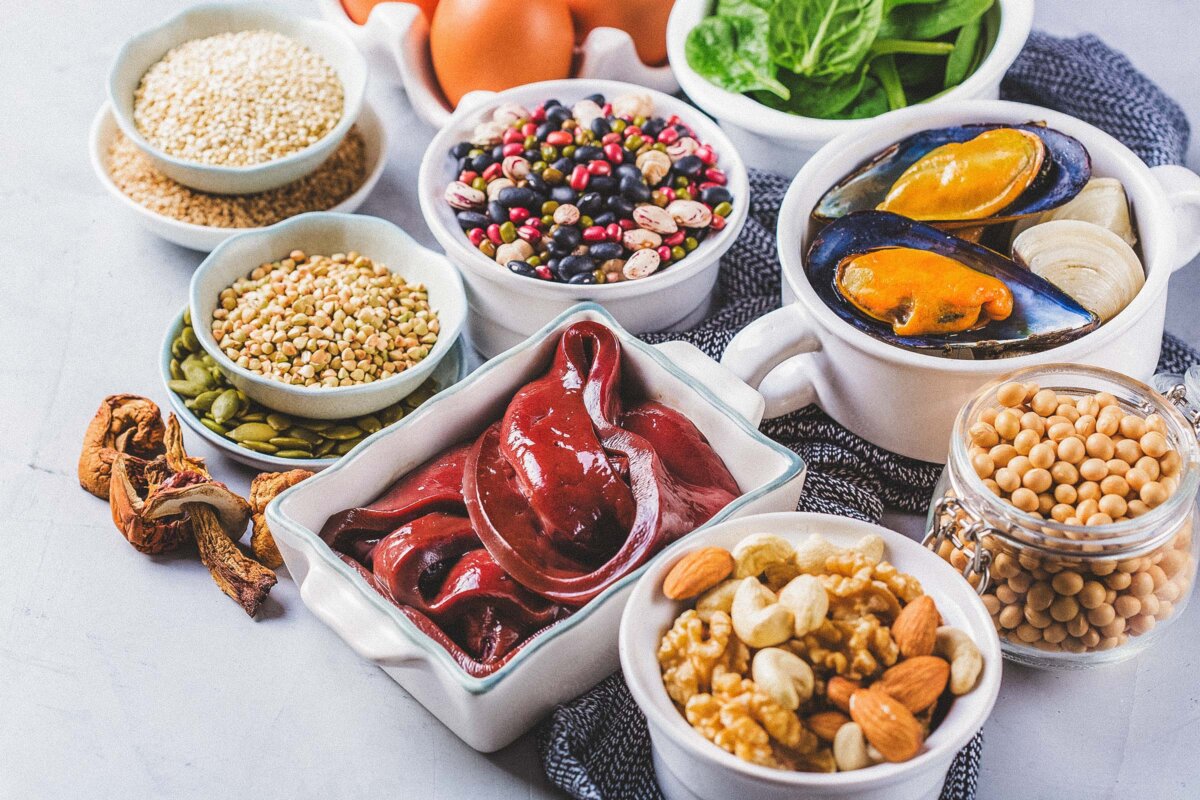
Most women only realize that they’re iron deficient when their energy collapses all at once. Lee’s version at age 45 was a mix of heart flutters, brain fog, and bone‑deep fatigue.
“It felt like my body was running on a low battery—exhausted, foggy, and jittery—and the iron tablets that were supposed to help just wrecked my stomach,” she told The Epoch Times.
Years of cycling on and off standard iron supplements alongside food barely nudged her blood levels and left her relying on infusions every few months just to function. However, when she finally switched to daily liver capsules, everything shifted: Within three days, her stomach calmed, her heart steadied, and her energy began to return in a way it hadn’t for years.
Liver capsules provide whole‑food nutrients from dried liver, rather than the synthetic ingredients used in most typical supplements or pharmaceuticals.
Stories such as Lee’s are very common in women with iron deficiency. One in three women of reproductive age is anemic, and most of them are taking the wrong thing to fix it.
People with iron deficiency often also struggle with hair shedding, dizziness, and shortness of breath. For many, typical iron supplements still do not fix the problem—and can cause constipation, cramps, and nausea—so it can be worth exploring gentler, whole-food options to help the body better use the iron in everyday meals.
When Iron and B12 Are Low
Iron and vitamin B12 are both needed to build healthy red blood cells, which carry oxygen around your body. When either is low, your tissues and brain get less oxygen, so even normal daily activities can leave you tired and short of breath.
Low iron typically causes a type of anemia in which red blood cells are smaller and paler than normal, while low B12 leads to a type in which red blood cells are fewer but larger and more fragile. Iron sits at the heart of hemoglobin, while B12 helps the spongy tissue inside your bones (bone marrow) make red blood cells.
B12 also supports your nervous system. Low levels can show up as tingling in the hands and feet, trouble with balance, or changes in memory and mood—sometimes even when standard anemia tests look only “borderline.” This is one reason why foods that deliver both iron and B12, such as liver and red meat, can feel so powerful for some women: They are topping up more than one missing piece at the same time.
Iron deficiency is very common and affects women the most. Heavy periods, pregnancy, low‑meat or plant‑only diets, celiac disease or other gut problems, and chronic illnesses with ongoing blood loss all raise the risk.
Common signs of iron deficiency include deep tiredness, looking pale or washed out, feeling cold all the time, getting puffed on small hills or stairs, and feeling light‑headed when you stand up. You might also notice thinking more slowly, feeling more irritable, having headaches, shedding hair, or experiencing restless legs at night. It is easy to blame these symptoms on being “too busy” or “stressed,” which is why seeing actual blood results matters.
As a clinical nutritionist, I usually look at hemoglobin, ferritin (iron storage), and transferrin saturation, plus both active B12 and total (serum) B12 to see the full picture in someone’s recent blood test. Active B12 reflects how much B12 your cells can use right now, so it is more sensitive for detecting early deficiency, while total B12 is a general measure, as it shows how much is circulating overall.
My view is shaped by 16 years of practice and by patients, including Lee, whose iron and B12 levels—and day‑to‑day lives—improved most with a food‑first, gut‑friendly plan rather than reliance on high-dose supplements.
Best-Absorbed Foods for Iron and B12
Not all iron in food acts the same in your body. Heme iron, found in animal foods such as meat, chicken, and liver, is more easily absorbed and is less affected by other things you eat than non‑heme iron from plants.
Non‑heme iron found in beans, lentils, tofu, spinach, nuts, seeds, and many iron‑fortified breads and cereals is harder for the body to absorb.
In a typical Western diet, people might take in about 10 milligrams (mg) to 15 mg of iron per day (women aged 19 to 50 need 18 mg daily—and 27 mg daily during pregnancy—while men and postmenopausal women need about 8 mg) but only absorb about 1 mg to 2 mg. Heme iron is typically absorbed at a rate of about 15 percent to 35 percent, compared with roughly 2 percent to 20 percent of non‑heme iron, depending on the meal.
The difference in absorption is why two women taking the same dose of iron on paper see very different results, depending on whether most of their iron comes from meat and fish or from plant foods and iron-fortified products.
Animal foods such as meat and fish can also improve how much non-heme iron you absorb from the rest of the meal, so even a small amount of animal protein alongside plant foods can help the iron in that meal work better. Nutrients do not always behave in the body the way they look on a food label or pill bottle.
What Blocks and What Helps Iron Absorption
How much iron your body takes up depends heavily on what you’re eating with it. Several common foods and compounds actively reduce absorption, while others significantly enhance it.
Phytates (also called phytic acid) are the main inhibitors in plant-based eating. They are found in grains, legumes, nuts, and seeds—many of the same foods that are promoted as iron sources—and they bind to iron in the gut, making it unavailable for absorption.
Polyphenols in tea, coffee, red wine, and even some herbal teas have a similar binding effect. Research has shown that a cup of black tea with a meal can cut iron absorption by more than half—this applies to both tea and coffee, regardless of whether they contain caffeine. Having these drinks at least two hours away from iron-rich meals reduces the interference.
Calcium competes with iron for the same absorption pathway in the gut. High-dose calcium supplements taken alongside an iron-rich meal can reduce iron uptake, as can large servings of dairy. As with tea and coffee, spacing calcium-rich foods and supplements away from your main iron meal is a practical workaround.
Vitamin C is the most powerful natural enhancer of non-heme iron absorption. When eaten with iron in the same meal, it converts iron into a form the gut can absorb more readily, with research showing that absorption can rise from less than 1 percent to a little more than 7 percent as the vitamin C dose increases. Good sources include capsicum, kiwi, strawberries, citrus, tomato, broccoli, and cabbage. Including one of these at every iron-focused meal is one of the simplest and most evidence-based habits you can adopt.
Liver, Red Meat, and Whole-Food Supplements
Liver is one of the richest natural sources of both heme iron and B12. Research shows that liver contains iron levels many times higher than those of lean meat, along with vitamin B12 levels that can easily meet your daily needs from only a small serving of 30 grams to 50 grams.
Liver also naturally carries folate, copper, and vitamin A—nutrients that help your body build and mature red blood cells—so you are getting a whole package that works together rather than iron in isolation. This nutrient combination is one reason some women report more stable energy on liver‑based foods or capsules than on iron tablets alone.
Red meat is less intense than liver but still provides solid amounts of heme iron and B12. About four palm‑sized servings of lean red meat per week can support iron and B12 for many women, although this works best as part of a broader diet that includes other heme sources such as chicken and fish rather than as the sole source.
As a former vegetarian myself, I know how confronting it can feel to even think about eating liver. I started introducing it into our dinners in patties made from half mince and half organic chicken liver, and even then, I found it a stretch to make these consistently. If you cannot bear the taste or the idea of cooking liver, whole‑food capsules made from dried liver can be a gentler way to access these nutrients in food‑like doses, without relying solely on synthetic iron tablets.
For both fresh liver and liver capsules, choosing products from grass‑fed, preferably organically fed animals is worth the extra effort, as this usually means fewer added hormones and antibiotics and a more nutrient‑dense profile overall.
Because liver is so nutrient‑dense, it also contains very high amounts of preformed vitamin A (retinol), which your body absorbs easily. Toxicity from food alone is rare; the bigger concern arises when high‑dose vitamin A supplements are added on top of a liver‑rich diet, so experts usually suggest small, regular portions and being careful with extra vitamin A pills.
Liver capsules are essentially dried, ground liver, so they provide iron, B12, and other supportive nutrients in a whole‑food form rather than as single, synthetic ingredients. For many women who cannot tolerate large doses of iron salts, these smaller, food‑like doses from heme sources are gentler on the gut and easier to continue in the long term, which matters when you are trying to slowly rebuild iron stores.
Too much iron over time can be risky if you have liver problems or conditions such as hemochromatosis, so it is better to test, not guess, and choose supplements with a nutritionist or other clinician. Classic iron supplement forms such as ferrous sulfate and ferrous fumarate can raise levels but often cause constipation, nausea, or stomach pain at higher doses, while gentler, chelated forms such as ferrous bisglycinate are often easier on sensitive digestion.
Everyday Habits That Support Recovery
Raising iron is rarely an instant fix unless it is given through intravenous infusion. A safer approach is one that is like turning up a safe, slow, steady flame: Small amounts of highly absorbable iron from whole-food sources, taken consistently, can refill your stores so you avoid recurring symptoms or supplement side effects.
A single liver capsule or a few bites of organic liver, red meat, or poultry may not seem dramatic, but taken most days for weeks or months, they can add up to a real change in your ferritin and hemoglobin.
Other practical habits that help include cooking tomato‑based sauces or stews in a cast‑iron pan to gently increase iron in the meal; building meals around one B12 and heme iron‑rich anchor such as meat, chicken, or fish, plus at least one vitamin C‑rich side; and rotating in liver in small, regular amounts—whether as pâté on toast, mixed into mince, or via whole‑food capsules—rather than forcing down a huge serving once in a while.
Those with symptoms of anemia, existing health problems, or a family history of iron overload conditions should have their blood tested and talk with their clinician before making major changes to supplements or to their diet, especially if they are on regular medications.
For many women, the most sustainable plan is a blend of basing regular meals around heme‑rich iron and B12, using vitamin C‑rich foods to support absorption, and adding whole-food supplements, guided by blood tests, when needed.
Lee’s experience is not a one‑off miracle, but a reminder that finding a way that works for you, through which you can regularly eat or take highly absorbable iron and B12, can make your body and mind feel substantially different. When iron and B12 are topped up in ways your gut can tolerate, it is often your everyday life—not just your lab numbers—that tells you that things are working well.
Recovery varies widely depending on a person’s other health and lifestyle factors. Liver capsules can work within a week and ferritin stores can be replenished in 120 days, which happens to be the life cycle of a red blood cell.