



Thousands of people take supplements every day without fail. The problem is, “every day” isn’t specific enough.
That’s because the body follows natural daily rhythms. Clocks in the brain and in organs such as the gut and liver help regulate digestion and how nutrients are used throughout the day. Take your supplements at the wrong time, and the benefits drop.
Your Body Runs on a Clock
Many systems in the body follow a daily rhythm, including our genes and the microbes living in the gut. These rhythms help regulate inflammation and overall health.
The body’s main biological clock sits in the brain, but many organs, including the liver, gut, and pancreas, also have their own clocks. These peripheral clocks help coordinate functions throughout the day. For example, glucose tolerance tends to be higher during the day and lower at night, melatonin rises in the evening to prepare the body for sleep, and cortisol peaks in the morning.
Because of these rhythms, the timing of when we eat or take supplements matters, as it can affect our health in different ways. Researchers are increasingly interested in this field, known as chrononutrition.
Take Your Supplements Right
Supplements work best when their timing aligns with your body’s rhythms. Research and clinical experience suggest the most common ones are:
Morning
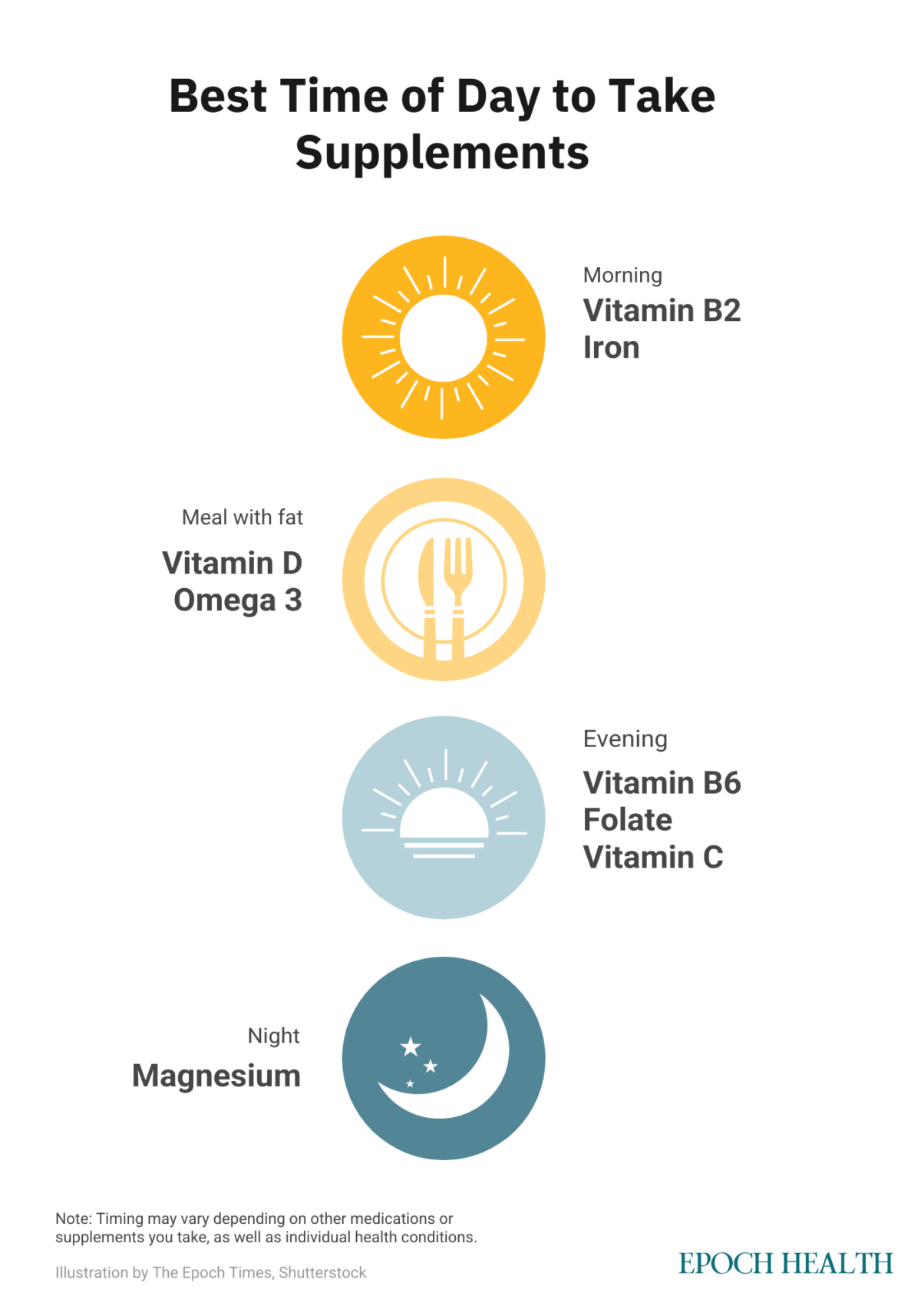
Vitamin B2
Vitamin B2 is best taken in the morning.
Morning intake has been linked to a lower risk of cardiovascular disease, likely because B2 supports a clock protein called CRY2 that helps regulate the body’s internal rhythm. In healthy people, CRY2 levels peak in the morning, so taking B2 then may better support normal daily patterns in heart activity, blood vessel repair, and metabolism.
Iron
Iron is particularly sensitive to timing—and to what surrounds it.
Iron is best taken in the morning, away from food or coffee, and with a source of vitamin C, such as orange juice, to boost absorption. Taking iron in the afternoon rather than the morning lowers absorption by about 37 percent. Taking vitamin C with iron increases absorption by about 30 percent, while taking iron with coffee can reduce it by 54 percent. Taking iron with breakfast and coffee cuts absorption by up to 66 percent, even if the meal contains vitamin C.
Some foods, such as chocolate, grains, and legumes, can make it harder for your body to absorb iron, so it helps to be mindful of when you take it. It’s also best to allow at least an hour between taking iron and taking minerals such as calcium, zinc, or magnesium, as well as between taking iron and taking certain medications, including levothyroxine and some antibiotics.
During the Day
Vitamin D
Vitamin D is best taken early in the day. Since vitamin D is fat-soluble, taking it with foods that contain fat, such as fatty fish, nuts, or peanut butter, can help the body absorb it better, Vanessa King, a registered dietitian nutritionist, told The Epoch Times. Taking it too late in the day may also disrupt sleep.
Vitamin D interacts with some medications, including orlistat, statins, steroids, and thiazide diuretics, so it’s worth checking with a health care professional if you take any of these, King said.
Omega-3
Omega-3 fatty acids are best taken with your largest meal of the day. Dietary fat helps your body absorb them and can reduce the fishy aftertaste that puts many people off, Dr. Sunil Kumar, a certified lifestyle medicine physician consultant, told The Epoch Times.
These fatty acids also have mild blood-thinning effects. People taking anticoagulants should check with a health care professional before using high doses (more than 3 grams per day), he said.
Evening
Vitamin B6 and folate
Although all belong to the B-vitamin family, vitamin B6 and folate—unlike vitamin B2—appear to work better in the evening. Higher evening intake has been linked to a lower risk of cardiovascular disease, possibly because the evening is when the body especially needs serotonin for melatonin production. Vitamin B6 helps synthesize serotonin, while folate supports the final step of melatonin production. Taking these nutrients in the evening may therefore help regulate sleep, circadian rhythms, oxidative stress, and cardiovascular function.
Vitamin C
A study examining data of more than 27,000 people found that taking vitamin C in the evening is beneficial.
Vitamin C protects cells against oxidation and inflammation. Many processes linked to oxidative stress and inflammation follow daily rhythms: Most antioxidants and immune cells naturally peak at night or just before daybreak.
Night
Magnesium
Magnesium is best taken in the evening, about one or two hours before bed, when your body is starting to wind down. It can promote relaxation and support restful sleep.
It can be taken with or without food, although King suggests taking it with a light meal or snack if it causes stomach upset.
Magnesium can interact with some medications. It may interfere with bisphosphonates (used for osteoporosis), certain antibiotics such as tetracyclines and fluoroquinolones, and diuretics. Other drugs, such as those for acid reflux or peptic ulcers, can reduce magnesium absorption, Kumar said.
High doses of zinc supplements can impair how well the body uses it.
“To be safe, separate magnesium from these medications by at least two hours,” Kumar said.
Taking multiple supplements can sometimes add up to more than your body needs, which can affect absorption or interact with medications. To avoid this, review what you’re taking and consider talking with your doctor or dietitian.
Timing can give your supplement routine a meaningful edge, but it only matters if you’re actually taking them. Consistency comes first, and the best schedule is one you’ll stick to.
“The best time is when you will remember to take them regularly, building a consistent habit,” King said.