



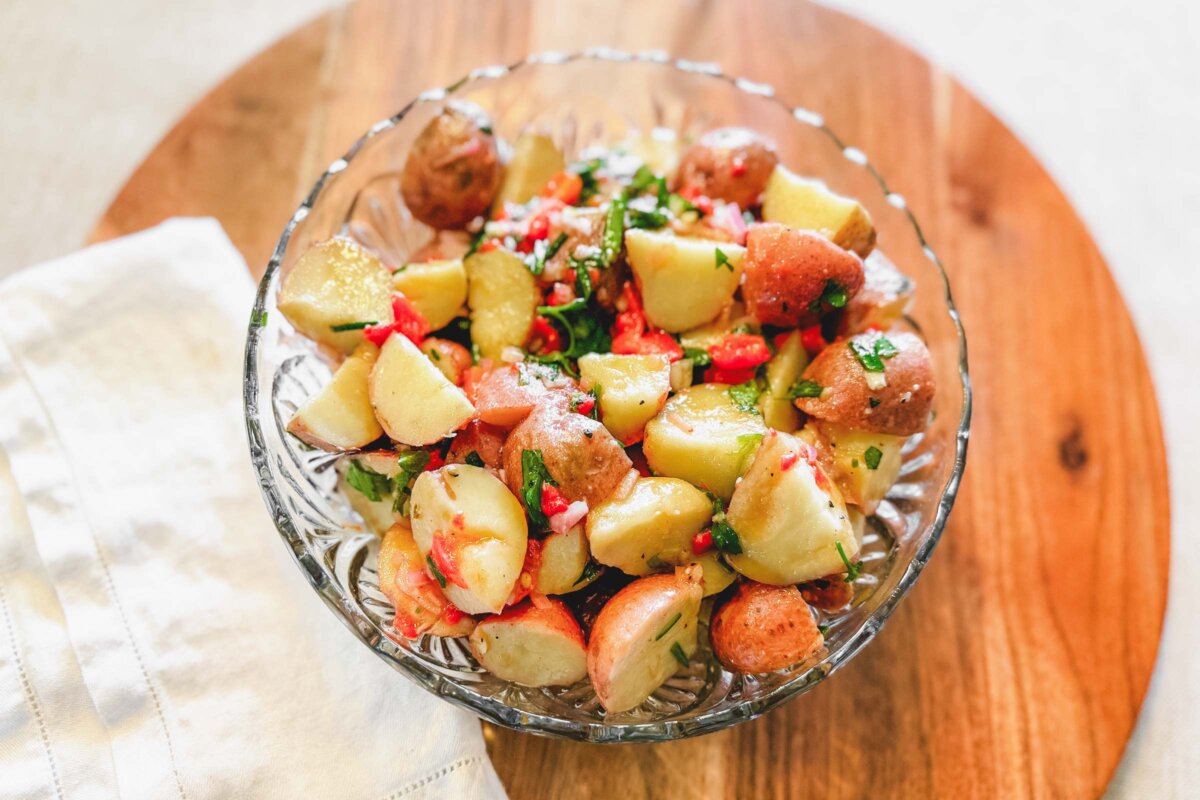
Potato salad may be the last thing you expect on a blood sugar-friendly menu, but this Italian-style version makes a strong case. In Italy, potatoes are often dressed with a light vinaigrette rather than the heavy mayonnaise common in American versions—a tradition that offers more nutritional wisdom than many realize. One simple technique takes it even further.
Potatoes have earned a bad reputation in some nutrition circles, but the issue is often how they’re prepared rather than the potato itself. French fries are a prime example. They are typically cooked at high temperatures in inflammatory seed oils that are reused repeatedly, creating oxidized fats, acrylamide, and advanced glycation end products—harmful compounds formed when foods are cooked at high heat. These compounds are linked to increased inflammation, oxidative stress, and a higher risk of chronic disease.
Those concerns don’t apply to baked or boiled potatoes, but blood sugar is still worth considering. Potatoes have a high glycemic index because they contain rapidly digestible starch, meaning freshly cooked potatoes can raise blood sugar quickly.
However, something remarkable happens when potatoes are cooked and then chilled overnight. Their starch structure changes, converting a significant portion of rapidly digestible starch into slowly digestible starch and resistant starch—the latter acting as a type of prebiotic fiber that slows glucose absorption and feeds beneficial gut bacteria. The same transformation occurs in cooked and cooled rice, pasta, and legumes.
This recipe takes full advantage of the conversion process while also avoiding another common issue. Many commercial mayonnaise products are made with inflammatory seed oils such as soybean oil, canola oil, and sunflower oil. A bright vinaigrette made with extra-virgin olive oil removes that concern while adding a cleaner, lighter, more versatile flavor.
Why Italian‑Style Potato Salad Is Better for Blood Sugar
Each ingredient contributes to both flavor and metabolic support.
Cooled Potatoes: One of the richest sources of resistant starch, which acts more like fiber than a digestible carbohydrate. In the large intestine, it is fermented into short-chain fatty acids such as butyrate, which help calm inflammation, support the gut lining, and improve blood sugar control over time. Because resistant starch is not rapidly converted into glucose, cooled potatoes have a lower glycemic effect than freshly cooked potatoes.
Chives and Shallot: Add fresh, mild onion flavor, and a hint of bitterness that balances the sweetness of the potatoes and peppers. They also provide small amounts of prebiotic fibers and antioxidants that support gut health and blood sugar regulation.
Extra-Virgin Olive Oil: Brings a clean, peppery richness and is full of healthy fats and plant compounds with antioxidant and anti-inflammatory effects, which help support beneficial gut bacteria, reduce inflammation, and promote more stable blood sugar.
Champagne Vinegar: Adds brightness and gentle acidity, which studies suggest can help reduce post-meal blood sugar spikes and improve how the body processes glucose.
Cooling cooked potatoes before serving transforms a classic dish into one that better supports blood sugar and gut health.
How to Make Italian‑Style Potato Salad With Resistant Starch
This Italian-style potato salad combines chilled, tender potatoes with a bright vinaigrette to create a satisfying, healthy salad.
Prep Time: 15 minutes
Cook Time: 12 minutes
Chill Time: 10 hours (or overnight)
Total Time: 10 hours, 27 minutes
Serves: 4
Ingredients
- 2 pounds red potatoes, scrubbed and halved or quartered into 1‑inch pieces
- 2 teaspoons sea salt, divided
- 1/3 cup extra‑virgin olive oil
- 2 tablespoons champagne vinegar
- 1 1/2 teaspoons Dijon mustard
- 1 small shallot, very finely minced
- 1/4 teaspoon ground black pepper
- 1/4 cup chopped chives or scallion greens
- 3 tablespoons chopped fresh parsley
- 1/2 cup chopped roasted red pepper
Instructions
Step 1: Cut potatoes into 1-inch pieces, then place in a large saucepan and cover with cold water. Add half of the salt, cover, and bring to a boil over medium‑high heat.
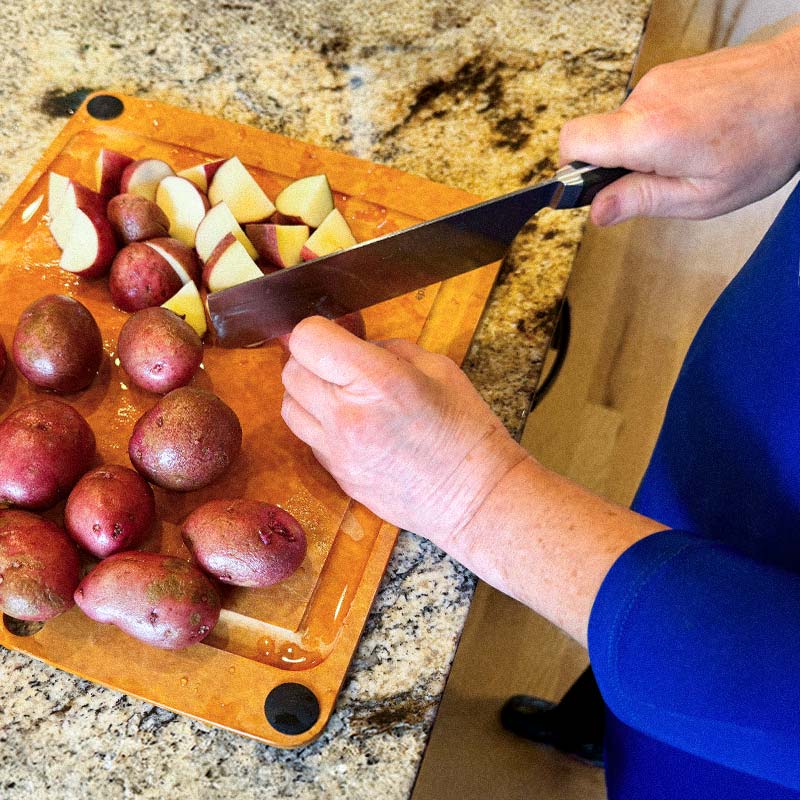
Step 2: Remove or vent the lid, then reduce heat and simmer for about 10 to 12 minutes, until just tender when pierced with a fork. Do not overcook.
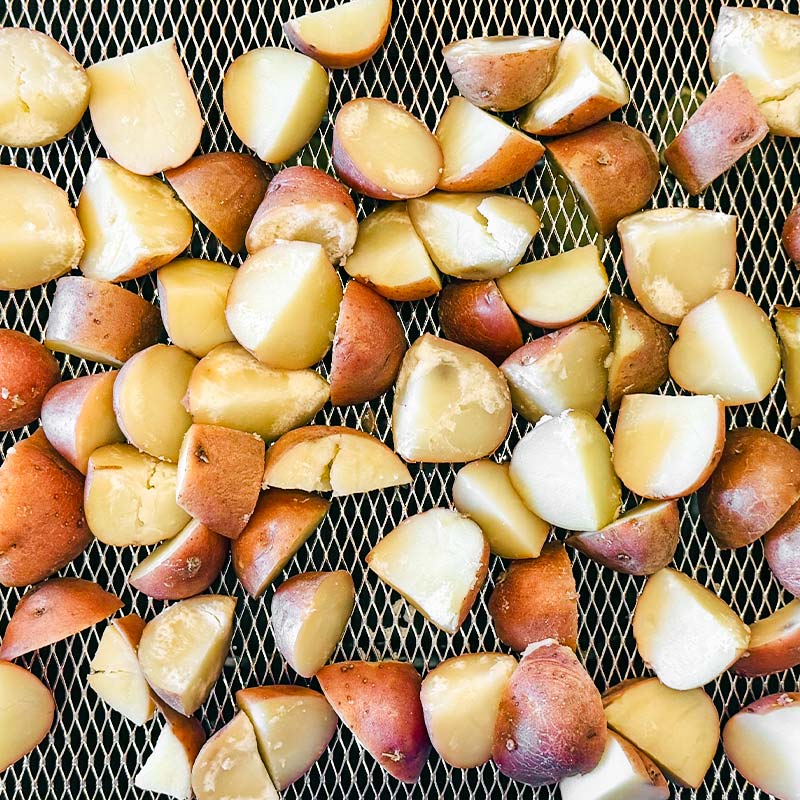
Step 3: Drain potatoes, then spread them on a tray to release steam. Transfer to a saucepan or serving bowl, cover loosely, and refrigerate for several hours or overnight to allow resistant starch to form.
Step 4: About 15 minutes before serving, whisk remaining salt, olive oil, vinegar, Dijon mustard, shallot, and black pepper in a small bowl until well combined. Taste and adjust seasoning as needed.
Step 5: Place chilled potatoes in a large bowl with chives, parsley, and roasted red pepper. Pour vinaigrette over the top and gently toss to coat evenly.
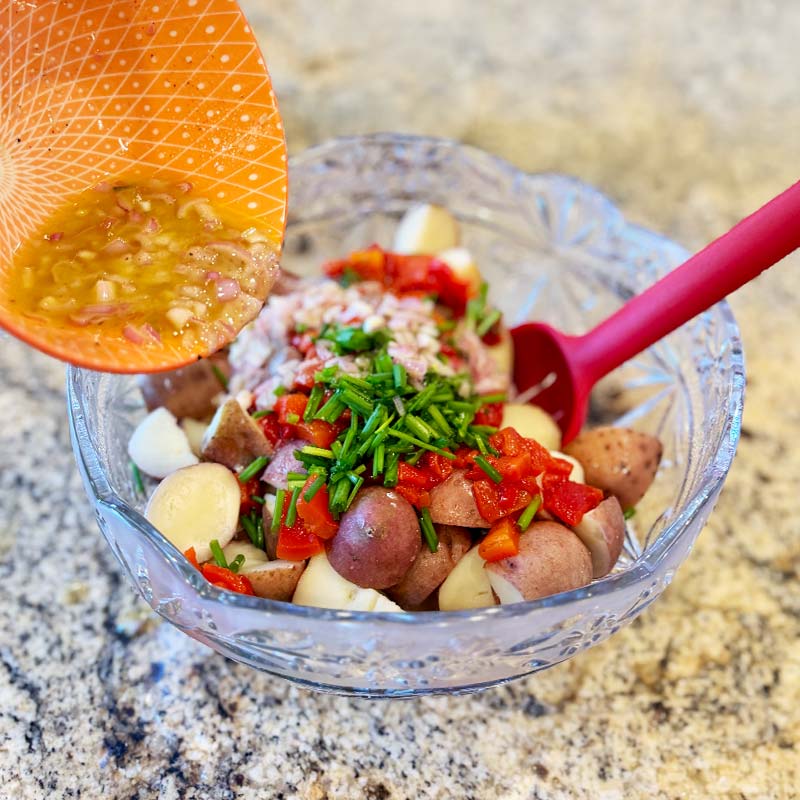
Step 6: Let salad rest for 10 to 15 minutes before serving so the potatoes can absorb the dressing.
Frequently Asked Questions
Q: Does reheating the potatoes destroy the resistant starch?
A: Yes. Reheating can convert a large share of the resistant starch in potatoes back into a digestible form, potentially more so than in foods such as pasta and rice. For maximum benefit, this salad is best enjoyed cold or at room temperature, making it ideal for meal prep.
Q: Can I use a different type of potato?
A: Red potatoes hold their shape well after chilling and have a waxy texture that works beautifully in a vinaigrette-dressed salad. Yukon Gold potatoes are a good substitute with a slightly creamier texture. Russet potatoes are not recommended, as they tend to fall apart after chilling and don’t hold up well when tossed.
Q: Can I substitute a different vinegar?
A: Yes. White wine vinegar is the closest substitute. Red wine vinegar should also work and will give a slightly deeper flavor, while raw apple cider vinegar offers a milder, fruitier taste. Other vinegars will change the flavor profile more noticeably.
Q: Can I make this ahead of time?
A: Yes, and the flavor actually improves with time. The potatoes can be boiled and refrigerated in advance, and the salad can be refrigerated after it’s assembled. For the best quality and food safety, store the salad in the refrigerator and eat it within five days.