



During one of my fitness classes, a student shared that she used to attend regular personal training sessions at the gym. However, as the training intensity increased, so did her mental stress. Her coach was a big believer in “progressive overload” and constantly pushed her to lift heavier weights, insisting it was the only way to stimulate muscle growth.
Many people still believe that constantly adding weight is essential to building muscle. However, recent research suggests this mindset may need a rethink. A study published in The Journal of Physiology had participants train one side of their body with heavy loads and the other with lighter loads. The results were surprising: As long as they trained close to muscular failure, both heavy and light weights produced nearly identical muscle growth.
Although both heavy and light loads can promote muscle growth when training close to failure, for long-term progress, it is still recommended to gradually increase resistance. This helps provide fresh stimuli to the muscles and supports continued progress.
Easy Resistance Band Exercises for Glutes and Legs
The glute and leg muscles play a crucial role in supporting the knee and hip joints, improving stability, and reducing the risk of sprains and strains during exercise or daily activities. Muscle contractions in the lower body also help pump blood back up from your legs to your heart, which is especially beneficial for people who sit for long hours because it can reduce swelling and improve circulation.
That’s why training your glutes and legs isn’t just about building a better shape. It’s about boosting overall health, improving daily function, and enhancing your quality of life.
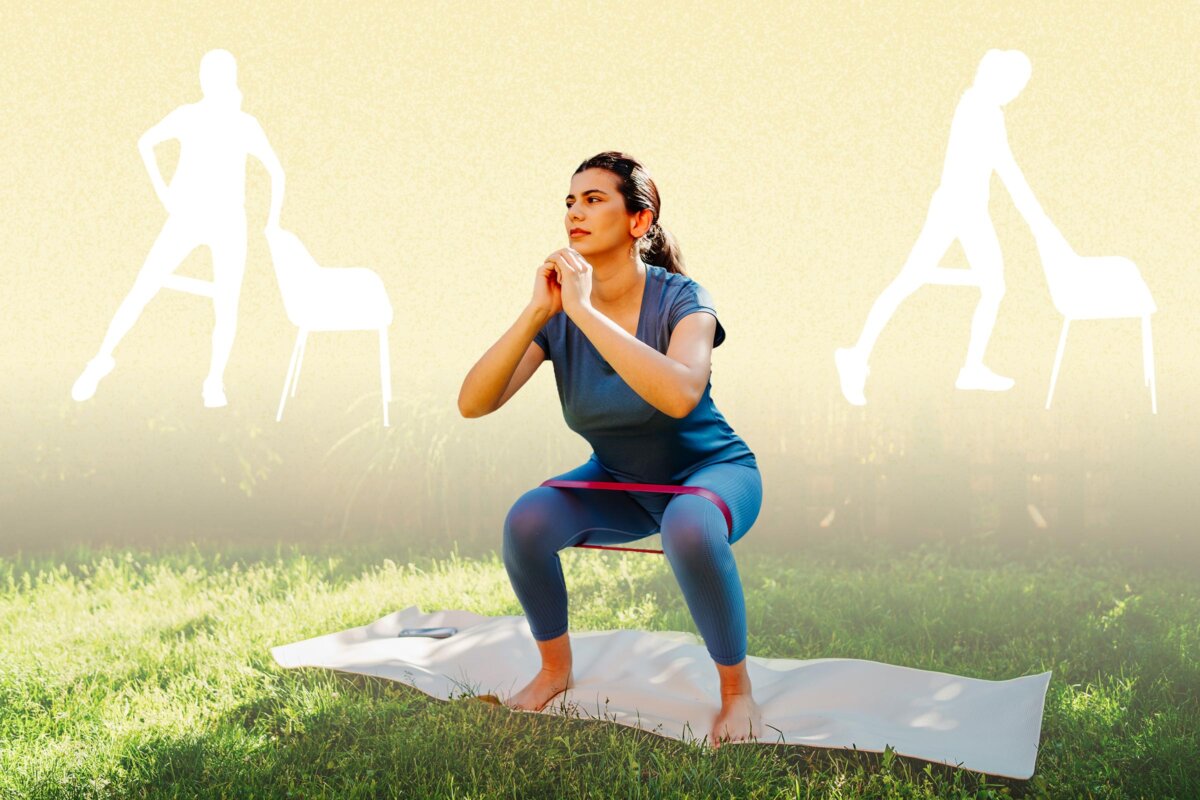
If heavy gym training doesn’t suit you, don’t worry—all you need is one resistance band to effectively train your glutes and legs at home. Here’s a simple, easy-to-follow workout you can do anytime:
1. Squat
The squat is an effective lower-body exercise that can build strength in your quadriceps, glutes, and hamstrings.
Step 1: Stand with your feet shoulder-width apart, distributing your weight evenly across your big toes, little toes, and heels. Place a resistance band around your thighs, just above your knees.
Step 2: As you inhale, lower into a squat until your thighs are parallel to the ground. You can cross your arms over your chest or keep your hands clasped in front of you.
Step 3: As you exhale, slowly return to a standing position.
2. Squat Move Left and Right
This dynamic squat variation adds lateral movement to further strengthen your glutes, quads, and outer hips.
Step 1: Place a resistance band around your thighs, just above your knees.
Step 2: Hold a squat position and step side to side while maintaining the squat.
3. Squat Hold
This isometric exercise builds lower-body strength and endurance by holding the bottom position of a squat under constant band tension.
Step 1: Place a resistance band around your thighs, just above your knees.
Step 2: Hold a squat position with your thighs parallel to the ground, staying as still as possible.
4. Back Tap Right
This move trains your right glute and hamstring while enhancing balance and hip stability.
Step 1: Place a resistance band around your thighs, just above your knees.
Step 2: Hold onto a chair in front of you and stand with your left leg slightly bent.
Step 3: Extend your right leg straight back, tap your toes on the ground behind you, then return to the starting position.
5. Back Tap Left
This exercise is the same as above, but targets the left side.
Step 1: Place a resistance band around your thighs, just above your knees.
Step 2: Hold onto a chair in front of you and stand with your right leg slightly bent.
Step 3: Extend your left leg straight back, tap your toes on the ground behind you, then return to the starting position.
6. Seated Leg Spread
This seated move helps improve hip stability and strength.
Step 1: Sit on a chair with your feet about shoulder-width apart.
Step 2: Place a resistance band around your thighs, just above your knees.
Step 3: Keeping your feet flat on the floor, push your knees outward against the resistance band to engage your hip abductor muscles.
7. Squat
Repeat the same steps as Exercise 1.
8. Squat Move Left and Right
Repeat the same steps as Exercise 2.
9. Squat Hold
Repeat the same steps as Exercise 3.
10. Side Tap Right
This unilateral move strengthens your outer hips and glute medius.
Step 1: Place a resistance band around your thighs, just above your knees.
Step 2: Hold onto a chair beside you and stand with your left leg slightly bent.
Step 3: Extend your right leg out to the side, tap your toes on the floor, then bring it back to the starting position.
11. Side Tap Left
This exercise is the same as above, but targets the left side.
Step 1: Place a resistance band around your thighs, just above your knees.
Step 2: Hold onto a chair beside you and stand with your right leg slightly bent.
Step 3: Extend your left leg out to the side, tap your toes on the floor, then return to the starting position.
12. Seated Leg Spread
Repeat the same steps as Exercise 6.
Beginners can start with a light resistance band and gradually increase the intensity.
With simple equipment, you can effectively train your glutes and legs at home. There’s no need to blindly chase heavier weights—finding a pace that works for you—because that’s what makes exercise consistent, enjoyable, and truly beneficial for a healthier and stronger body.
Views expressed in this article are the opinions of the author and do not necessarily reflect the views of The Epoch Times. Epoch Health welcomes professional discussion and friendly debate. To submit an opinion piece, please follow these guidelines and submit through our form here.