



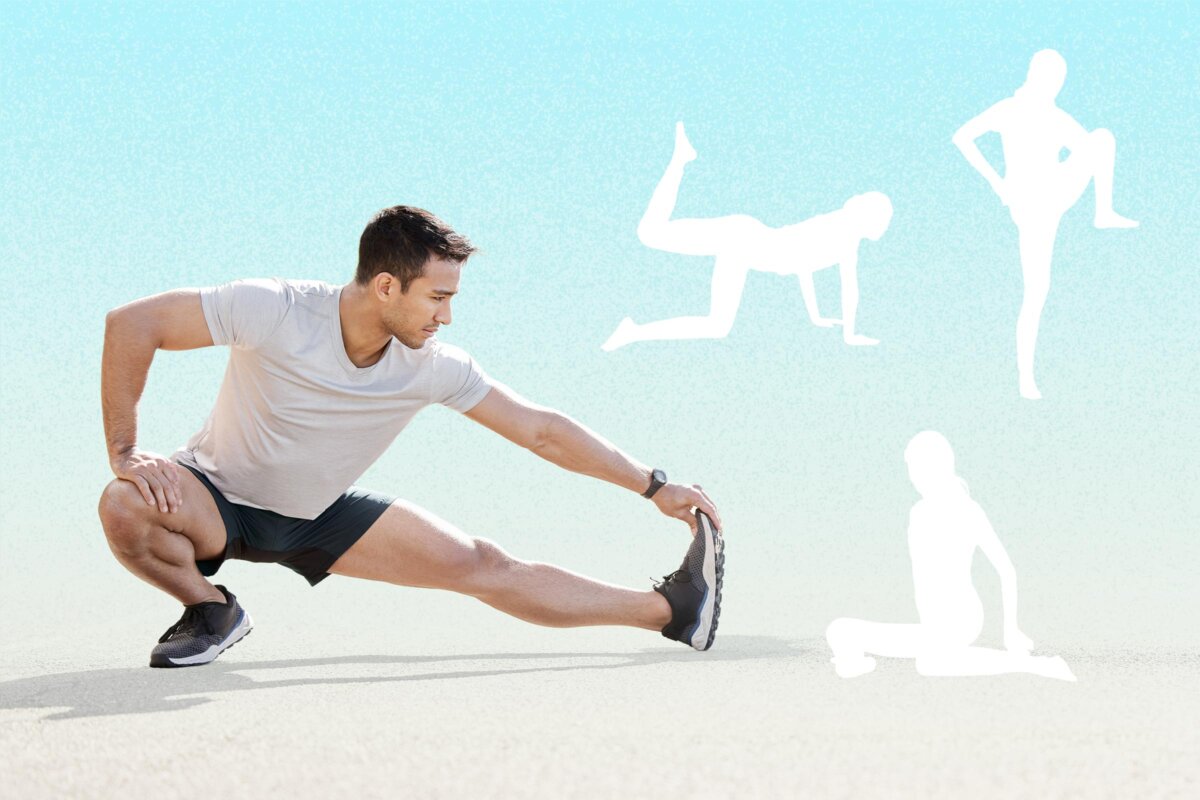
A well-known health proverb notes that “You age from your legs first.” More specifically, it’s limited hip mobility that ages us. When your hips become stiff, it not only affects how you walk and move but also puts extra strain on your lower back, leading to aches and discomfort.
To help slow that process, I designed this simple 10-minute hip mobility routine to boost flexibility and make daily life more comfortable.
Improve Hip Mobility to Relieve Lower Back Pain
The hip joint is a key connection between the trunk and the lower limbs. In daily movements and physical activity, it plays a central role in generating and transferring force.
Hip health not only affects mobility but is also closely linked to lower back health. A 2025 randomized controlled trial published in the Journal of Sport Sciences examined male professional football players with chronic low back pain and limited hip flexion. After an eight-week dynamic hip flexor stretching program, participants showed significant improvements in hip range of motion, pain reduction, dynamic balance, and athletic performance.
The study results demonstrate that enhancing hip flexibility can improve movement and performance, while providing relief from lower back pain. For people who sit for long hours or have lower activity levels, incorporating hip mobility training into a daily routine is a wise choice.
10-Minute Hip Mobility Routine
The following is a targeted sequence of 12 hip exercises that progresses from simple warm-up movements to functional training, and is suitable for beginners and advanced levels.
1. 90/90 Hip Stretch
This foundational mobility exercise improves internal and external hip rotation while helping loosen tight hips.
Step 1: Sit on the floor with both knees bent to 90 degrees, feet flat on the floor, and legs slightly wider than hip-width. Keep your upper body as upright as possible. Your hands can hover off the ground or lightly support your body.
Step 2: Simultaneously rotate both legs to the right, placing the outer side of your right leg and the inner side of your left leg on the floor. Return to the center, then rotate to the left side. Alternate sides while keeping both knees bent to 90 degrees throughout the movement.
2. 90/90 Get-Up
This dynamic variation builds hip mobility, strength, and coordination by adding a controlled transition to kneeling.
Step 1: Sit on the floor with both knees bent to 90 degrees, feet flat on the floor, and legs slightly wider than hip-width. Keep your upper body upright.
Step 2: Rotate both legs to the right, placing the outer side of your right leg and the inner side of your left leg on the floor. Using your hips and legs, rise up into a kneeling position, then sit back down. Return to the center, then rotate to the left side and kneel up again. Alternate sides while keeping both knees bent to 90 degrees throughout the movement.
3. Seated Left Hip External Rotation
This exercise improves mobility in the left hip and helps increase the range of motion needed for daily movements.
Step 1: Sit on the floor with your right leg bent and resting in front of you. Extend your left leg to the side, then bend your left knee so it points upward.
Step 2: Gently press your left knee inward and downward toward the floor, then open it back up so it points upward. Repeat several times.
4. Seated Right Hip External Rotation
This exercise is the same as above, but performed on the right side.
Step 1: Sit on the floor with your left leg bent and resting in front of you. Extend your right leg to the side, then bend the knee with the knee pointing upward.
Step 2: Gently press your right knee inward and downward toward the floor, then open it back up to point upward. Repeat several times.
5. Hip Rotation–Left
This movement gently mobilizes the left hip joint and improves control through a full range of motion.
Step 1: Start on all fours with your hands and knees on the floor, positioned directly under your shoulders and hips. Keep your back straight.
Step 2: Lift your left knee and make counterclockwise circular movements: forward, left, up, down, then returning to the starting position.
6. Hip Rotation–Right
This exercise is the same as above, but performed on the right side.
Step 1: Start on all fours with your hands and knees on the floor, positioned directly under your shoulders and hips. Keep your back straight.
Step 2: Lift your right knee and make clockwise circular movements: forward, right, up, down, then returning to the starting position.
7. Pelvic Rotation–Left
This exercise enhances coordination between the left hip and pelvis, promoting smoother and more efficient movement.
Step 1: Sit on the floor with your right leg bent and resting in front of you, and your left leg extended to the side.
Step 2: Rotate your left leg forward. As your left knee approaches the floor, bend it so your lower leg folds backward. Then straighten your lower leg and rotate the left leg back to the starting position. Keep your right leg still while the left leg guides the rotation of your pelvis.
8. Pelvic Rotation–Right
This exercise is the same as above, but performed on the right side.
Step 1: Sit on the floor with your left leg bent and resting in front of you, and your right leg extended to the side.
Step 2: Rotate your right leg forward. As your right knee approaches the floor, bend it so your lower leg folds backward. Then straighten your lower leg and rotate the right leg back to the starting position. Keep your left leg still while your right leg guides the rotation of your pelvis.
9. Low Lunge Side Shift
This flowing movement stretches the inner thighs and hips while improving lateral mobility and flexibility.
Step 1: Stand with your right foot stepping out wide to the right. Place your hands on the floor and shift your weight to the right. Push your hips back and down as you lower into a low lunge with your right knee bent and your left leg straight.
Step 2: Push off with your right foot, shift your weight to the left, and sink into a low lunge on the left side. Continue alternating the movement from side to side.
10. Low Lunge to Front Lunge Transition
This dynamic exercise increases hip mobility by moving the body through multiple planes of motion.
Step 1: Stand and step your right foot wide to the right. Place your hands on the floor and shift your weight to the right, pushing your hips back and down into a low right-side lunge.
Step 2: Rotate your body forward, transitioning into a right-side front lunge, then return your body to face forward.
Step 3: Push off with your right foot, shift your weight to the left, and sink into a low left-side lunge.
Step 4: Rotate your body forward, transitioning into a left-side front lunge, then return your body to face forward. Continue moving from side to side, alternating each lunge.
11. Front and Side Leg Lift
This exercise strengthens the hip muscles and improves balance, stability and active flexibility.
Step 1: Stand upright with your body straight.
Step 2: Lift your right knee forward to 90 degrees, then lower it. Next, lift your right leg out to the right side to 90 degrees, then lower it.
Step 3: Repeat with your left leg: Lift it forward to 90 degrees, then to the left side to 90 degrees, lowering after each lift. Continue alternating sides.
12. Second Position Plié
This lower-body exercise strengthens the hips and legs while improving flexibility and hip control.
Step 1: Stand with your feet slightly wider than shoulder-width apart, toes turned outward.
Step 2: Keep your upper body upright and slowly bend your knees, lowering into a squat until your thighs are parallel to the floor. Hold for a few seconds, then stand back up. Keep your heels on the floor and ensure your knees track in the same direction as your toes. Repeat several times.