



High blood pressure, often called a “silent killer,” is a major risk factor for serious chronic conditions, including cardiovascular disease, stroke, diabetes, and kidney disease. While medications help control blood pressure, Japanese pharmacologist and preventive medicine expert Masatoshi Kato wrote in his book, “One‑Minute Blood‑Pressure‑Lowering Exercise,” that long-term reliance on medication alone may increase the risk of side effects and place a burden on the body.
High blood pressure is closely linked to the hardening and stiffening of blood vessels. A critical factor in maintaining vascular health is nitric oxide levels in the body.
According to the nitric oxide theory proposed by the three winners of the 1998 Nobel Prize in Physiology or Medicine, nitric oxide helps relax blood vessels, preserve their elasticity, and significantly reduce the risk of arteriosclerosis, cardiovascular disease, and stroke.
However, nitric oxide production naturally declines with age. Studies suggest that movements involving alternating muscle contraction and relaxation can help support blood vessel function and promote nitric oxide availability and endothelial function.
4 Chair Exercises to Help Stabilize Blood Pressure
Kato recommended a series of simple chair exercises. By repeatedly contracting and relaxing the muscles, these movements help stimulate nitric oxide production.
1. Prayer Press Hold
The Prayer Press Hold exercise creates tension in the upper body, stimulating nitric oxide release.
Step 1: Sit upright in a chair with your back naturally straight and your palms pressed together in front of your chest.
Step 2: Keep your armpits slightly open and press your palms together firmly.
Step 3: Hold the pressure for 10 seconds, then relax.
2. Opposite Arm and Leg Hold
Coordinated movement engages the core and limbs to help improve overall vascular flexibility and blood flow.
Step 1: Sit upright in a chair and place both hands overlapped on top of one knee.
Step 2: Press downward with your hands while simultaneously lifting the heel and pushing the leg upward on the same side.
Step 3: Apply opposing force between the hands and leg for 10 seconds, then relax and switch sides.
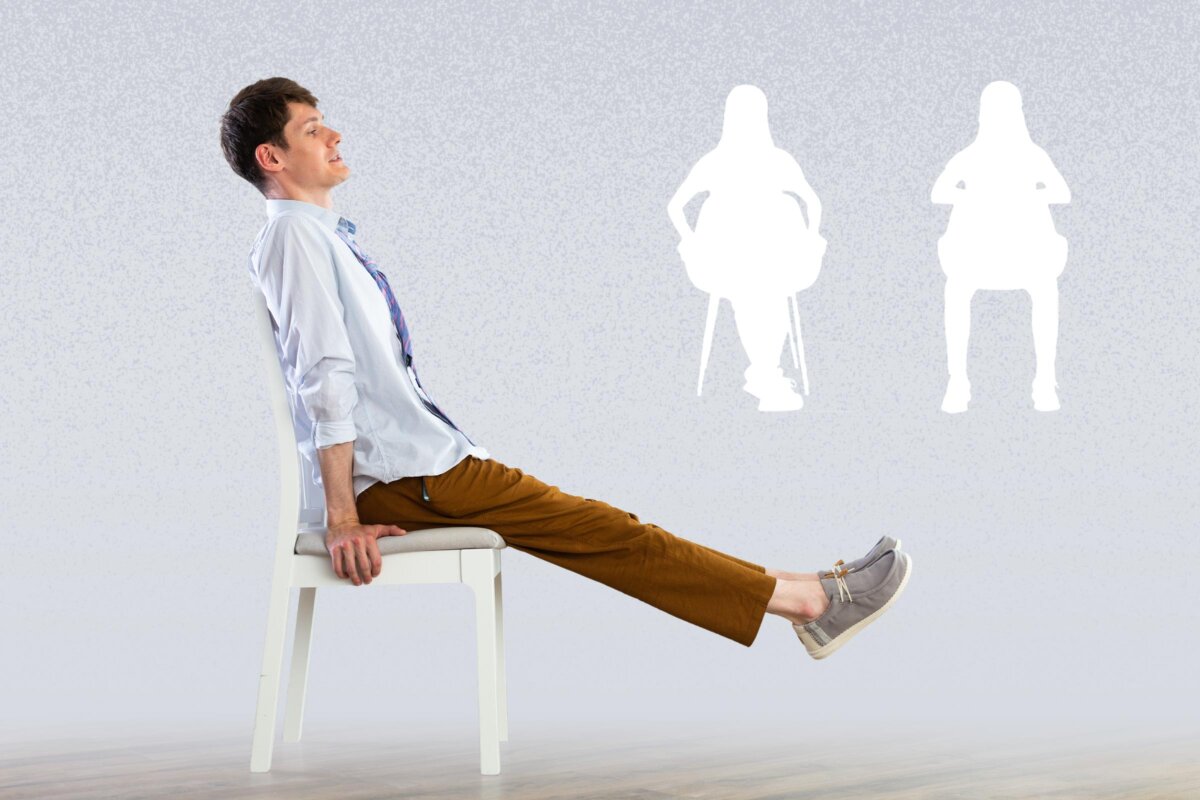
3. Core Hold
The Core Holds activates the deep abdominal and back muscles and helps stabilize blood pressure.
Step 1: Sit in a chair and grip the seat edges with both hands.
Step 2: Lean your upper body backward at about a 45-degree angle.
Step 3: Use your abdominal and back muscles to maintain the position for 10 seconds, then relax.
4. Leg Press Hold
The Leg Press Hold movement generates tension in the legs and hips, helping blood flow and reducing vascular stiffness.
Step 1: Sit in a chair with one leg crossed slightly over the other, keeping both knees slightly bent.
Step 2: Hold onto the chair for support, lift both feet slightly off the floor, and lean your upper body back slightly.
Step 3: Press the upper leg downward while pushing the lower leg upward. Hold the opposing force for 10 seconds, then switch leg positions and repeat.
In addition to regular exercise, stabilizing blood pressure also requires a balanced diet, reduced intake of high-salt and high-fat foods, maintaining a healthy weight, and getting sufficient sleep.
Healthy habits can support better blood pressure naturally, but if you’re already on medication, any changes should always be guided by your doctor—not made on your own.
Views expressed in this article are the opinions of the author and do not necessarily reflect the views of The Epoch Times. Epoch Health welcomes professional discussion and friendly debate. To submit an opinion piece, please follow these guidelines and submit through our form here.