



Memorial Day brings family, friends, and neighbors together in remembrance of those who have fallen in service to our country—often at the heart of the day is a shared barbecue meal. A two-step, healthy backyard smoked brisket recipe can contribute to the sense of community and gratitude that define the occasion.
Most backyard brisket fails twice: it comes out dry and tough, or it spends so long over heavy smoke that harmful compounds build up. This two-step method solves both problems. A brief smoke adds classic flavor and color, then a low, slow steam finish takes the brisket to tender perfection while helping keep those compounds in check.
A Healthier Way to Smoke Beef Brisket
Smoked brisket is one of the great achievements of American barbecue, but the traditional method has a drawback. Long hours over heavy smoke allow cancer-causing compounds called heterocyclic amines (HCAs) and polycyclic aromatic hydrocarbons (PAHs) to accumulate in the meat. These compounds form when proteins and fats in meat are exposed to high heat and smoke for extended periods, with longer, heavier smoke exposure increasing their concentration.
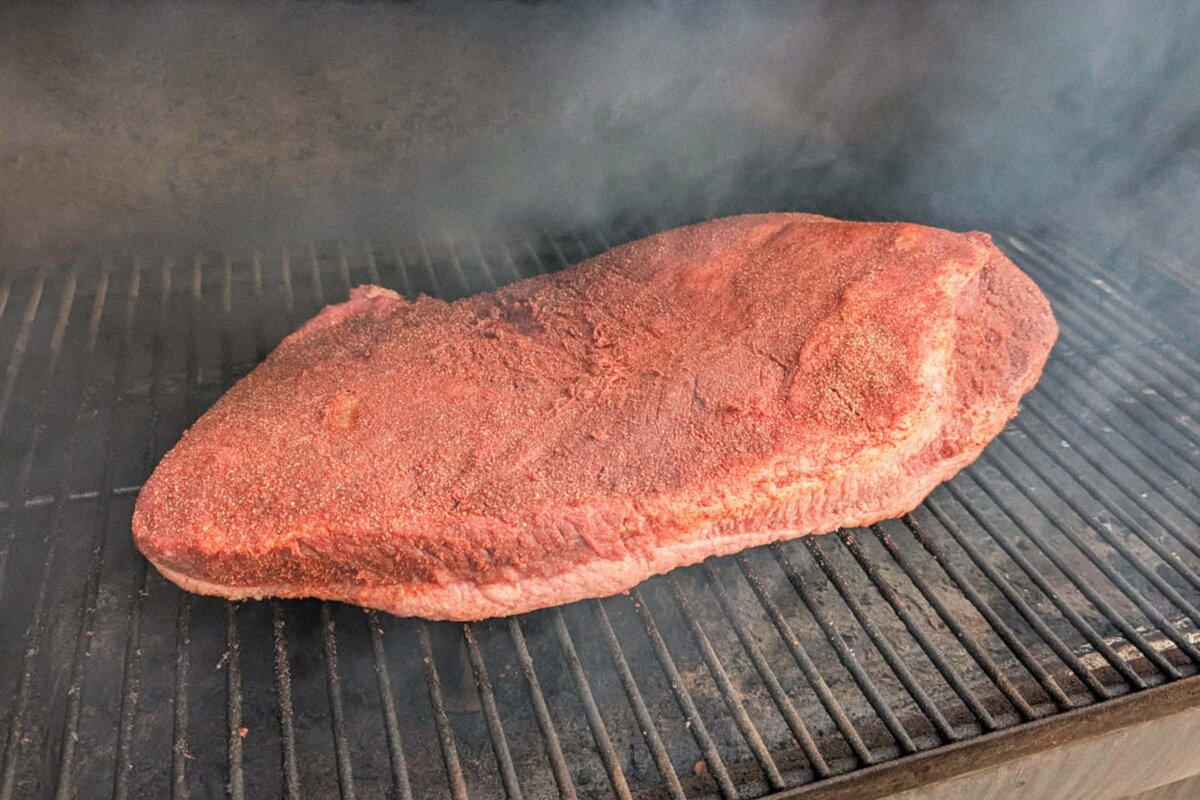
This recipe takes a different approach. One hour on the “smoke” setting builds genuine smoke flavor and color without prolonged exposure. A second hour at 400 F develops the exterior. Then the brisket moves into a covered steam tray at 225 F, where moist heat finishes the job.
Moist heat does not generate the same harmful compounds that dry, high heat does. It also does something dry heat cannot—it slowly breaks down the tough collagen in brisket into gelatin, which is what creates that fall-apart texture. The steam tray is not a shortcut, but a smarter finish.
The Steam Tray: A Smart Investment
A stainless steel steam tray with a lid—the same style used to keep food warm on a buffet table—is the key piece of equipment in this recipe. It isn’t standard backyard grilling gear, but it quickly proves its value.
The covered tray creates a moist cooking environment that serves two purposes. First, it keeps the meat’s surface temperature lower than that of a dry oven or an open grill, which limits further HCA and PAH formation during the long finish. Second, the trapped moisture prevents the brisket from drying out during the hours it takes to reach tenderness.
Stainless steel steam trays are available online and at restaurant supply stores. Restaurant supply stores are also an excellent place to buy a large brisket at a fair price. Choose a tray large enough to accommodate the biggest brisket or roast you typically cook. It’s a one-time purchase that can change the way you handle large cuts of meat.
Choosing Pellets for Your Smoker
Oak is the classic choice for brisket, with a balanced smoke flavor that complements beef without overpowering it. Cherry adds mild sweetness and deeper color, while pecan offers a subtle nuttiness. Hickory delivers a bolder smoke flavor and is best used moderately or blended with oak. Mesquite is the strongest option, but too much can become bitter.
Because this method uses only about an hour of smoke, stronger woods such as hickory or hickory-oak blends work well. For a milder, classic flavor, oak and cherry are a dependable combination.
How to Make Smoked Beef Brisket
This two-step method combines a brief smoke with a long, covered steam finish to produce tender brisket with deep barbecue flavor.
Prep Time: 15 minutes (plus overnight refrigeration)
Cook Time: 7 to 12 hours
Total Time: 8 to 13 hours
Serves 10 to 12
Equipment Needed
- Pellet smoker (or other smoker with good temperature control)
- Stainless steel steam tray with lid
- Instant-read or leave-in meat thermometer
Ingredients
For the rub (see notes and tips):
- 1/4 cup smoked paprika
- 2 tablespoons sea salt
- 4 teaspoons garlic powder
- 4 teaspoons onion powder
- 2 1/2 teaspoons mustard powder
- 2 teaspoons black pepper
For the brisket:
- 1 whole beef brisket (about 8 to 15 pounds)
- 1 inch water in the steam tray
Instructions
Step 1
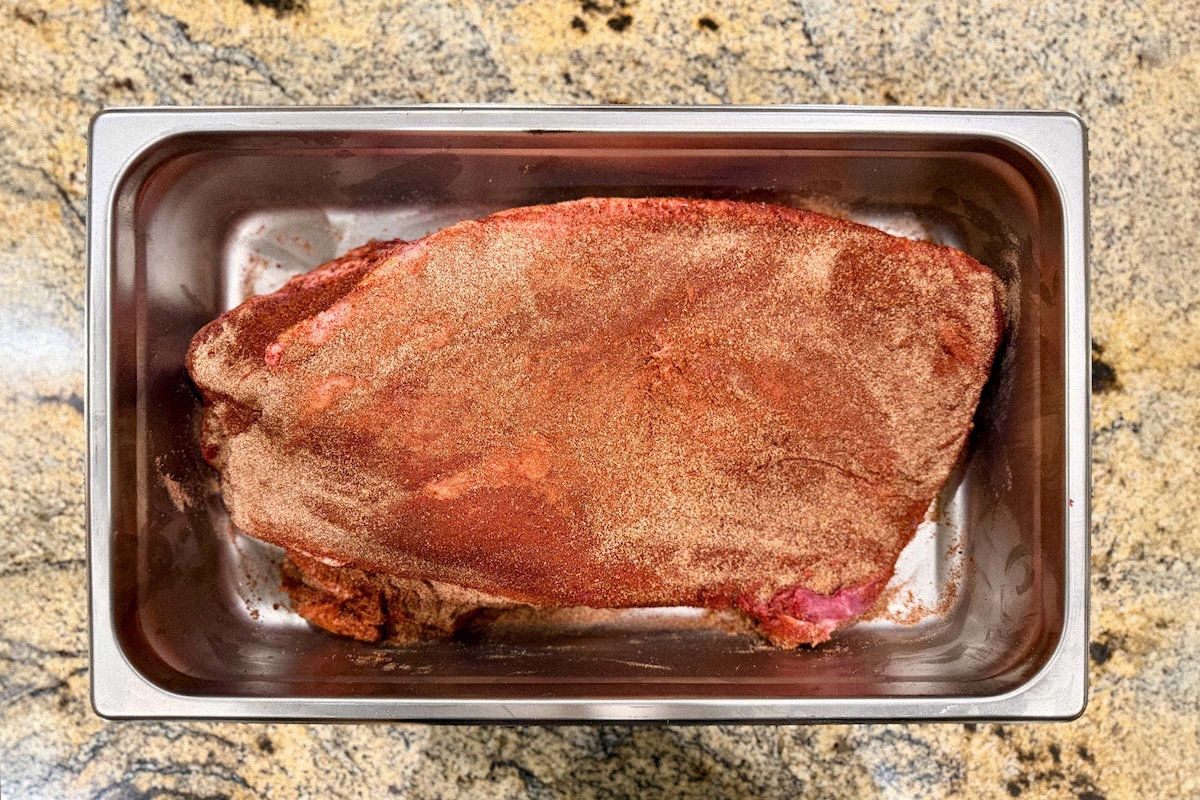
- Generously coat the brisket on all sides with the rub. To avoid cross-contamination, sprinkle it on with a clean spoon rather than dipping into the main batch. Cover and refrigerate the brisket overnight. Store any unused rub in an airtight container.
- Take the brisket out of the refrigerator 30 to 60 minutes before smoking to reduce time on the smoker.
- Set the smoker to the “smoke” setting. Place the brisket directly on the rack, fat-side down just for this initial phase to protect the meat from direct heat on some smokers; it will be turned fat-side up later. Smoke for about one to two hours for more smoke flavor.
- Increase the temperature to 400 degrees F and cook for another hour.
Step 2
- Transfer the brisket to the steam tray, fat-side up. Add 1 inch of water to the bottom. Cover tightly and return to the smoker at 225 F. If your smoker does not have thermostatic control, use an oven thermometer to verify temperature.
- Cook for five to 10 hours until the internal temperature reaches 197 F and a thermometer probe slides in and out with little to no resistance. Plan on the longer end for larger or tougher cuts, but go by the probe test, not the clock. On cold or windy days, a grill insulation blanket made for your smoker can help maintain a steady temperature and reduce pellet consumption.
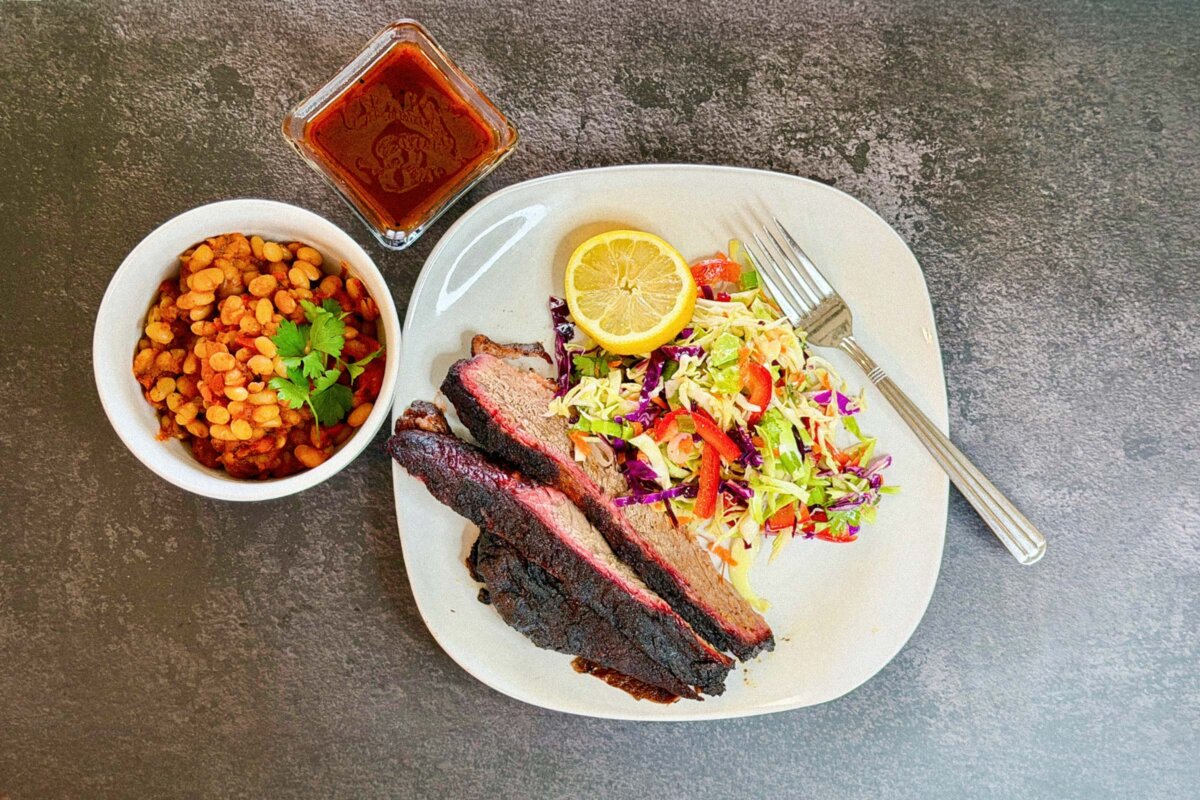
- Remove the brisket from the steam tray and let it rest on a cutting board for 30 to 60 minutes before slicing. Resting allows the hot juices pushed toward the center during cooking to spread back through the meat so each slice stays moist. Slice against the grain.
Storage
Store leftovers in the refrigerator up to five days or the freezer up to three months.
Notes and Tips
This recipe makes enough rub for one large whole packer brisket (about 10 to 14 pounds). For smaller briskets (8 to 10 pounds), you’ll have some leftover for another use.
The cooking juices left in the tray become an extraordinary au jus. Mixed half and half with your favorite barbecue sauce, it is exceptional for dipping or drizzling.
Frequently Asked Questions
The following questions and answers cover practical details about choosing a brisket, using this two-step method, and making the most of leftovers.
Q: What cut of brisket is best—flat, point, or whole packer?
A: A whole packer brisket includes both the flat and the point and is the best choice for this method. The point has more fat and connective tissue, which keeps the meat moist during the long cook. The flat alone can dry out more easily. If a whole packer is unavailable, a top-round shoulder roast works well with the same method.
Q: What size brisket should I buy?
A: Plan on about one pound per person before cooking. Brisket loses roughly 30 to 40 percent of its weight during cooking, so a 10-pound brisket will yield approximately 6 to 7 pounds of cooked meat. Buying larger than you need means excellent leftovers.
Q: What are some ideas for leftovers?
A: Leftover brisket may be even better the next day. To keep it moist and tender, reheat slices in a covered dish with a splash of reserved au jus or beef broth at 300 F just until warmed through. Here are some favorite ways to use it:
- Sandwiches with slaw and barbecue au jus
- Breakfast hash with potatoes, peppers, and eggs
- Tacos, enchiladas, or nachos
- Chili
- Empanadas or pot pie
- Loaded baked potato
Q: Can this method work with other cuts?
A: Yes. A top round shoulder roast works well with this two-step method when a large brisket is unavailable. The probe test applies the same way—insert it and look for little to no resistance before pulling the meat.