



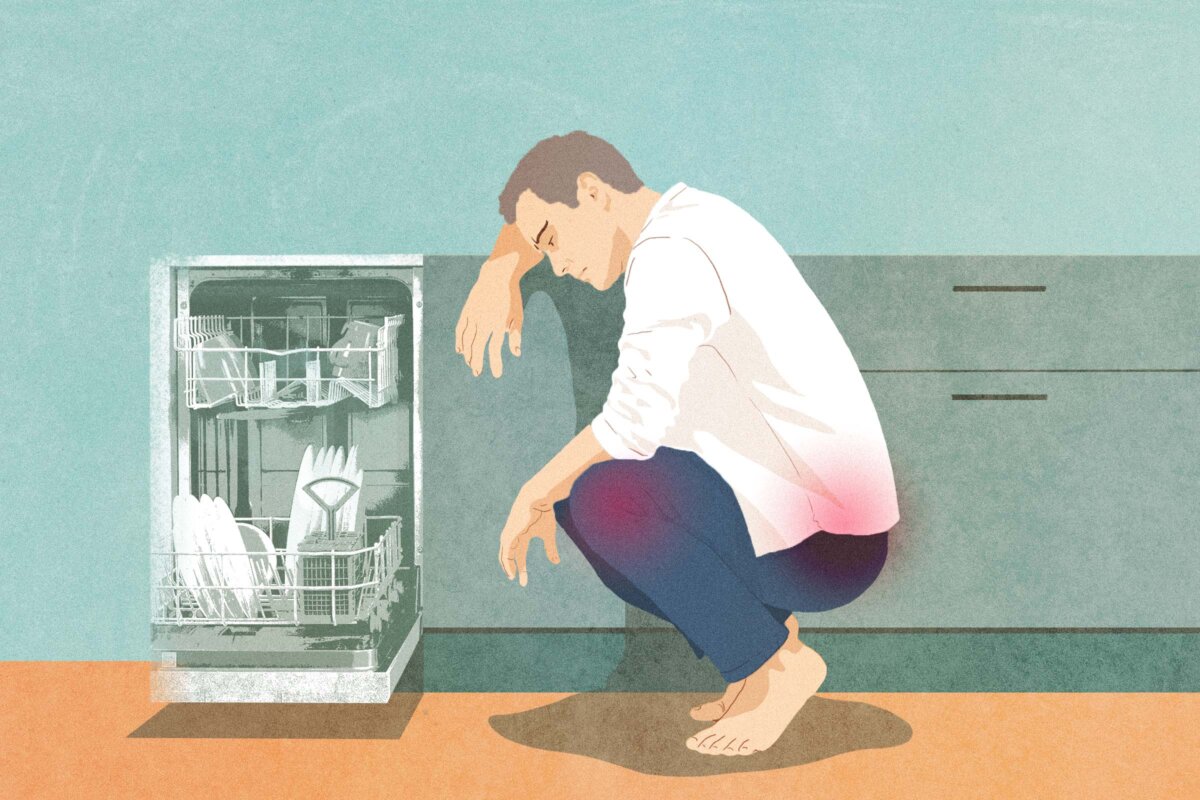
Why does the hip joint become ‘stuck’?
Compared with the knees, the hip joint has a much greater range of motion, which also makes its structure more complex and more easily affected by daily habits. Prolonged sitting, lack of physical activity, poor posture, sitting cross-legged or in a “W” position, or even kneeling for long periods can gradually reduce hip mobility, stability, and muscular endurance.
When the hips fall out of proper alignment—causing both mobility and stability to decline—the body naturally compensates through other joints and muscles. The knees are often the first to bear the extra strain, which is why many cases of knee pain actually stem from hip dysfunction.
While many people focus on strengthening the glute muscles, hip “mobility” is just as important as muscle strength, physical therapist Duke Pan told The Epoch Times. Hip movement includes external and internal rotation, abduction, adduction, flexion, and extension. In clinical practice, therapists also commonly observe asymmetry in the hips—for example, one side appearing more prominent while the other looks flatter—often associated with tight gluteal muscles and restricted joint mobility.
When certain muscles remain overly tight for long periods, it can lead to “tight hips,” which further affects movement quality and joint stability.
Symptoms That Indicate Hip Joint Imbalance
The hip is often called a “silent joint” because even when it becomes imbalanced, early-stage issues may not cause noticeable pain. Pan said that the following signs could be warning signals from your hips:
- Difficulty squatting deeply
- Pain in one knee
- Asymmetrical buttock shape
- Difficulty sitting cross-legged or crossing one leg over the other
- Pain in the front of the hip when lifting the leg
- Trouble lifting the leg when going up or down stairs
When the hip joint cannot maintain proper stability, surrounding soft tissues, such as ligaments and the labrum, can easily rub against each other, Pan said. Over time, this friction may wear down cartilage, cause labral tears, and, in severe cases, necessitate hip replacement surgery.
The root cause of hip instability is often long-term poor posture and habits, such as frequently crossing the legs, sitting in a “W” position, or kneeling with your hips shifted forward. These habits gradually loosen the supporting tissues.
Once these tissues become too loose, the body typically compensates in two ways: Either the joint shifts out of its normal position, or the surrounding muscles tighten excessively to protect the joint, creating a cycle that can further worsen hip function.
1 Simple Test for Hip Stability
Pan recommended a simple method to check hip stability.
Step 1: Stand on one leg.
Step 2: Slightly bend the knee of the standing leg and slowly lower your body into a small squat. While doing this, observe the direction of your knee.
If your knee caves inward, wobbles side to side, or your pelvis tilts during the test, it indicates insufficient hip joint stability—often the underlying cause of many knee pain issues.
If your knee stays properly aligned but you still feel pain while squatting, the problem may be more related to the knee joint itself.
2 Exercises to Improve Hip Stability
With only a resistance band, you can begin strengthening your hips at home.
Training 1
This exercise helps activate the glute muscles that stabilize the hip joint.
Step 1: Stand on one leg with your knee slightly bent. Lean your upper body slightly forward. Extend the other leg straight back and lightly touch the floor with your toes, keeping your body and back leg in one straight line.
Step 2: While maintaining that straight line from your upper body through your back leg, lift your back foot off the floor and lean your torso slightly further forward. Hold for five seconds, then slowly return to the starting position. Switch legs and repeat.
During this movement, you should clearly feel the glute muscle of the standing leg working and becoming fatigued. This sensation indicates that your glute muscles are actively stabilizing the hip joint. As you get stronger, gradually increase the hold time.
Training 2
This movement challenges balance and hip control while strengthening the muscles around the joint.
Step 1: Place a resistance band around both legs. Position your feet about shoulder-width apart and keep the band under tension.
Step 2: Stand firmly on one leg. Slowly extend the other leg and tap the ground in front of you, then return to the starting position. Next, tap to the side and return, and finally, tap behind you and return. Repeat the exercise while standing on the other leg.
Throughout the exercise, maintain constant tension in the resistance band. The slower you perform the movements, the more effective the training will be.
Views expressed in this article are the opinions of the author and do not necessarily reflect the views of The Epoch Times. Epoch Health welcomes professional discussion and friendly debate. To submit an opinion piece, please follow these guidelines and submit through our form here.